
Best Bathroom Vanity Materials for Humid Climates
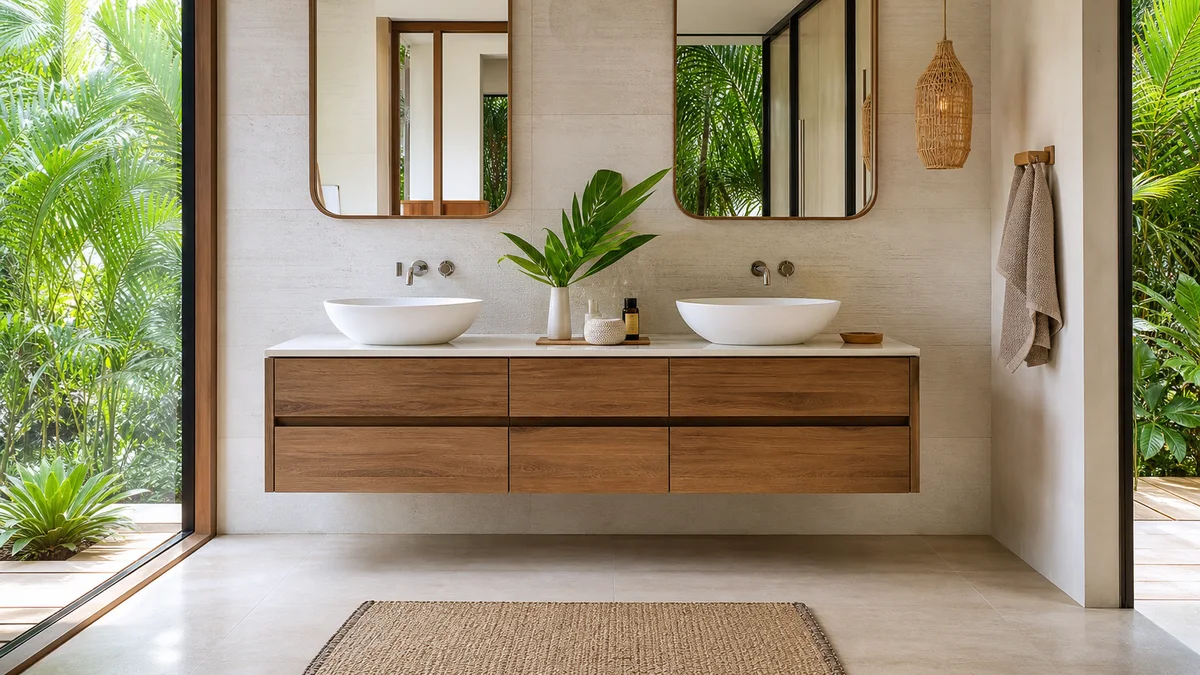
A bathroom vanity lives in the hardest environment in the house: daily steam, splashed water, condensation running down walls — and in tropical or coastal markets, that assault continues around the clock from ambient humidity alone. Buyers in Southeast Asia, the Gulf, coastal Africa and island markets know the failure pattern well: an ordinary vanity looks fine for a year, then edges swell, doors sag and the carcass blooms. All of it is preventable at specification time. Here's what actually keeps a vanity alive in a humid climate.
Why moisture kills ordinary vanities
Standard cabinet boards — particleboard and regular MDF — are wood fibre held together with resin. When water vapour finds a path into the core, the fibres swell and the board loses structure; unlike solid timber, it doesn't shrink back. The attack almost never comes through the finished face, which is sealed. It comes through the edges (where boards are cut and banded), the hinge and screw holes (which pierce the sealed skin), and the bottom of the cabinet (where splashes pool). That's why "waterproofing" a vanity is really three decisions: what the core is, how every edge and hole is sealed, and how the cabinet meets the wall and floor.
Cores that survive: the hierarchy
The core material sets your baseline. From strongest to weakest in wet rooms:
Marine-grade and WBP plywood is the premium answer — cross-laminated veneers with water-resistant glue lines. It holds screws firmly (a loaded vanity drawer is heavy), resists swelling, and recovers rather than crumbles if moisture does get in. It's the reason our waterproof bathroom vanities are built on plywood as standard rather than as an upgrade.
PVC / foamed-plastic board contains no wood fibre at all, so it simply cannot swell — a genuinely waterproof core used in some wet-area programmes. Its limits are structural: it's softer than plywood, holds screws less firmly, and flexes on wide spans, so it suits smaller vanities and moderate loads better than big drawer stacks.
Moisture-resistant (MR, green-core) MDF or particleboard raises tolerance meaningfully over standard board at modest cost — right for humid-climate kitchens and acceptable for vanities in drier bathrooms — but in a full tropical wet room it's the floor, not the ceiling, of what to specify. The full board comparison is in our guide to MDF vs plywood vs particleboard.
Sealing: where waterproofing is won or lost
A plywood carcass with sloppy edges will fail before an MR board cabinet with perfect sealing. The details that matter: machine-applied edge-banding on every edge, including the ones hidden inside and behind — factories cutting corners band only what shows; sealed hinge and screw penetrations; a sealed or one-piece cabinet bottom; and quality waterproof adhesives in assembly. When your order is checked before the container closes, edges and penetrations are the first inspection points — see our pre-shipment inspection checklist for the full routine.
Finishes and design choices that help
The finish is your outer raincoat. Lacquered surfaces (properly cured, multi-coat) shed water and wipe dry; melamine and laminate faces are inherently water-shy on the surface, provided their edges are sealed; real-wood veneer works in bathrooms when lacquered over, though it asks for more care. High-gloss acrylic handles humidity well and suits the bright, easy-clean look many hotel programmes want.
Two design choices multiply whatever material you pick — and both are free. Go wall-hung: floating wall-hung vanities lift the cabinet off the wet floor entirely, removing the single most common water path and making the floor easier to clean — the standard approach in modern tropical hotels. Ventilate: an extractor fan or louvred door detail that lets the cabinet interior dry out between showers extends its life more than any single material upgrade.
Tops and basins: close the last gap
The cabinet is only as dry as the joint above it. Quartz, sintered stone and solid-surface tops all handle bathroom water well; what differs is the basin joint. An integrated or one-piece basin-and-top eliminates the seam entirely — the most failure-proof choice for hotels and rentals. Under-mount basins look premium but live or die by the quality of the sealant bead around the cut-out, so specify the sealing explicitly and check it at inspection. Whichever top you choose, insist the cut-outs (basin and tap holes) are machine-cut and sealed at the factory rather than improvised on site — raw cut edges above a wood-based carcass are exactly the kind of hidden water path this whole specification exists to close.
The specification that works
For a humid or tropical market, the recipe we'd defend project after project: plywood core, full machine edge-banding with sealed penetrations, lacquer or laminate face, wall-hung mounting, soft-close stainless or treated hardware (ordinary steel hinges rust before the cabinet fails), and a stone or solid-surface top with an integrated or well-sealed basin joint. None of these items is exotic; together they turn the bathroom from the first room to fail into just another room.
FAQ
Frequently asked questions
What is the best material for a bathroom vanity in a humid climate?
A marine-grade or WBP plywood carcass with fully sealed edges, under a lacquered or laminate face. PVC board is a good alternative for smaller units; MR board is the minimum acceptable, not the target.
Are "waterproof" vanities really waterproof?
The honest term is highly water-resistant. PVC cores can't swell at all; plywood resists and recovers. But every vanity still depends on sealed edges, sealed screw holes and a sound basin joint — specification and workmanship together, not a magic material.
Is a floating vanity better in a humid bathroom?
Yes — lifting the cabinet off the floor removes standing-water contact, improves airflow underneath and makes cleaning easier. It's the default in modern hotel and tropical residential design.
Will the hardware rust before the cabinet fails?
It can, if you specify ordinary steel. Ask for stainless or anti-corrosion-treated hinges and runners in wet rooms — a small line item that decides how the vanity feels in year five.
Can I order humid-climate vanities together with kitchens and wardrobes?
Yes, and it's the efficient way: one factory, one finish palette, one container — with the vanity line specced tougher than the dry-room cabinetry.
Start a conversation
Tell us your market — we'll spec cores, edges and finishes built for humidity, with samples
Get a Factory-Direct QuoteKeep reading
Related posts
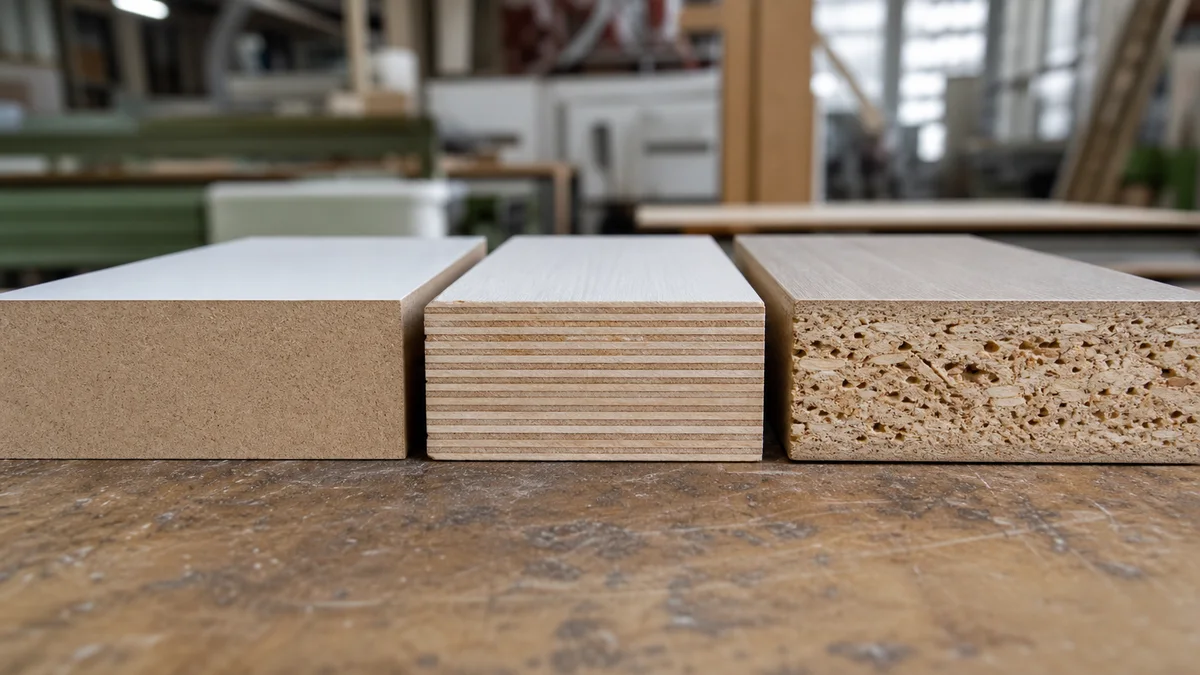
MDF vs Plywood vs Particleboard: Choosing a Cabinet Carcass (2026)
MDF, plywood and particleboard compared for cabinet carcasses — strength, moisture resistance, weight and cost, plus which board to choose in humid climates.
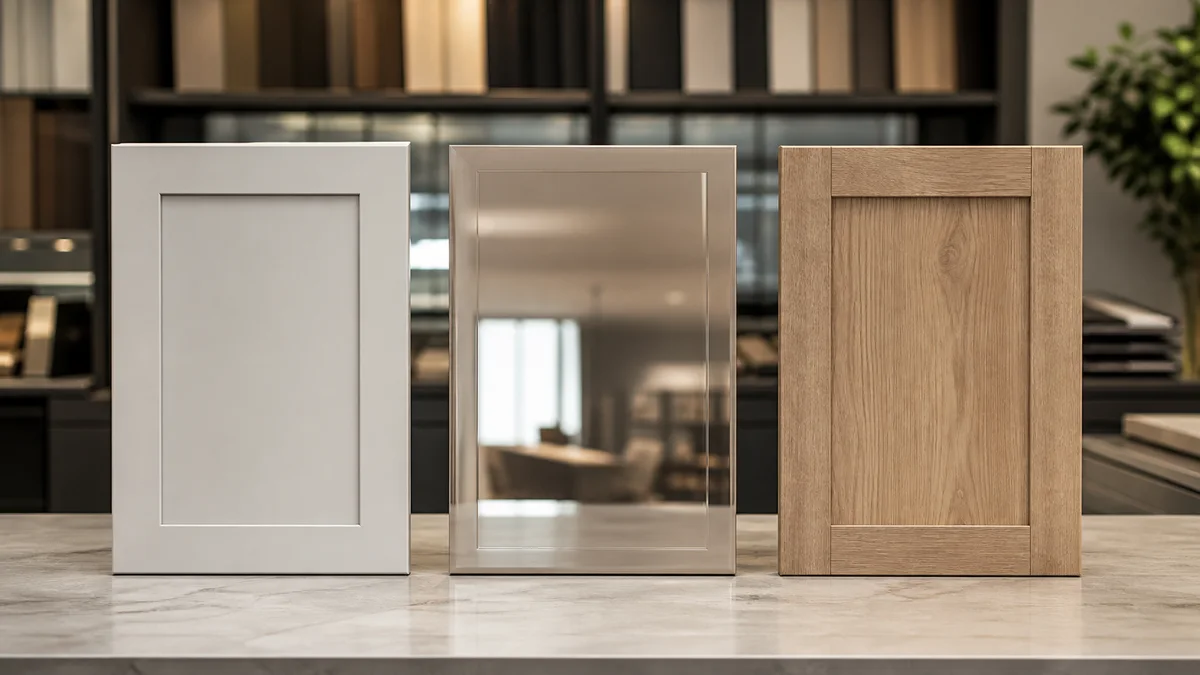
Lacquer vs Acrylic vs Melamine Kitchen Cabinets: Full Comparison (2026)
Lacquer, acrylic and melamine kitchen cabinets compared — look, durability, maintenance, cost and best use cases, to pick the right finish per project.
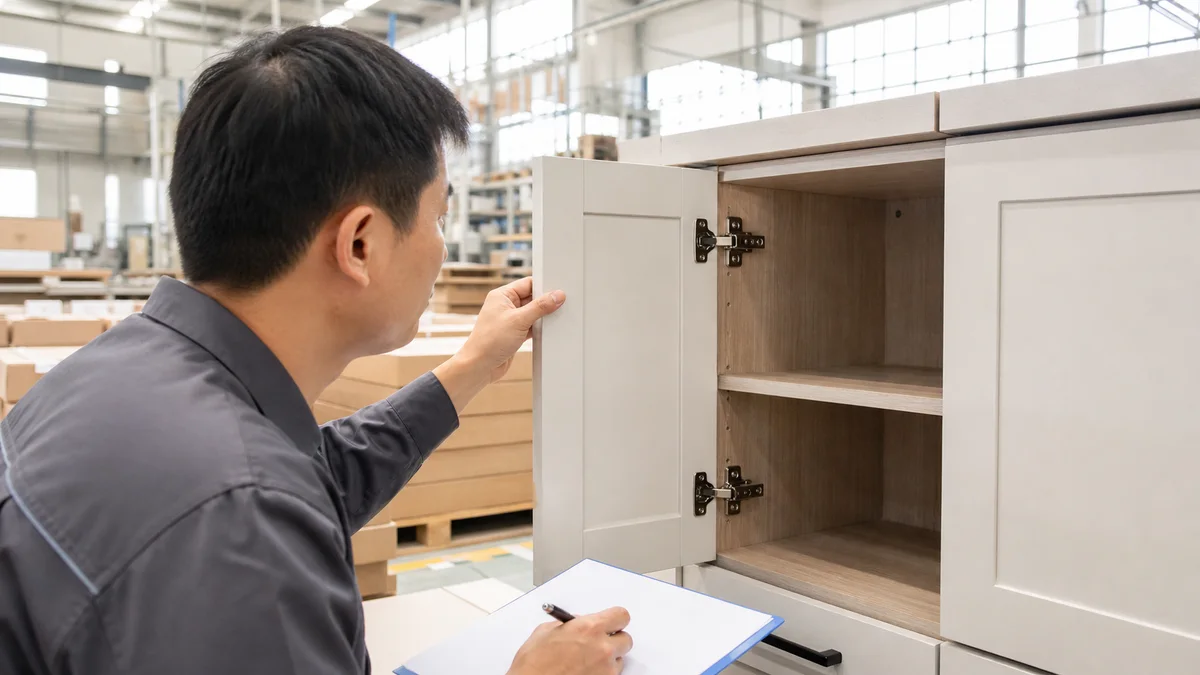
How to Inspect Cabinets Before Shipment (2026 QC Guide)
A pre-shipment inspection guide for cabinet buyers — what to check on carcass, doors, hardware, finish and packing, plus DIY, third-party and video QC.