
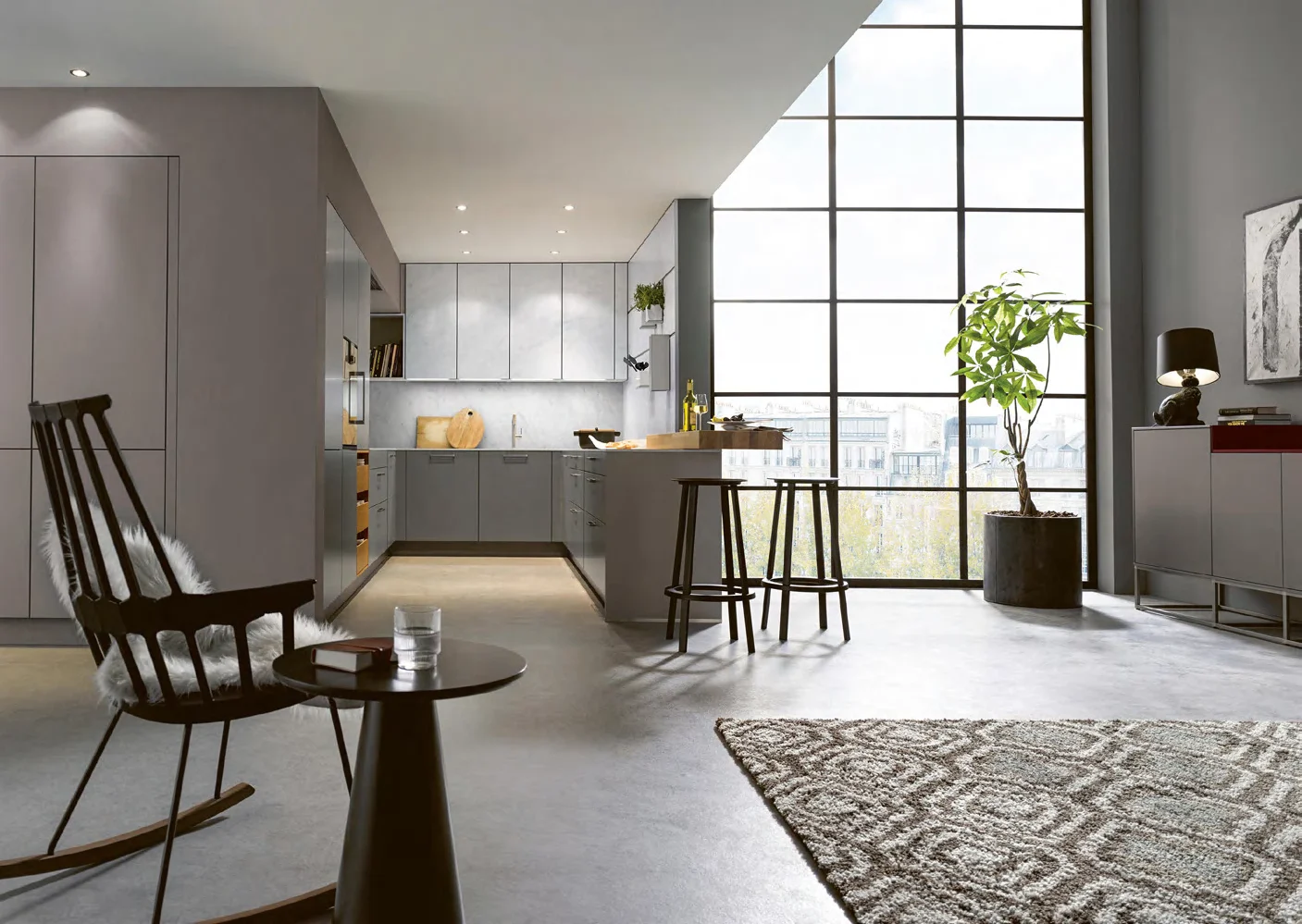
High-gloss fronts
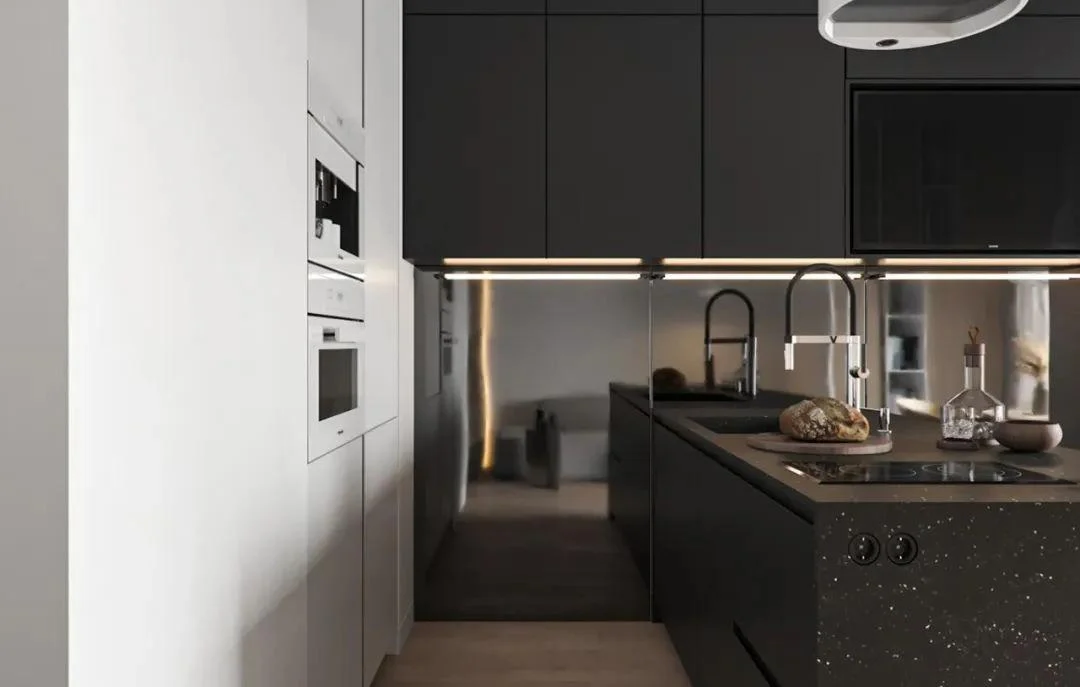
Strong reflection can create a precise contemporary effect and makes surface alignment prominent.
Kitchen cabinets · Acrylic surfaces
Acrylic fronts can deliver a highly controlled gloss or refined matte appearance. The surface, backing board, edge method, colour reference and protective handling should be approved together.
Product guidance for project buyers
The visible sheet is bonded to a substrate and finished at the edges. Differences in surface type, backing balance and edge banding affect the final flatness, reflectivity and perceived quality.
The cabinet design must also account for fingerprints, lighting, handle drilling, protective film and the way large reflective fronts meet appliances.
Product focus
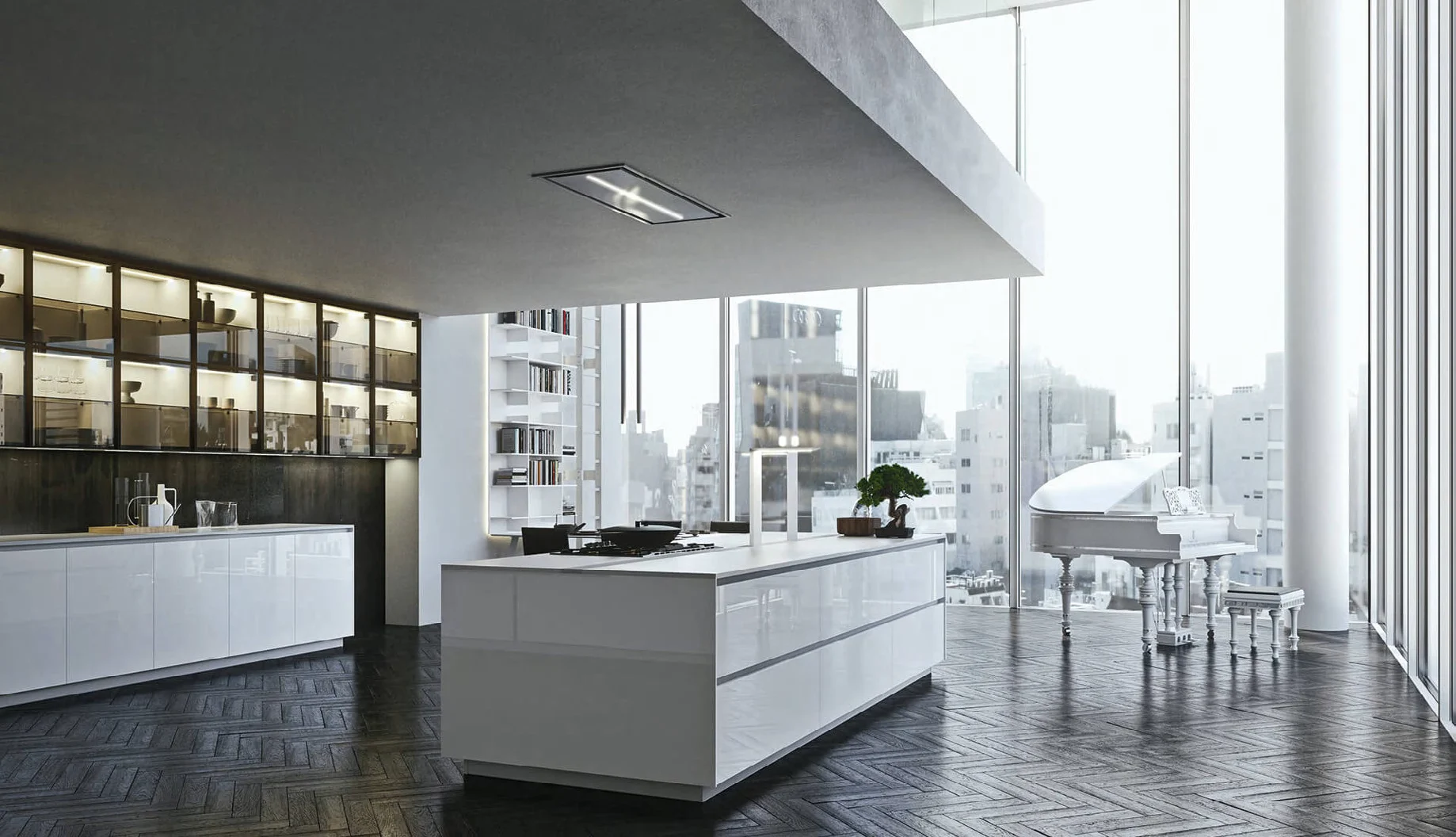
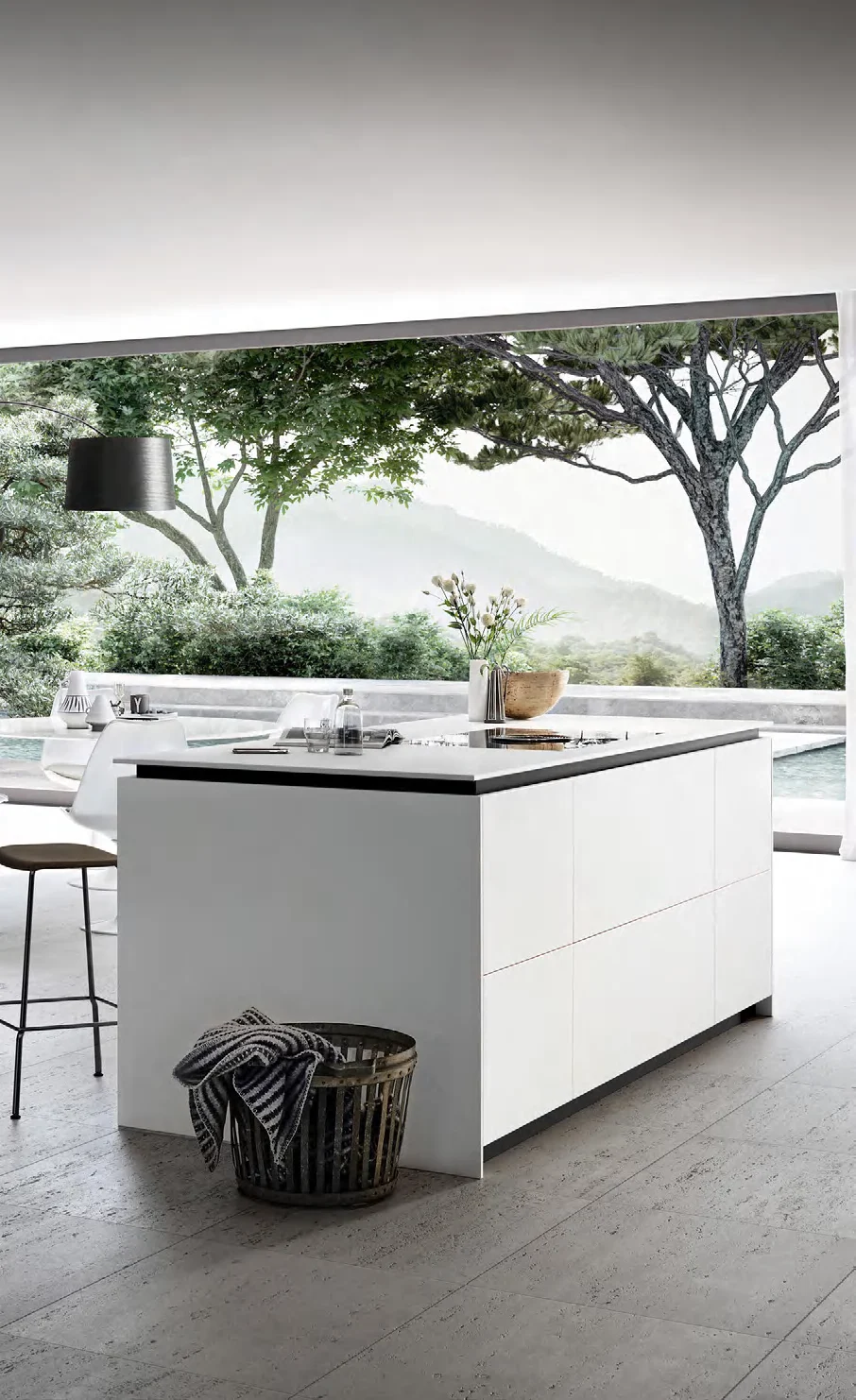
Reflection, colour depth and front scale should be reviewed in the room context, especially on islands and tall units.
Strong reflection can create a precise contemporary effect and makes surface alignment prominent.
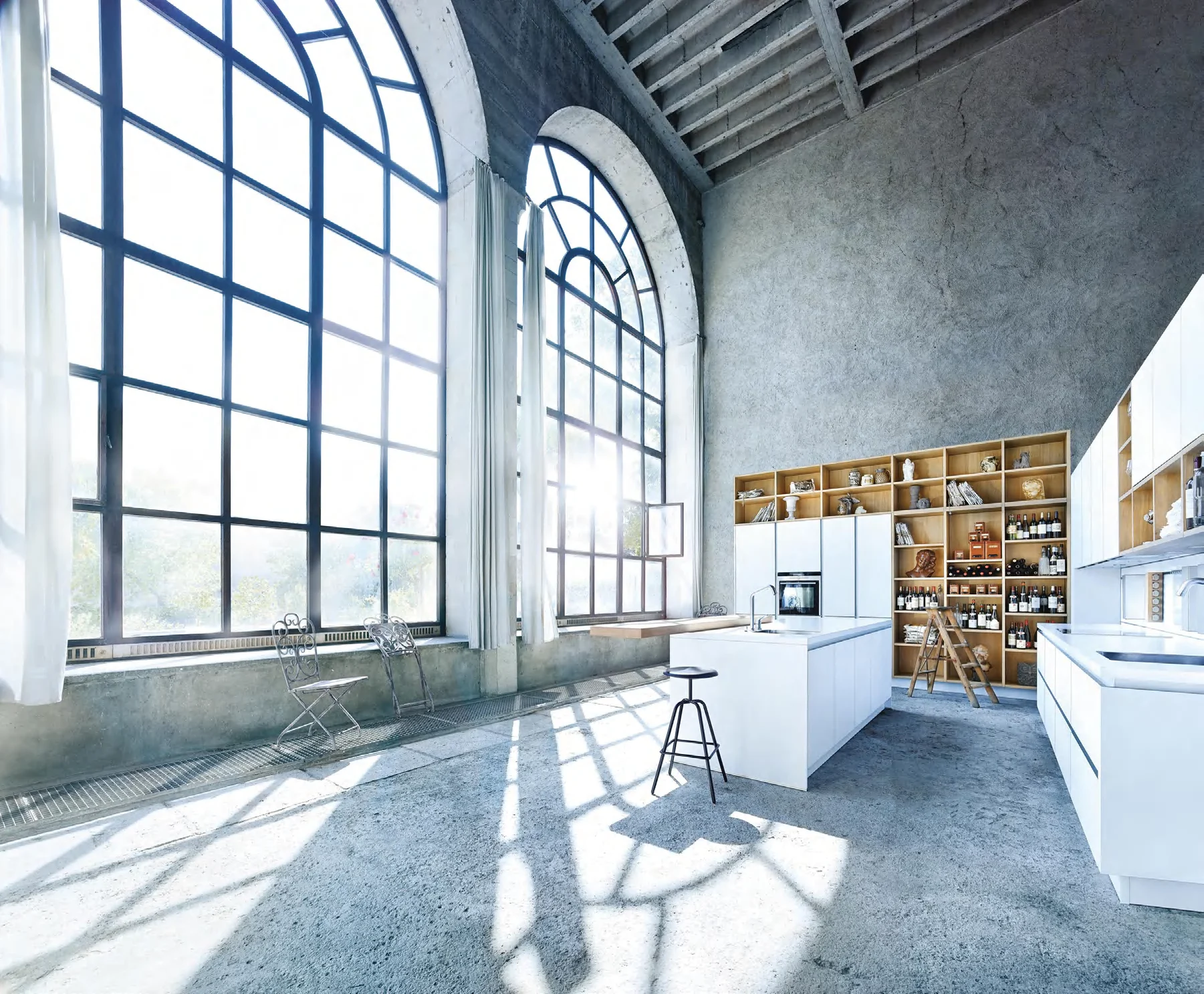
Low-reflection acrylic supports a quieter appearance while retaining a controlled factory surface.
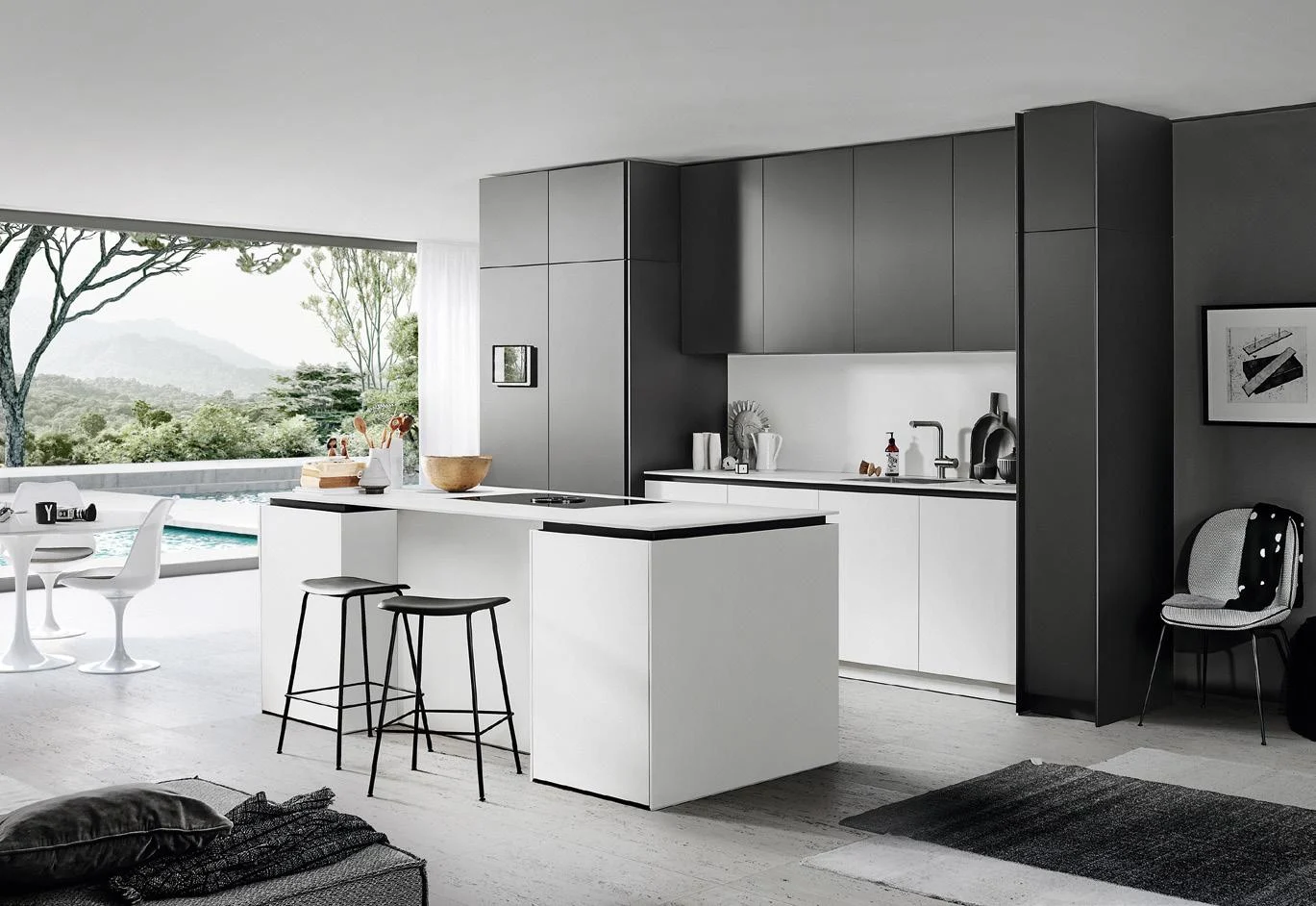
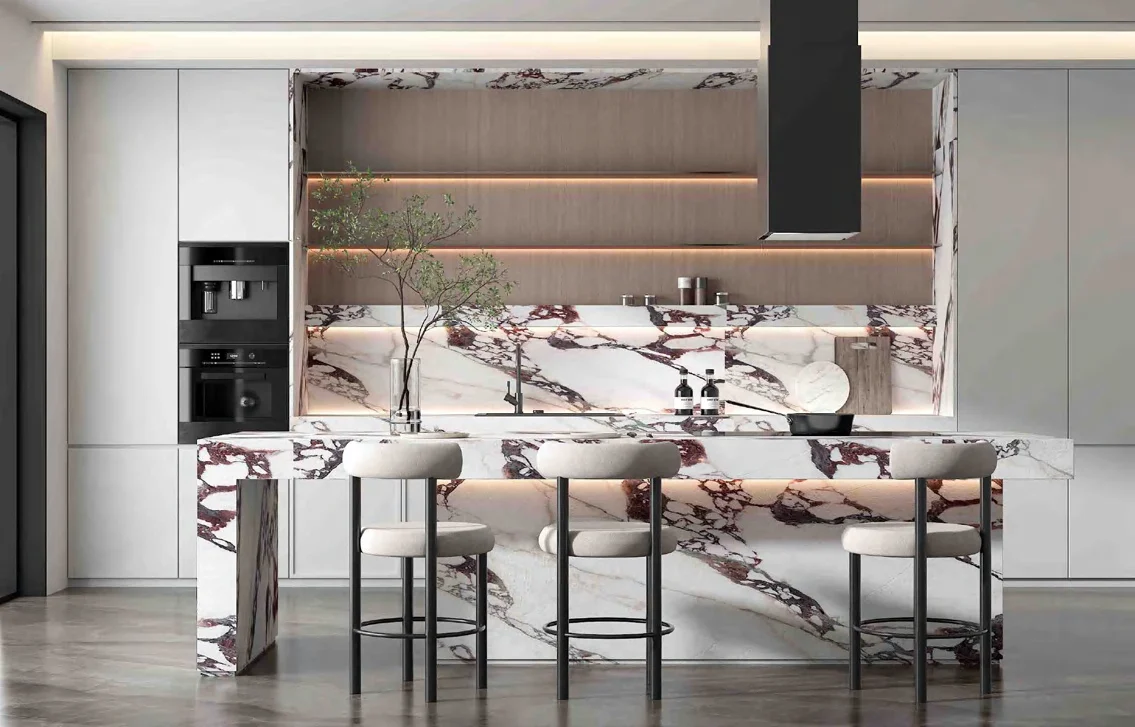
Acrylic can define selected islands or tall volumes within a mixed-material kitchen.
Specification checkpoints
These controls define what the buyer will receive more accurately than the word “acrylic” alone.
Identify the specific gloss or matte sheet system and approved colour.
Confirm the core, thickness and balancing layer used for the panel.
Select compatible edge colour, thickness and corner appearance.
Review large doors and drawer widths against available sheet size and hardware.
Complete handle, hinge and appliance interface data before machining.
Coordinate film retention, scratch protection, cleaning and site handover.
Configuration framework
The finish schedule should connect the branded or approved surface reference to every door, exposed panel and edge.
Record product family, colour, gloss level and approved sample.
State substrate, thickness, backing and allowable component sizes.
Define material, colour and visible joint expectation on all exposed edges.
Specify the internal cabinet material independently from acrylic fronts.
Choose runners, hinges, lift systems and handles for the door weight and use.
Agree packing, transport, film removal and final cleaning responsibility.
Project fit
Acrylic works well when the project prioritises a controlled contemporary surface and can manage careful handling.
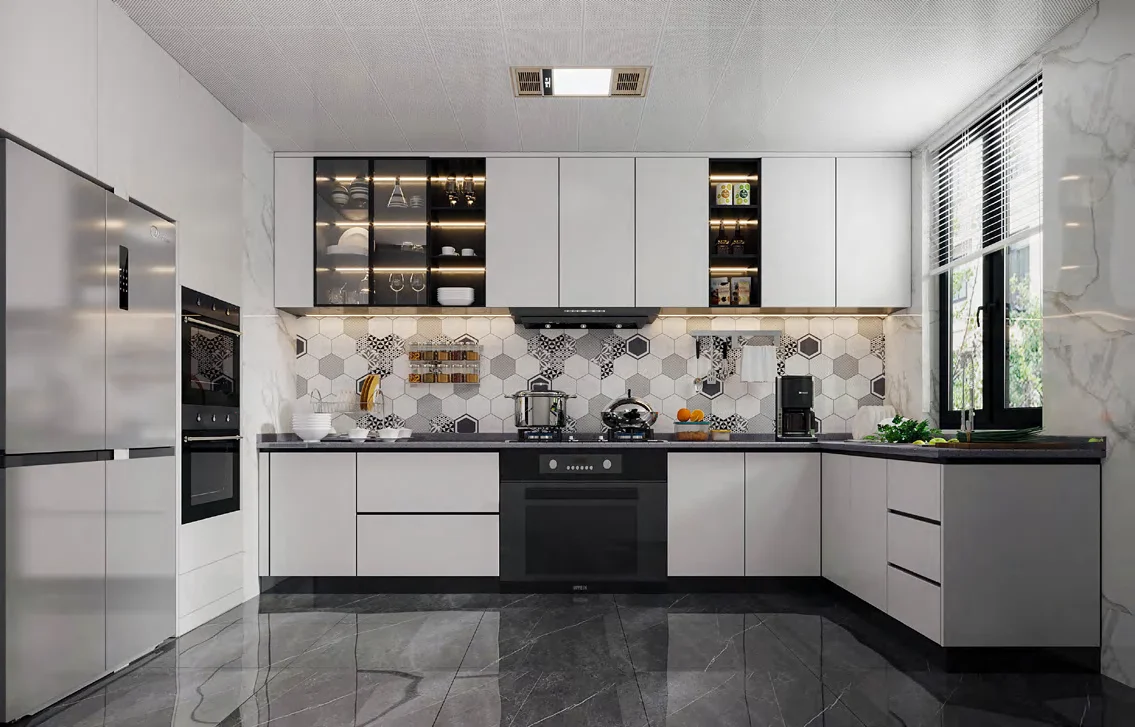
Supports repeatable smooth fronts across compact and open-plan kitchens.
Provides strong colour depth and reflection for selected statement areas.
Matte acrylic can suit subdued palettes with clean slab-door geometry.
Pairs with timber, stone and metal when edge transitions are explicitly detailed.
Details that affect the order
Review the front at normal room distance and inspect how the edge reads beside the face and adjacent appliances.
Prepare a useful inquiry
These inputs allow accurate comparison between panel systems and cabinet constructions.
Provide plans, elevations and major front dimensions.
Share colour, gloss or matte preference and any known product code.
State matched, contrasting or minimal-joint direction.
Identify handles, channels, finger pulls or push-to-open zones.
List models, accessories and loading requirements.
Include quantity, destination, schedule and packing needs.
Buyer questions
Surface products differ, so project references must be confirmed.
No. Acrylic surface systems can include gloss and matte options; availability depends on the selected supplier range.
No. Acrylic is generally a factory-applied sheet surface on a panel, while lacquer is a sprayed coating system.
Yes. Handle drilling and edge clearances should be finalised before production.
Reflective surfaces can reveal touch marks and dust differently; cleaning expectations should be considered during selection.
Protective film and packing methods are coordinated with the surface, route and installation sequence.
Send drawings, surface direction, edge expectation, opening method, hardware, quantity and destination.
Start with available project information
Share your elevations, surface direction and edge expectations. We will organise the decisions needed for a meaningful cabinet quotation.
Cabinetry guides, finishes and project updates.