
Cabinet Hardware Guide: Hinges, Runners and Lift Systems
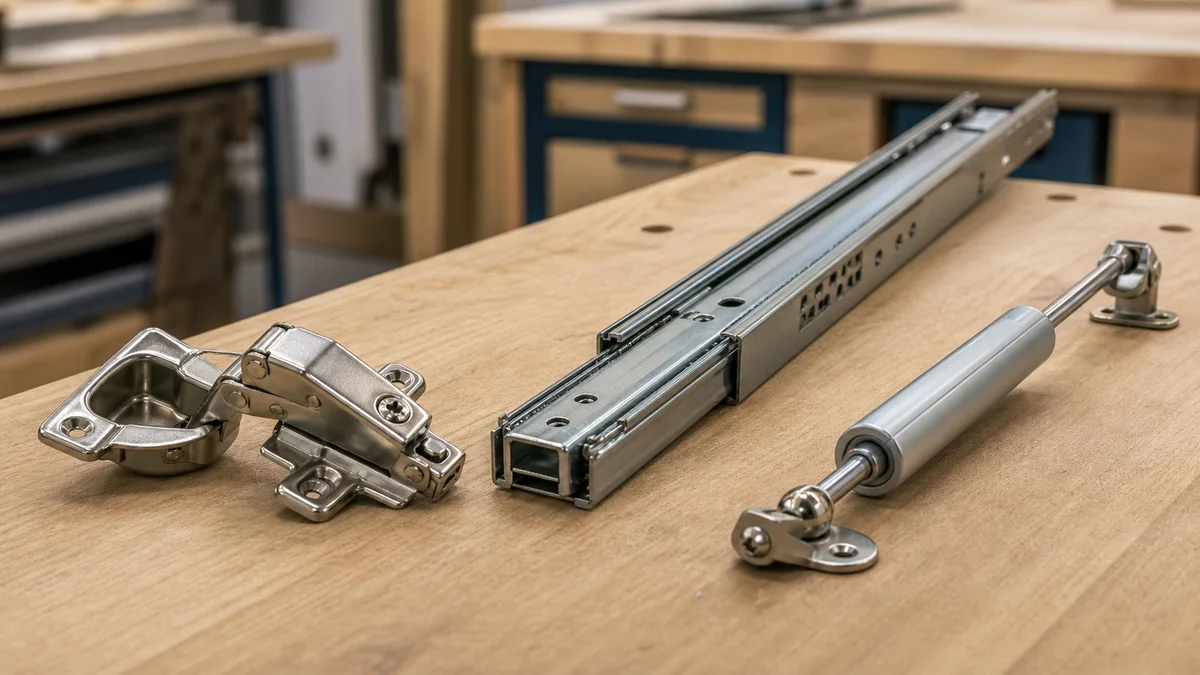
Hardware is where a kitchen is felt rather than seen. Buyers photograph doors and countertops, but what they touch fifty times a day is a hinge closing, a drawer gliding, a lift door rising — and nothing separates a cabinet that feels premium from one that feels cheap faster than the metal inside it. Hardware is also the easiest place for a low-price quote to hide a downgrade. This guide covers the four components that matter, what the brand tiers mean, and exactly what to put in writing when you order.
Hinges: the everyday workhorse
The modern standard is the concealed (cup) hinge — invisible when the door is closed, adjustable in three directions so doors can be aligned perfectly after installation. Specification points that matter: the opening angle (around 110° is standard; corner and special cabinets use wider angles), clip-on mounting (lets doors lift off without tools — installers love it), and adjustability. Cheap hinges work when new; the difference appears at year three, in doors that sag, drift out of alignment, and close with a clack instead of a hush.
For wet rooms and coastal markets, ask for corrosion-resistant or stainless variants — a hinge that rusts retires a cabinet long before the board fails.
Drawer runners: where quality is most obvious
Nothing exposes hardware grade like a loaded drawer. The ladder runs from basic side-mount rollers (visible, rattly, partial extension) through ball-bearing side-mounts (smooth, sturdy, still visible) to undermount full-extension runners — hidden beneath the drawer, gliding on damped ball bearings, letting the drawer pull out completely so the back is reachable. Undermount full-extension with soft-close is the specification premium kitchens treat as baseline.
Two things to write into an order: load rating (deep pot drawers and pantry pull-outs need heavy-duty ratings — a runner at its load limit feels fine empty and terrible full) and extension type (full extension costs a little more than three-quarter and is worth it everywhere the drawer holds things you reach for).
Lift systems and soft-close: the premium feel
Wall cabinets increasingly open up, not out — gas stays and mechanical lift systems raise the door overhead and hold it at any position, keeping heads safe and sightlines clean in handleless designs. They range from simple gas struts to damped parallel-lift mechanisms for wide doors; the wider and heavier the front, the more the mechanism matters.
Soft-close deserves its own line because buyers now expect it as standard, not luxury: dampers that catch a slamming door or drawer in the last few centimetres and settle it silently. It can live in the hinge, the runner or as a separate damper. The honest advice: specify soft-close on everything — the cost difference at factory level is small, and its absence is the first thing an end customer notices.
Brands and grades: what the names mean
Hardware brands function as quality shorthand across the industry. Blum (Austria) and Hettich (Germany) sit at the premium tier — the names global developers specify when the brief says top-grade, with prices to match. DTC and comparable major Chinese manufacturers occupy the strong middle: export-grade quality, widely used in international projects, at a meaningfully lower cost. Below that sits unbranded generic hardware — where most "too good to be true" quotes quietly live, and where year-three problems are born.
Three practical rules. First, match the tier to the market: Blum hinges on a budget rental programme is money the tenant never feels; generic runners in a luxury villa is a complaint waiting to happen. Mid-tier branded hardware is the sweet spot for most export projects. Second, write the brand into the contract — "soft-close hinges" without a name is an invitation to substitute; "DTC clip-on soft-close, 110°" is enforceable. Third, check what actually shipped: hardware brands print their names on the product, which makes verification during a pre-shipment inspection checklist a thirty-second job. Hardware substitution is among the most common quiet downgrades in the trade — and among the easiest to catch.
What hardware does to the price
In the stack of costs that build a cabinet quote, hardware is a modest slice with an outsized effect on feel — upgrading every hinge and runner in a kitchen typically moves the total far less than a door-finish upgrade would, which is why it's often the highest-return money in the specification. Where the slice sits in the whole stack is covered in how cabinet pricing is built up; the short version is that skimping on hardware saves little and costs reputation. When comparing quotes for custom kitchen cabinets, always ask each supplier to state the hardware brand and model — two quotes that look identical can be a hardware tier apart. More component explainers live in our product guides.
FAQ
Frequently asked questions
Is Blum worth the premium over Chinese brands like DTC?
For premium projects where the brand itself reassures buyers, yes. For most export programmes, major Chinese brands deliver reliable soft-close performance at a notably lower cost — which is why they're the volume standard. Match the tier to the market.
What should I specify for drawers?
Undermount, full-extension, soft-close runners with a load rating suited to the drawer's contents. Heavy pot drawers and pull-out pantries need heavy-duty ratings.
Is soft-close worth it on every door and drawer?
Yes. The factory-level cost difference is small, end customers now expect it, and its absence is noticed immediately. It's the cheapest "premium feel" available.
How do I stop a supplier substituting cheaper hardware?
Name the brand and model in the order confirmation, then verify at pre-shipment inspection — brands mark their products, so checking takes seconds.
Do humid climates need special hardware?
Yes — specify stainless or anti-corrosion-treated hinges and runners for bathrooms, coastal and tropical projects. Standard steel hardware is usually the first thing to fail in wet air.
Start a conversation
Tell us your market's expectations — we'll recommend a hardware package and quote it in writing
Get a Factory-Direct QuoteKeep reading
Related posts
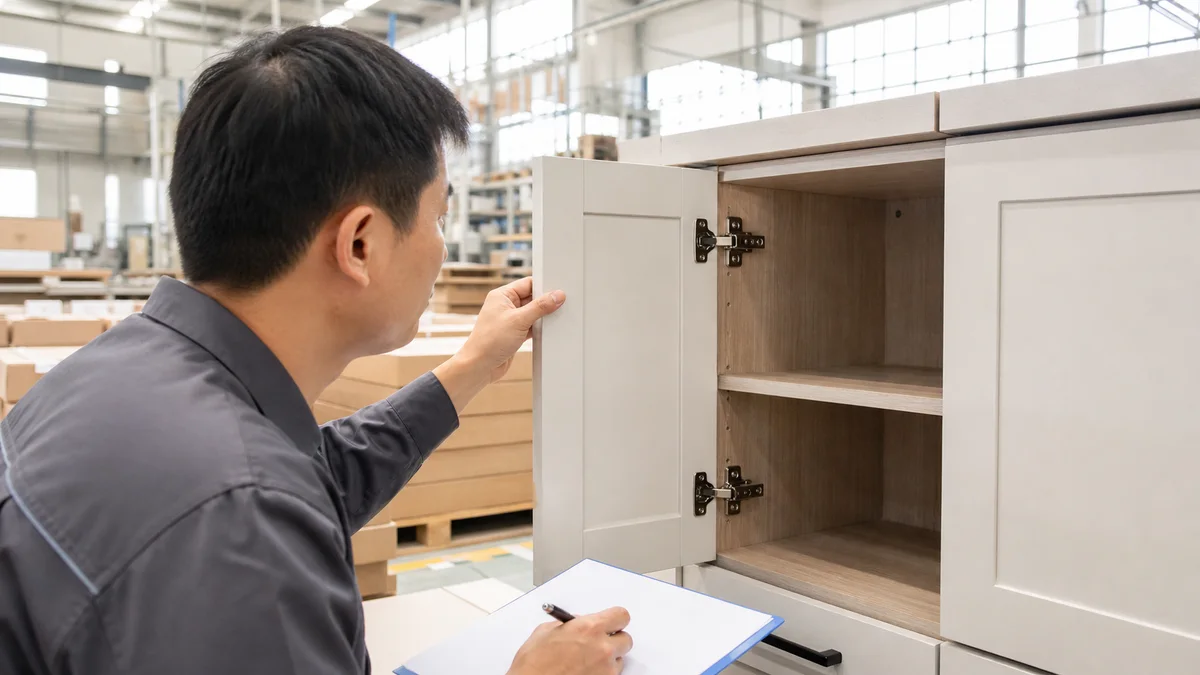
How to Inspect Cabinets Before Shipment (2026 QC Guide)
A pre-shipment inspection guide for cabinet buyers — what to check on carcass, doors, hardware, finish and packing, plus DIY, third-party and video QC.
Kitchen Cabinet MOQ, Lead Time & Pricing Explained (2026)
How cabinet MOQ, lead time and pricing actually work when buying from a China factory — what drives each, and practical ways to lower your landed cost.
How to Source Kitchen Cabinets from China: A 2026 Buyer's Guide
Step-by-step guide to sourcing kitchen cabinets from China — specs, choosing a manufacturer, samples, pricing, QC and shipping. Avoid the common mistakes.