
Kitchen Cabinet MOQ, Lead Time & Pricing Explained
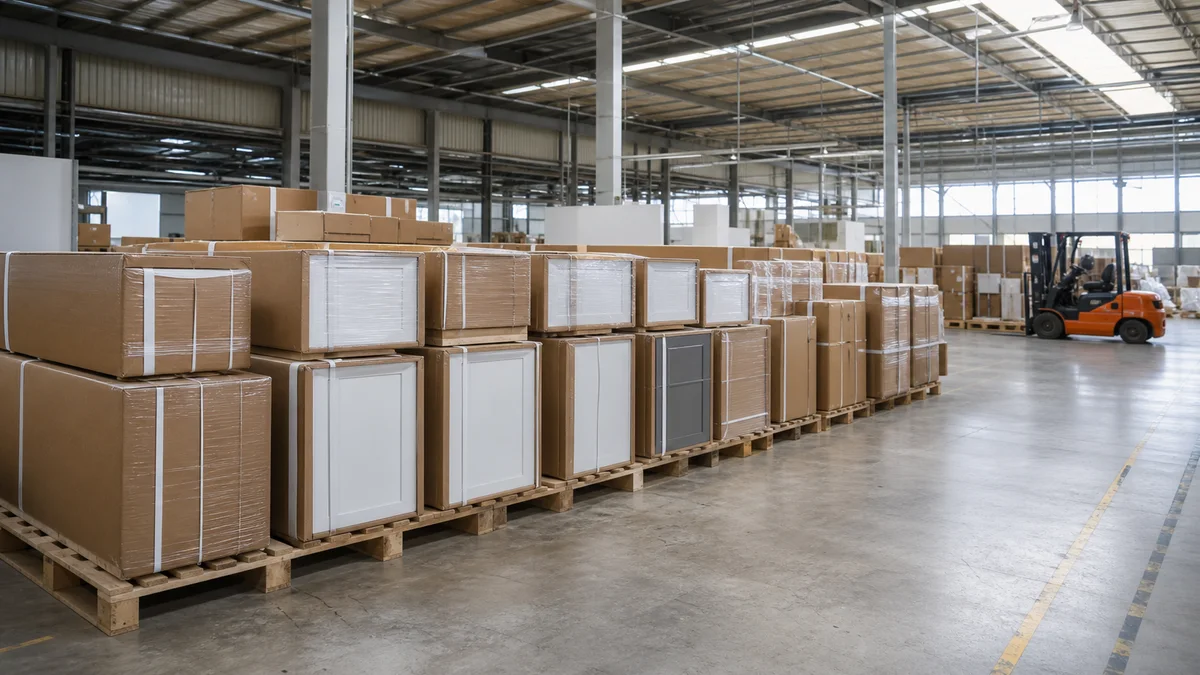
Three questions decide whether a China cabinet order makes sense for your project: how much you have to order (MOQ), how long it takes (lead time), and how the price is built up. This guide explains what actually drives each one — so you can read a quote correctly and find the real levers that lower your landed cost, instead of chasing a headline unit price.
What "MOQ" really means for cabinets
MOQ — minimum order quantity — is the smallest order a factory will accept and still price competitively. For cabinetry it's rarely a single fixed number, because a "unit" can mean a cabinet, a linear metre, a full kitchen set, or a container. What a manufacturer is really protecting is the setup: material purchasing, machine setup, edge-banding runs and a production slot all cost roughly the same whether you order five kitchens or fifty.
A few things push the practical minimum up or down:
- Customization depth. Standard sizes, colours and hardware carry a lower minimum than fully bespoke drawings, special finishes or non-stock boards.
- Category. Custom kitchen cabinets usually carry a different minimum than wardrobes or vanities, because the mix of parts and materials differs.
- Container economics. Cabinets are bulky. Even below a formal MOQ, most buyers order toward a full container (FCL) because a half-empty container wastes freight — so container fill often becomes the real minimum in practice.
The honest answer to "what's your MOQ?" is: it depends on your configuration — share the spec and quantities and a manufacturer will confirm. Project volumes are generally welcomed, so if you're a developer, contractor or distributor ordering for real jobs, MOQ is seldom the blocker.
What drives lead time
Lead time is the clock from confirmed order to goods leaving the factory. It is not one number and should always be quoted in two parts: production time, then shipping transit. Treat any quote that blends them as a red flag.
Production time is shaped by:
- Design sign-off. The clock effectively starts when drawings, colours and hardware are approved — not when you first enquire. Slow approvals are the most common self-inflicted delay.
- Materials. In-stock boards and standard hardware move fast; imported finishes, special glass or bespoke hardware add procurement time.
- Order size and factory load. A larger order takes longer to build, and peak-season backlog can extend the queue.
- Finish type. High-gloss lacquer and multi-step finishes need more curing and handling than melamine or laminate.
Shipping transit then depends on your route and port — sea freight from South China to different regions varies widely, and you add customs clearance at the far end. A reliable supplier states production and shipping separately and gives you checkpoints along the way, so you can plan your install date backward from a real ship date. If your timeline is tight, say so up front: sequencing, partial shipments or choosing in-stock finishes can all pull the date in.
How cabinet pricing is built up
A cabinet price is not a single figure — it's a stack. Understanding the stack is what lets you compare two quotes fairly and see where the money actually goes:
- Boards / carcass material — particleboard, MDF, plywood or solid wood; grade and thickness matter.
- Door / front — material and finish (melamine, laminate, lacquer, acrylic, veneer, solid wood) is usually the biggest swing in price.
- Hardware — hinges, runners and lift systems; branded vs standard is a real cost difference and worth specifying.
- Countertop (if included) — quartz, stone or laminate, priced separately by area.
- Labour and finishing — construction complexity, edge treatment, assembly.
- Packing — export cartons, corner protection, palletisation.
- Trade term — whether the number is FOB, CIF or DDP changes what freight, insurance and duty are already inside it.
That last point causes more confusion than any other. A quote is only comparable to another quote on the same Incoterm. FOB looks cheaper than DDP because it excludes ocean freight, insurance and import duty — costs you'll pay later anyway. We cover the terms in depth in FOB vs CIF vs DDP; the short rule is: never compare two quotes until they're on the same term and you know exactly what each includes.
Practical ways to lower your landed cost
Chasing a lower unit price often backfires — a cheaper board or hardware shows up as a warranty problem later. These levers lower total landed cost without cutting quality:
- Fill the container. Freight is a big share of landed cost. Ordering toward a full container, or consolidating categories (kitchens + wardrobes + vanities) into one shipment, spreads freight across more units.
- Consider flat-pack. Flat-pack / RTA cabinets ship denser than assembled units, so you fit more per container and cut freight — at the cost of some on-site assembly. Weigh it against your local labour rate.
- Standardise where you can. Repeating sizes, colours and hardware across a project reduces setup cost and error rate versus a different bespoke spec on every unit.
- Approve fast and completely. Every day saved on sign-off is a day off the lead time — and rush changes mid-production are where extra cost creeps in.
- Order direct from the factory. Buying from the manufacturer rather than through a trading company removes a margin layer and shortens the communication chain. Ask to see our factory so you know who's actually building.
- Compare on total landed cost, not unit price. Add freight, duty, assembly and defect risk. The lowest FOB number is frequently not the lowest delivered cost.
FAQ
Frequently asked questions
Is there a fixed MOQ for kitchen cabinets?
No single fixed number — it depends on category, how custom the spec is, and container economics. Share your quantities and configuration and the manufacturer will confirm a workable minimum; project volumes are generally welcomed.
How long does a cabinet order take?
Ask for production time and shipping transit separately. Production is quoted per order after design sign-off; shipping depends on your route and port. Combined "X weeks total" quotes hide which part is which.
Why do two quotes for the "same" cabinets differ so much?
Usually a different trade term (FOB vs CIF vs DDP), a different board or hardware grade, or a trading-company margin. Put both on the same Incoterm and the same spec before comparing.
Does flat-pack really save money?
On freight, yes — RTA ships denser, so more units per container. The trade-off is on-site assembly labour, so it depends on your local labour cost and install setup.
Can I lower the price without lowering quality?
Yes — fill the container, standardise the spec, buy factory-direct, and compare on landed cost. Cutting board or hardware grade to shave the unit price usually costs more later.
Start a conversation
Send your quantities and drawings for MOQ, lead time and pricing
Get a Factory-Direct QuoteKeep reading
Related posts
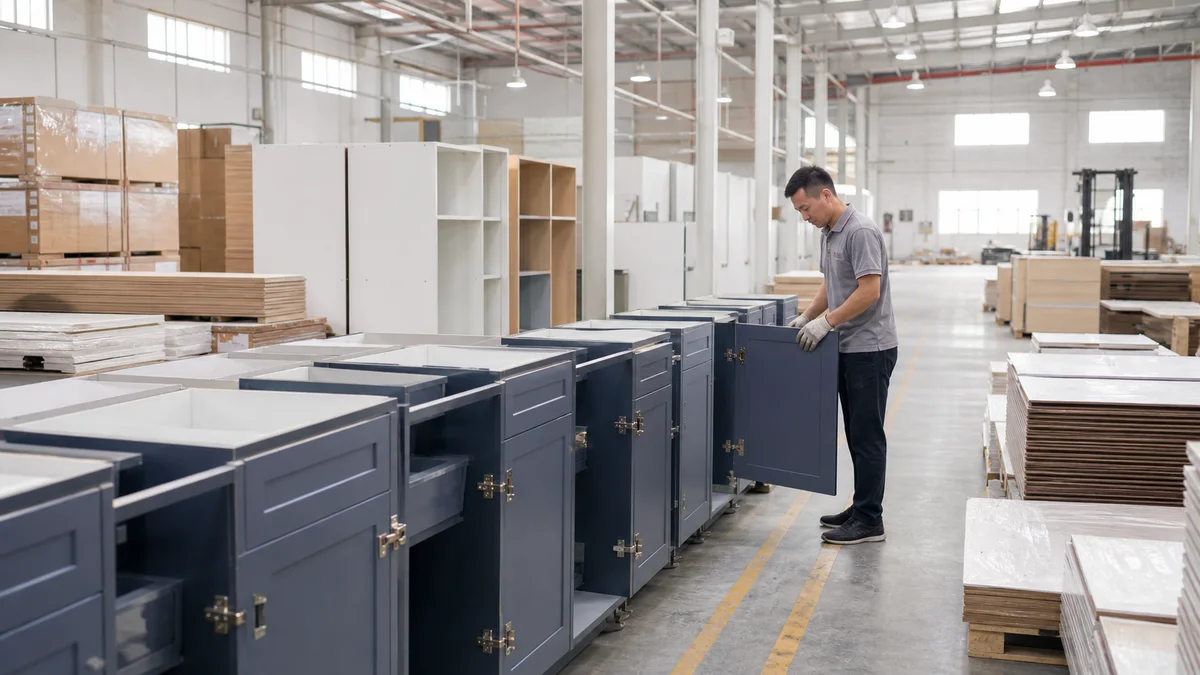
How to Source Kitchen Cabinets from China: A 2026 Buyer's Guide
Step-by-step guide to sourcing kitchen cabinets from China — specs, choosing a manufacturer, samples, pricing, QC and shipping. Avoid the common mistakes.
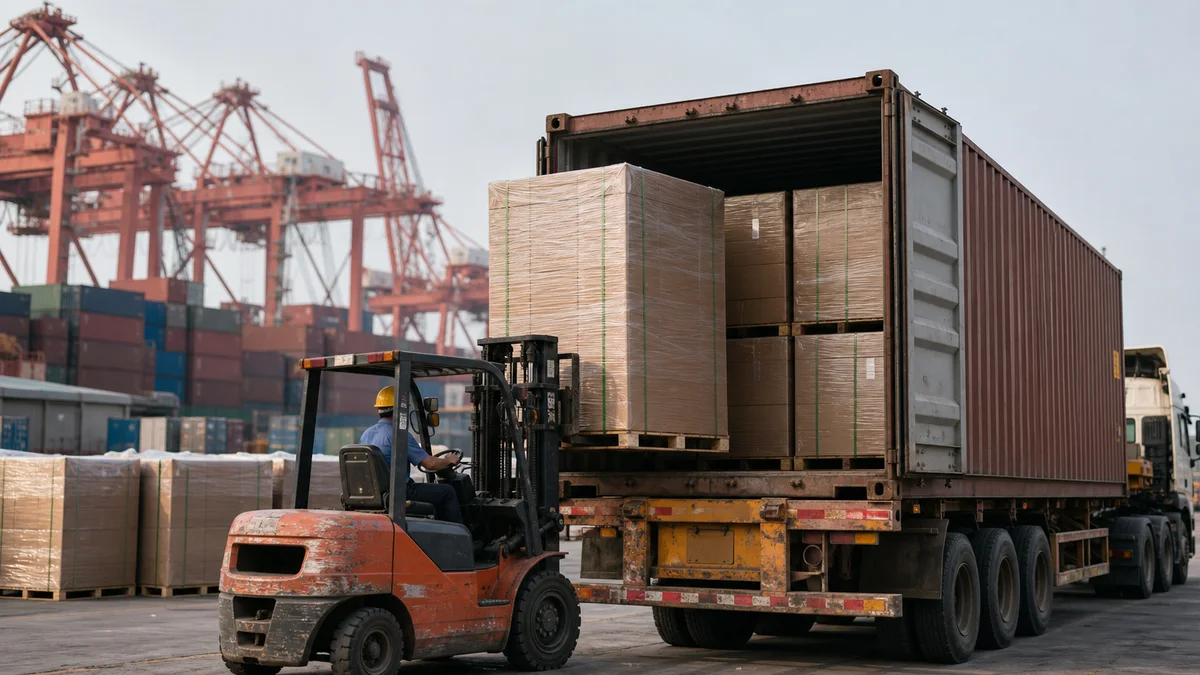
FOB vs CIF vs DDP: Shipping Cabinets from China (2026)
FOB, CIF and DDP explained for cabinet buyers — what each Incoterm includes, who carries the risk, and which term to choose when importing from China.
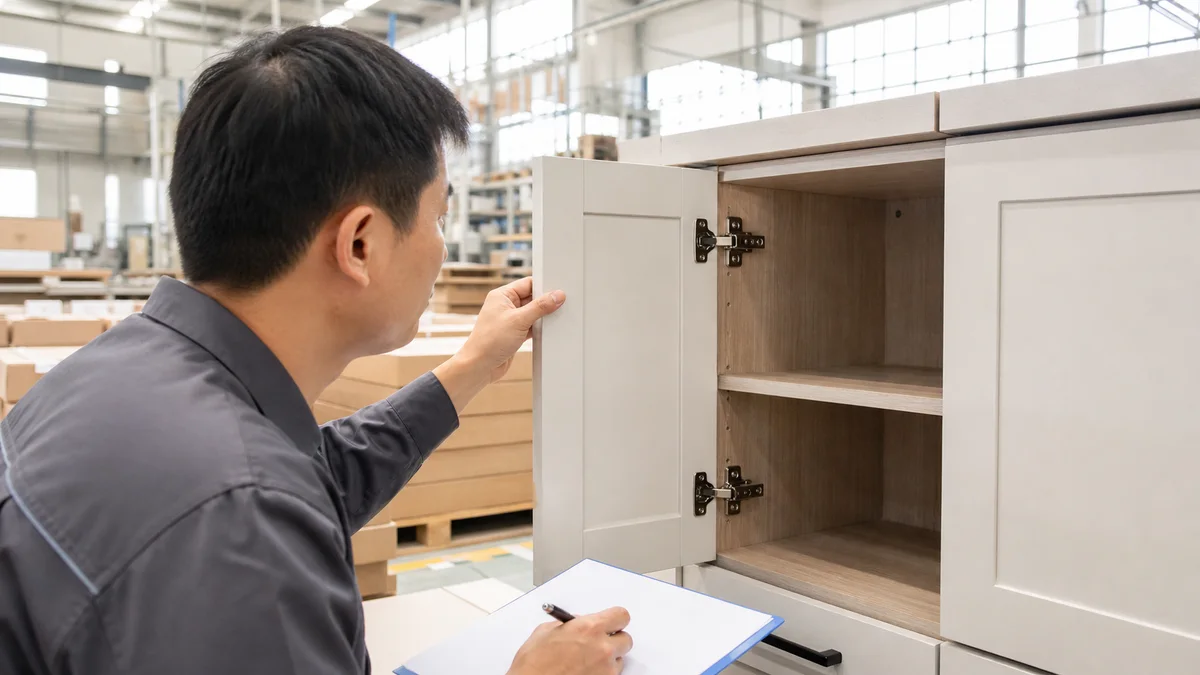
How to Inspect Cabinets Before Shipment (2026 QC Guide)
A pre-shipment inspection guide for cabinet buyers — what to check on carcass, doors, hardware, finish and packing, plus DIY, third-party and video QC.