
Cabinetry for Apartment Developments: A Procurement Guide
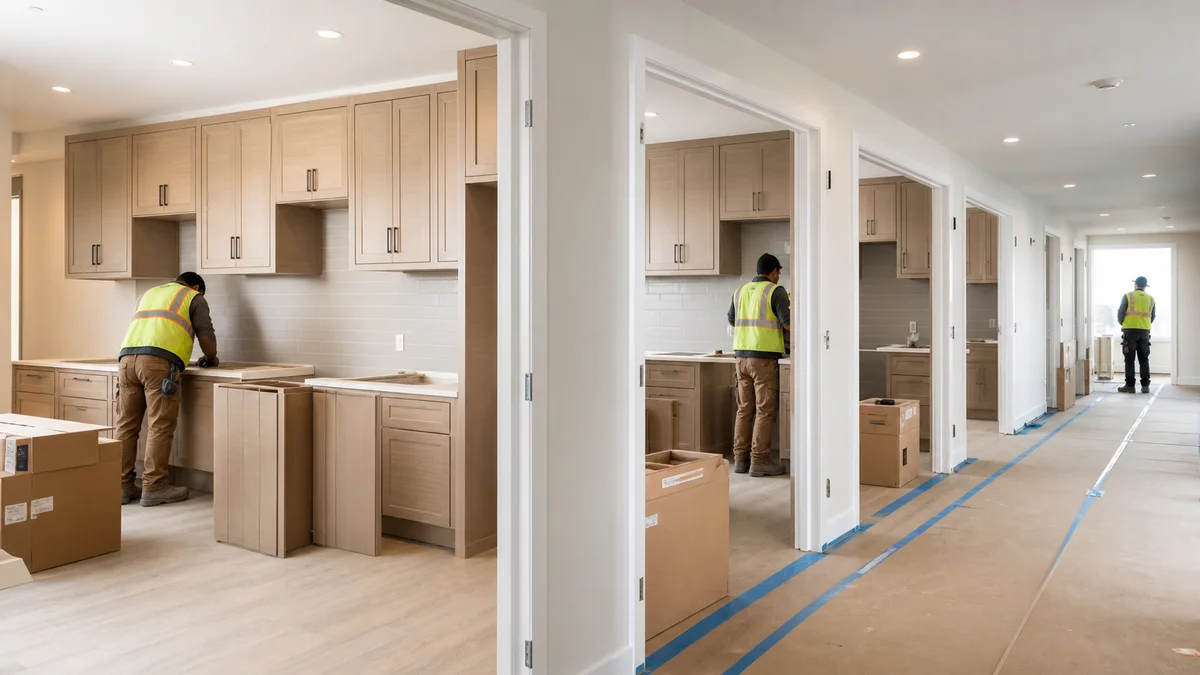
Buying cabinetry for one kitchen is a design decision. Buying it for two hundred apartments is a supply-chain project — and treating it like two hundred separate kitchens is the most expensive mistake a developer can make. This guide covers how experienced developers and main contractors procure cabinetry at scale: standardising the specification, protecting the construction programme, and getting identical quality in unit 178 as in unit 1.
The procurement problem, stated honestly
Apartment cabinetry sits at an awkward intersection. It's custom (every project's layouts differ), repetitive (within the project, the same kitchen recurs dozens of times), bulky (it eats logistics budget), and late-programme (it installs after wet trades, so delays cascade straight into handover dates). Retail cabinet shops aren't built for this: they price per kitchen, produce serially, and struggle when the order is "the same thing, three hundred times, on a construction schedule." A factory set up for residential project solutions is running a different game: production-line repetition, unit-set packing and programme-driven delivery.
Understanding that difference reframes every decision below — you're not shopping for kitchens, you're contracting manufacturing capacity.
Standardise the specification first
The single highest-leverage move happens before any supplier is contacted: reduce your unit types to a cabinet kit. Map every apartment layout to a small set of kitchen configurations — typically one per unit type, with left/right mirrored variants — and lock a single materials palette across all of them: one carcass spec, one or two door finishes, one hardware package, one worktop programme.
What this buys you is compounding: fewer shop drawings to approve, fewer SKUs to manufacture (so lower unit prices — the mechanics are in MOQ, lead time and pricing), fewer things to install wrongly on site, and a spare-parts inventory that actually covers the whole building. Developers who let each floor's interior designer "refresh" the kitchen spec pay for that creativity three times: in production, in logistics and in snagging.
A practical discipline: put the full specification in writing as a one-page schedule — boards, thicknesses, finishes, hardware brand and models, edge treatment, packing format — and make it a contract document. Ambiguity at this stage becomes substitution later.
Repeatability is a factory property — verify it
Two hundred identical kitchens are only identical if the factory's process makes them so: CNC cutting from the same programme files, batch-consistent boards and finishes, and QC that samples across the run rather than admiring the first unit. When you evaluate suppliers, ask process questions, not showroom questions: How are colour batches controlled across a three-month production run? What's the sampling plan? Can they produce a sealed control sample — one approved kitchen set that both sides sign, against which every later delivery is judged?
Then verify independently. Approve shop drawings and physical samples in writing before production; inspect mid-run, not just at the end; and run a pre-shipment inspection on every shipment wave, checked against the control sample. On multi-container programmes, the discipline of inspecting each wave is what catches batch drift while it's still fixable.
Programme, logistics and the site
Cabinetry's position late in the construction programme makes its logistics unforgiving in both directions: arrive late and you delay handovers; arrive early and hundreds of cartons occupy site space that doesn't exist. The solution experienced contractors use is wave delivery aligned to the fit-out sequence — containers scheduled against floor-completion milestones, so cabinetry lands as the floors that need it become ready.
Three specifics to agree in the contract. Packing by unit-set: every apartment's cabinets packed and labelled as one set ("Building B · Level 12 · Unit 1204"), so site distribution is a reading exercise, not a sorting project. Format: flat-pack ships denser and suits projects with organised assembly crews; assembled saves site labour where that's scarce — the arithmetic is in RTA vs assembled formats, and mixed orders are routine. Attic stock: order a small percentage of spare doors, panels and hardware in the same batch — same colour run, same dye lot — because replacing a damaged door two years later from a new batch never quite matches.
Build the timeline backward from first handover: installation start, minus delivery and clearance, minus ocean transit, minus production, minus drawing approval. That last item is the one developers control and most often blow — every week a drawing sign-off slips, the whole chain slips with it.
The commercial structure
Project cabinetry contracts have their own commercial grammar, and getting it right up front prevents most disputes. Payment typically runs on milestones: a deposit on order, a stage payment at production or inspection, balance against shipping documents — never large sums unlinked to verifiable events. Variations deserve their own clause: on a two-hundred-unit programme somebody will change a layout mid-run, so agree in advance how variations are priced, how they affect the schedule, and the cut-off date after which changes wait for a later wave. Retention against snagging is common in construction culture; if you want it, negotiate it at contract stage rather than imposing it at invoice stage. And write delivery obligations precisely — wave dates, notice periods, site access assumptions — because "October" means different things to a factory planner and a site manager. None of this is adversarial; it's the paperwork version of the standardisation principle: decide once, in writing, while everyone is calm. Experienced buyers also keep one master schedule that names both sides' obligations by date — drawing approvals owed by the developer, production and shipping milestones owed by the factory — so accountability is symmetrical and slippage is visible the week it happens, not the month after.
Coordinating beyond the kitchen
Apartments aren't kitchens alone: wardrobes, bathroom vanities, entry storage and laundry units usually ship in the same programme. Consolidating them with one manufacturer does more than simplify contracts — it fills containers efficiently (mixed product uses awkward container space well), keeps one finish palette across every room, and gives you a single quality system and a single accountable party across apartment projects of any size. The alternative — four suppliers, four QC regimes, four delivery schedules converging on one fit-out programme — is how snagging lists get long.
FAQ
Frequently asked questions
What's the minimum project size for factory-direct apartment cabinetry?
Think in containers rather than unit counts: once a project fills meaningful container volume, factory-direct economics work — and multi-phase developments can order phase by phase on one locked specification. Share your unit count and configurations and the maths gets concrete quickly.
How do we guarantee unit 200 matches unit 1?
A signed control sample, written specification, batch-controlled production, and pre-shipment inspection of every delivery wave against that sample. Repeatability is process plus verification, not either alone.
Should we buy flat-pack or assembled for a development?
Run the freight-versus-labour arithmetic for your site: flat-pack ships far denser but needs an assembly crew; assembled lands ready but costs container space. Many projects mix formats by building phase.
How early should cabinetry be ordered in the construction programme?
Work backward from installation: production plus shipping plus clearance plus a buffer, and start drawing approvals well before that. Cabinetry ordered "when the site is ready" is cabinetry that arrives late.
Can one supplier handle kitchens, wardrobes and vanities together?
Yes — and consolidated programmes are usually cheaper to ship, easier to colour-match and simpler to manage than split procurement.
Start a conversation
Share unit counts and drawings — we'll return a standardised spec, container plan and factory-direct pricing
Get a Factory-Direct QuoteKeep reading
Related posts

Hotel Casework & FF&E: A Buyer's Guide (2026)
What hotel casework covers, what contract-grade really means, and how to procure guest-room millwork that stays identical across hundreds of rooms.
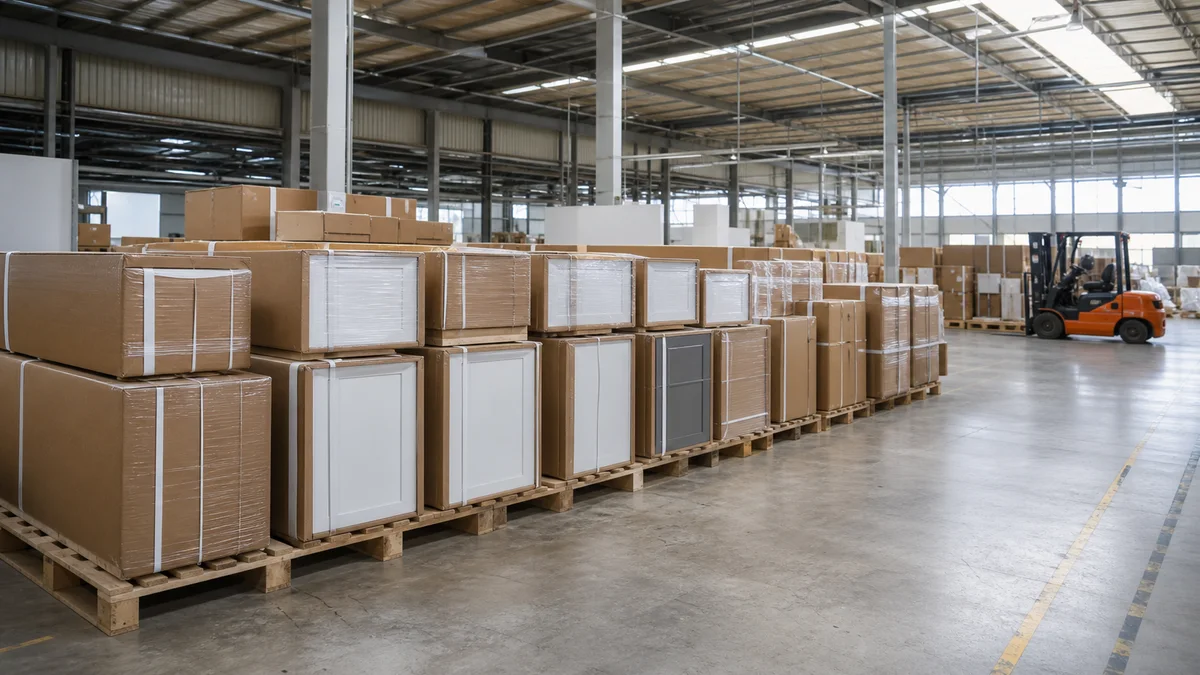
Kitchen Cabinet MOQ, Lead Time & Pricing Explained (2026)
How cabinet MOQ, lead time and pricing actually work when buying from a China factory — what drives each, and practical ways to lower your landed cost.
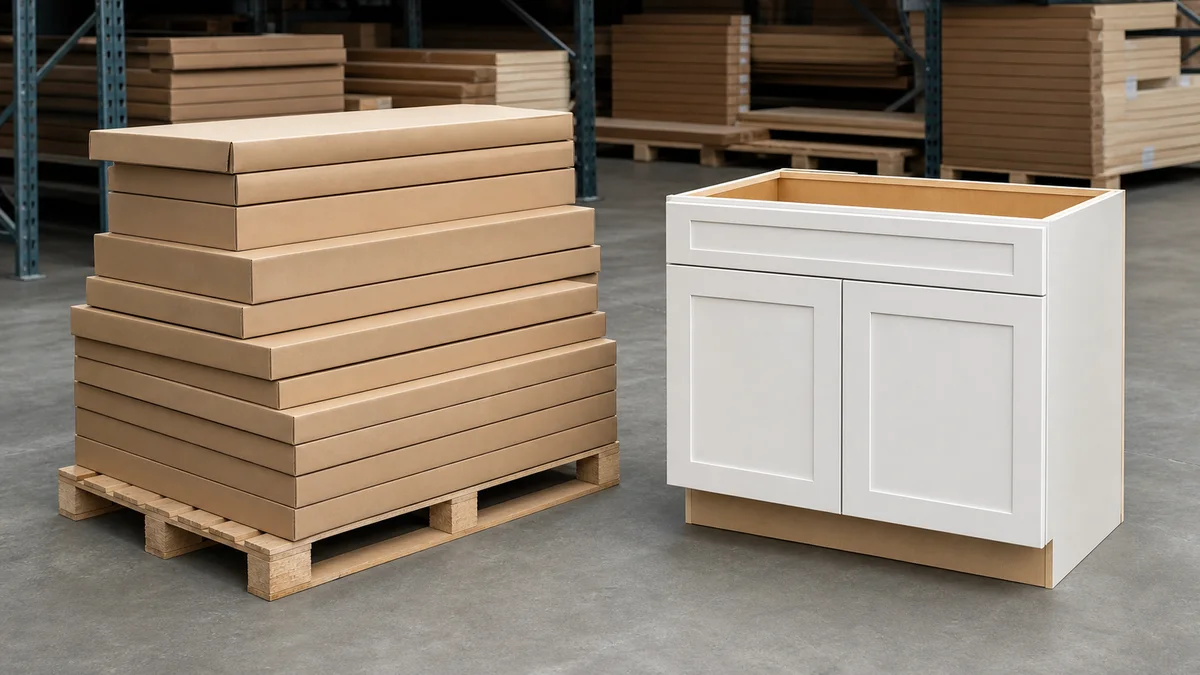
RTA vs Assembled Cabinets: Freight, Assembly & Which to Buy (2026)
RTA flat-pack vs pre-assembled cabinets — how each affects container freight, on-site labour, quality consistency and total landed cost for importers.