
Sourcing Cabinets for Africa: What Importers Need to Know

Africa's construction story is one of the fastest-moving in the world — residential estates around Lagos and Nairobi, apartment towers in Accra and Abidjan, hotels and mixed-use projects from Dakar to Dar es Salaam. Cabinetry for that growth is overwhelmingly imported, and China is the dominant source. But Africa is fifty-plus markets, not one, and the importers who do well treat the logistics and payment mechanics with the same seriousness as the product. Here's the practical picture.
What the market buys
Across most African urban markets the commercial sweet spot is durable mid-range modern: flat-slab doors in white, grey and wood-grain melamine, straightforward layouts, hardware that survives real use, at prices that work for volume development. The premium segment — high-gloss and lacquered kitchens, walk-in wardrobes, full villa packages — is growing fast in upscale estates and penthouses, while hotels buy to international casework standards. Wood-grain finishes deserve special mention: warm timber looks sell consistently across the continent, and modern synchronised-texture melamine delivers them at import-friendly prices.
Climate belongs in the specification conversation by region: coastal West and East African cities run hot and humid, which calls for moisture-resistant cores, sealed edges and corrosion-resistant hardware — while highland and inland markets are kinder to standard board. Specify by city, not by continent.
Logistics: ports, inland legs and packing
Sea routes from South China to Africa's major container gateways — Lagos (Apapa/Lekki), Tema, Abidjan, Mombasa, Dar es Salaam, Durban and others — are well established. Two realities shape planning more than the ocean leg itself. First, port dwell and clearance times vary widely by country and season; experienced importers build generous clearance buffers and treat a good local clearing agent as a core supplier, not a commodity. Second, many projects sit far inland — Nairobi behind Mombasa, landlocked markets behind coastal gateways — so the inland leg deserves the same planning attention as the sea leg: road or rail arrangements, transshipment handling and final-mile capability.
Both realities argue for tough, smart packing: export-grade cartons, corner protection and container bracing specified explicitly, because goods that survive the ocean must still survive the road. The documentation side follows the standard import playbook — commercial invoice, packing list, B/L, certificate of origin, plus destination-specific pre-shipment or conformity programmes that several African markets require. Confirm your country's scheme before production, not at the port; the general framework is in our guide to import documents and duties.
Why RTA rules this trade — and when it shouldn't
Flat-pack dominates Africa-bound cabinetry for solid economic reasons: freight per unit drops sharply when cabinets ship dense, and assembly labour at destination is affordable and available. For distributors and developers, RTA flat-pack formats usually win the landed-cost arithmetic decisively — with SKU-labelled, unit-set packing specified so warehouse distribution stays sane.
The honest exceptions: hotel programmes and premium showcase projects often mix in factory-assembled units where showroom-grade consistency matters, and any buyer without a practised assembly crew should price that labour honestly first. Mixed-format orders in one container are routine.
Payment security and supplier verification
Cross-continent trade runs on trust mechanics, and the standard tools work well when actually used. Pay against documented milestones — deposit, then balance against shipping documents (or letter-of-credit terms for larger programmes) — rather than large sums up front. Verify the manufacturer is real before the first payment: video walkthroughs, business licence, export history, references. Approve physical samples and shop drawings in writing so quality disputes have a baseline. And put a pre-shipment inspection on every container — yourself, a third-party agency, or a live video inspection before sealing. None of this is exotic; it's the standard discipline that separates smooth import businesses from cautionary tales, and a credible factory across our full product range will welcome all of it.
One more habit worth copying from the continent's experienced importers: start with one container, verify everything with your own eyes, then scale. The suppliers worth keeping are the ones who perform identically on container one and container twenty. And treat currency planning as part of procurement — quotes are typically in US dollars, so agree the quote's validity period in writing and time orders against your own currency reality rather than discovering the gap at balance-payment day. Experienced importers often hold a small margin buffer for exactly this, priced into the landed-cost model from day one.
FAQ
Frequently asked questions
Which African ports do you ship to?
The established China–Africa lanes cover the continent's major gateways — West, East and Southern. Tell us your port and inland destination and we'll quote the route with realistic transit expectations.
Is RTA or assembled better for African markets?
RTA wins most volume trade on freight economics, given available assembly labour. Hotels and premium projects often mix in assembled units. Run the freight-versus-labour numbers for your own case.
How do I pay safely on a first order?
Milestone payments against documents, a verified factory, written sample approvals and pre-shipment inspection. Start with one container and scale on demonstrated performance.
What documentation do African imports need?
The standard export set plus, in several markets, destination-specific conformity or pre-shipment verification programmes. Confirm your country's requirements before production so certificates travel with the goods.
Can you supply whole developments, not just kitchens?
Yes — kitchens, wardrobes, vanities and doors in one coordinated programme, packed by unit-set for site distribution. That's how most of our African project clients buy.
Start a conversation
Tell us your port and project — we'll quote with the right format, packing and paperwork
Get a Factory-Direct QuoteKeep reading
Related posts

Sourcing Cabinets for the Middle East Market: A Practical Guide (2026)
What Gulf and Middle East buyers should know when sourcing cabinets from China — local style preferences, climate-ready materials, logistics and lead times.
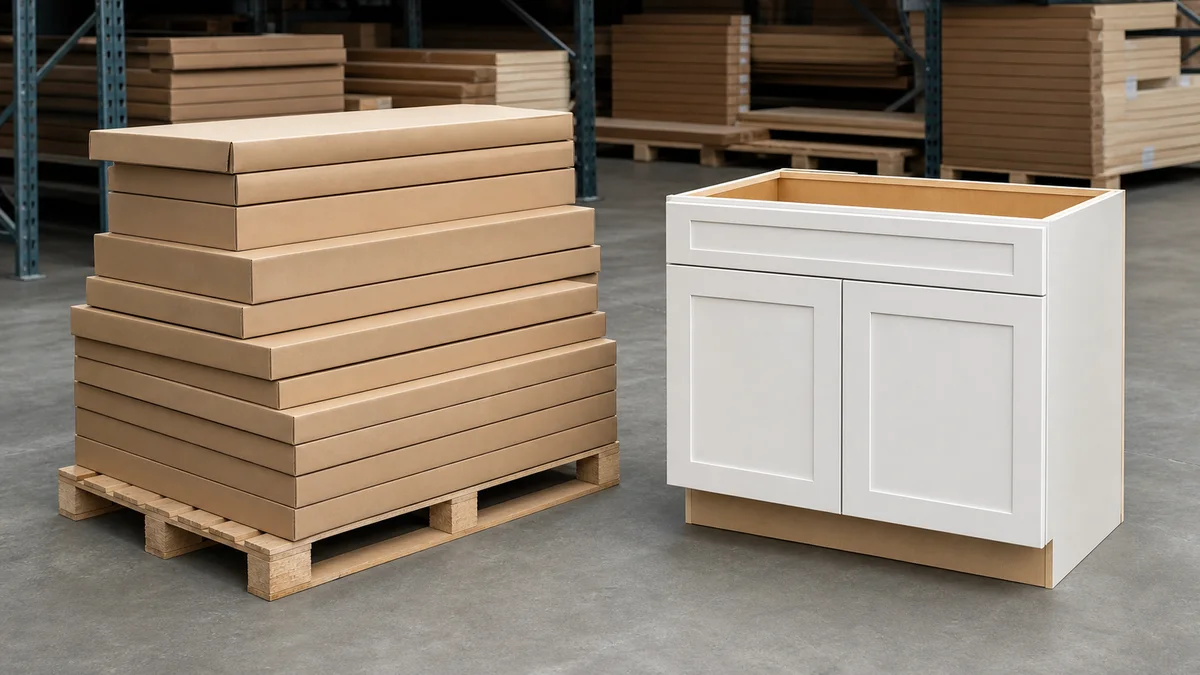
RTA vs Assembled Cabinets: Freight, Assembly & Which to Buy (2026)
RTA flat-pack vs pre-assembled cabinets — how each affects container freight, on-site labour, quality consistency and total landed cost for importers.

Importing Cabinets & Doors from China: Docs & Duties (2026)
How to import cabinets and doors from China — documents, HS codes and duties, choosing a forwarder, port and delivery, and customs pitfalls to avoid.