
China vs Local Kitchen Cabinet Suppliers: An Honest Comparison

Should you buy your kitchen cabinets from China or from a supplier down the road? As a Chinese manufacturer we obviously have a position — but the truthful answer is that each option wins in different situations, and pretending otherwise would cost us the trust this comparison is meant to build. Here's how the two stack up on the factors that actually decide projects: cost, lead time, quality control, communication and risk — and an honest account of when local is the right call.
Cost: where the gap comes from
The headline gap is real. For comparable specification — same board grade, similar hardware class, custom sizes — cabinets manufactured in China typically land at a fraction of the local factory price in North America, Europe or Australia, even after adding ocean freight and import duties. The difference doesn't come from cutting corners; it comes from scale and clustering. Foshan alone concentrates board mills, hardware makers, finishing lines and skilled labour in one region, which strips cost out of every step. That's why custom kitchen cabinets that would be premium-priced locally can be standard specification from a Chinese factory.
Two honesty notes. First, always compare landed cost — goods plus freight, duty and delivery — against the local quote, not the ex-factory price; our guide to FOB, CIF and DDP shipping terms shows how to read those numbers. Second, the smaller the order, the smaller the advantage: freight is a fixed-ish cost, so a single small kitchen gains far less than a project's worth of units.
Lead time: local wins the sprint, China wins the marathon
A local shop can often deliver faster on a single kitchen — no ocean in the way. If your renovation starts in three weeks, local is simply the practical answer.
For project volumes the picture flips. Local workshops queue jobs one after another and can struggle to produce fifty kitchens at once; a factory running production lines builds them in parallel. Once you add sea freight, total China lead time for a project order is frequently comparable to — sometimes shorter than — a local factory's backlog for the same volume. The discipline that matters is planning: order against your construction schedule, and the ocean transit disappears into the timeline. What you can't do with China sourcing is improvise at the last minute.
Quality and quality control
The stubborn myth is that imported means lower quality. The reality: China produces the full spectrum, from throwaway flat-pack to cabinetry that equips five-star hotels — the same factories exporting to New Zealand, the US and Europe run the same boards, hinges and finishing lines global brands use. Quality is a specification and verification problem, not a geography problem.
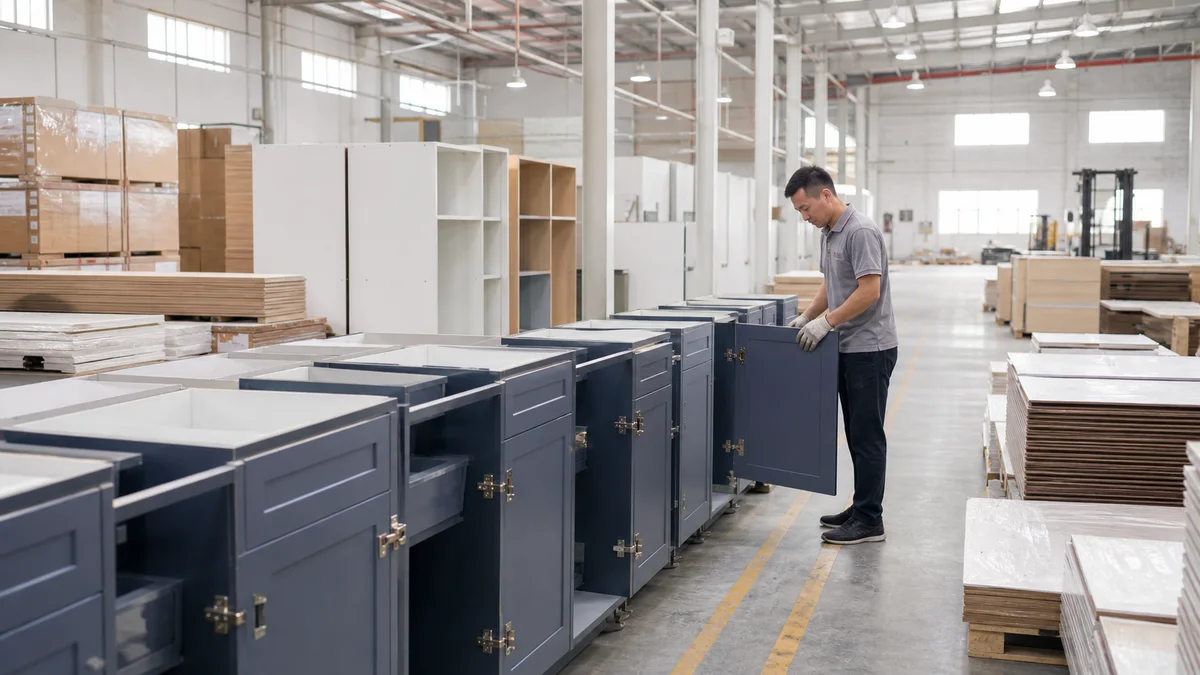
What's genuinely different is how you verify. With a local supplier you can drive to the workshop; with an overseas one you verify deliberately: check the factory is real (video walkthrough, licence, references — or visit; here's our factory), approve physical samples before production, and run a pre-shipment inspection before the container seals. Buyers who follow that process get consistent quality; the horror stories almost always trace back to skipping it and buying on price alone from an unverified trader.
Communication and service
Local wins face-to-face convenience: same time zone, same language, a showroom you can walk into, and an installer who has probably met the cabinet-maker. If a door arrives damaged, replacement is a short drive away. These are real advantages and worth money to some buyers.
Modern China sourcing has closed more of this gap than most first-time buyers expect: English-speaking project managers, CAD shop drawings for written sign-off before production, WhatsApp updates with photos from the line, video inspections on demand. The working rhythm is asynchronous but documented — and that written trail (drawings, approvals, inspection reports) is itself a quality tool that informal local arrangements often lack. Time zones even help: questions sent at your evening are answered by your morning.
Aftersales is the honest weak point of importing: replacement parts cross an ocean. Mitigate it the way experienced buyers do — order attic stock (a few spare doors and panels in the container) and agree the replacement-parts process before ordering, not after.
When each option genuinely makes sense
Choose local when: it's one kitchen on a tight deadline; the project needs on-site measuring and complex installation coordination; your total volume is too small to fill meaningful container space; or import duties in your market erase the saving for your category.
Choose China when: you're buying project volumes — apartments, hotels, multi-house developments — where the per-unit saving multiplies; you're a distributor or contractor who can plan eight to twelve weeks ahead; you want specification control (exact boards, hardware, finishes) documented in writing; or your local market quotes premium prices for what is, structurally, the same manufactured product. The full process, from spec to container, is laid out in our step-by-step sourcing guide.
Plenty of professional buyers run both: local for one-off rush jobs, China for the planned volume that makes their margin. A common hybrid worth copying: import the cabinetry — where the cost gap is widest — and buy locally the items where local genuinely adds value, such as countertops templated on site after the cabinets are installed, appliances with local warranties, and installation labour. That structure captures most of the import saving while keeping the site-critical trades close to the project. It also de-risks your first order: start with one container for one building phase, judge the quality and process with your own eyes, then scale the share you import as confidence grows.
FAQ
Frequently asked questions
Are Chinese kitchen cabinets lower quality than local ones?
Not inherently. China manufactures across the full quality spectrum with the same materials and hardware brands used worldwide. Outcomes depend on specifying clearly, verifying the manufacturer and inspecting before shipment.
How much can I actually save?
It varies by market, specification and volume — which is why we won't quote a universal percentage. The honest method: price your exact local specification with a China factory, add freight and duty, and compare landed cost to the local quote.
What's the biggest risk of buying from China, and how do I manage it?
Distance: you can't drop by the workshop. Manage it with written sign-offs on drawings and samples, production updates, and a pre-shipment inspection — the process most experienced importers treat as standard.
Is it worth importing a single kitchen?
Usually only if your local market is very expensive and you're not in a hurry. The economics strengthen sharply with volume, because freight spreads across more units.
What about aftersales and spare parts?
Agree it upfront: most project buyers include attic stock — spare doors, panels and hardware — in the container, which covers the realistic replacement scenarios without waiting on another shipment.
Start a conversation
Send your local quote's spec — we'll price the identical kitchen so you can compare honestly
Get a Factory-Direct QuoteKeep reading
Related posts
How to Source Kitchen Cabinets from China: A 2026 Buyer's Guide
Step-by-step guide to sourcing kitchen cabinets from China — specs, choosing a manufacturer, samples, pricing, QC and shipping. Avoid the common mistakes.
Kitchen Cabinet MOQ, Lead Time & Pricing Explained (2026)
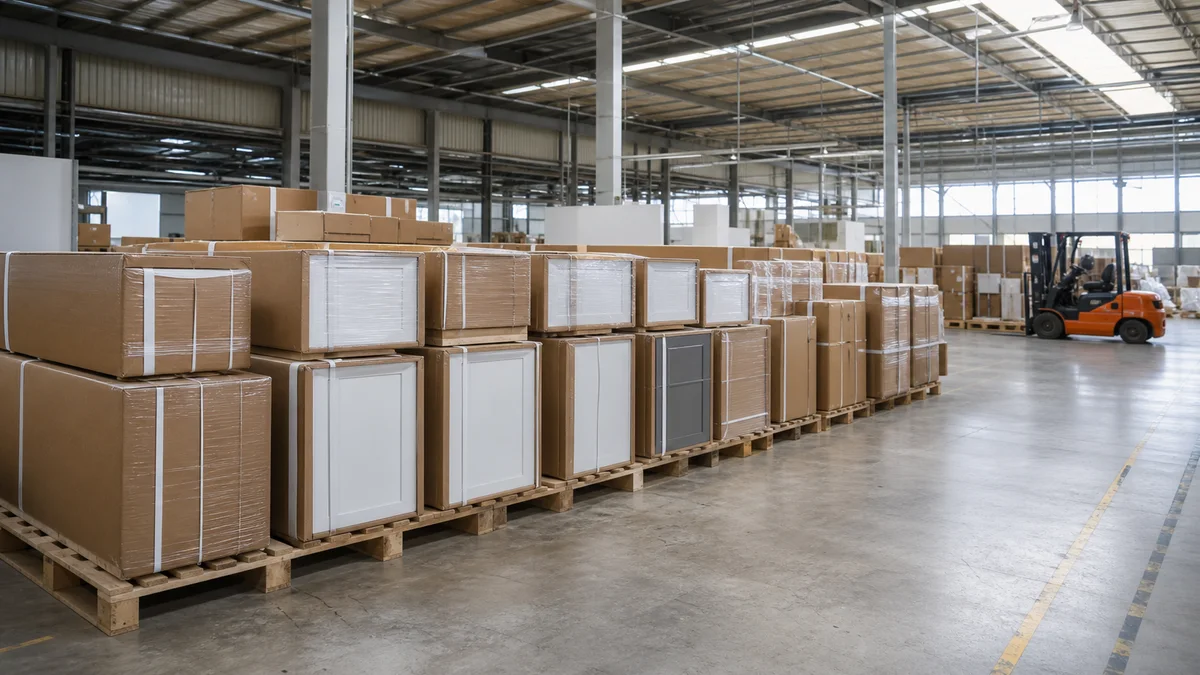
How cabinet MOQ, lead time and pricing actually work when buying from a China factory — what drives each, and practical ways to lower your landed cost.
FOB vs CIF vs DDP: Shipping Cabinets from China (2026)
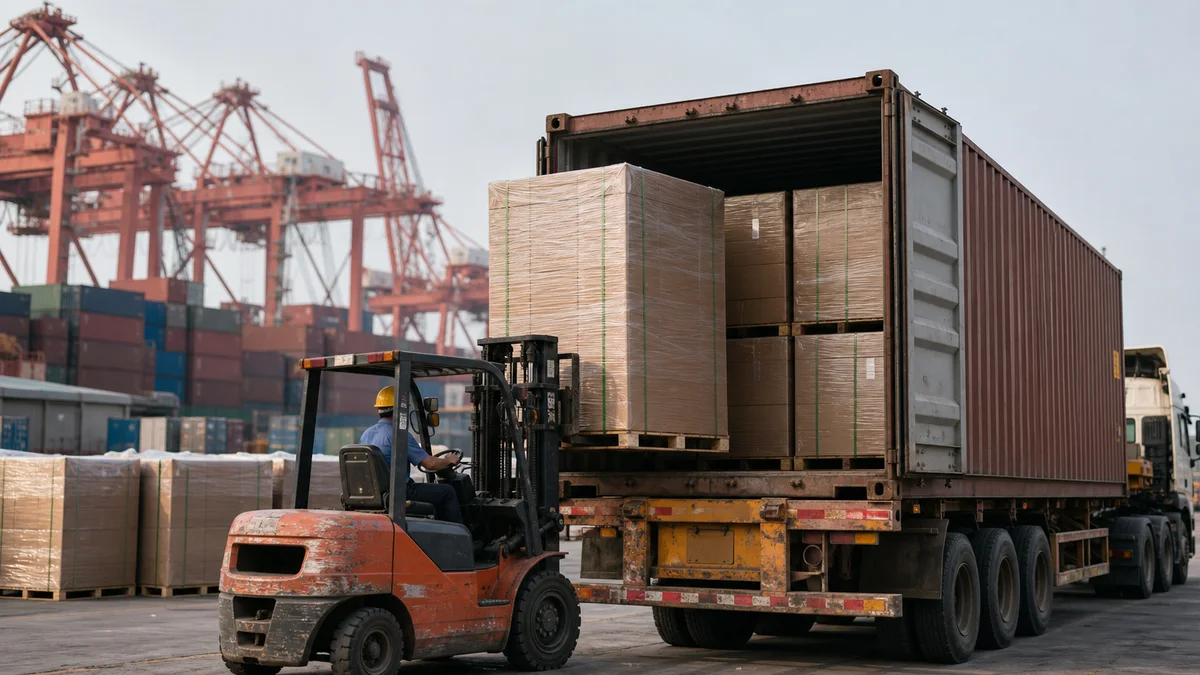
FOB, CIF and DDP explained for cabinet buyers — what each Incoterm includes, who carries the risk, and which term to choose when importing from China.