
Hotel Casework and FF&E: A Buyer's Guide
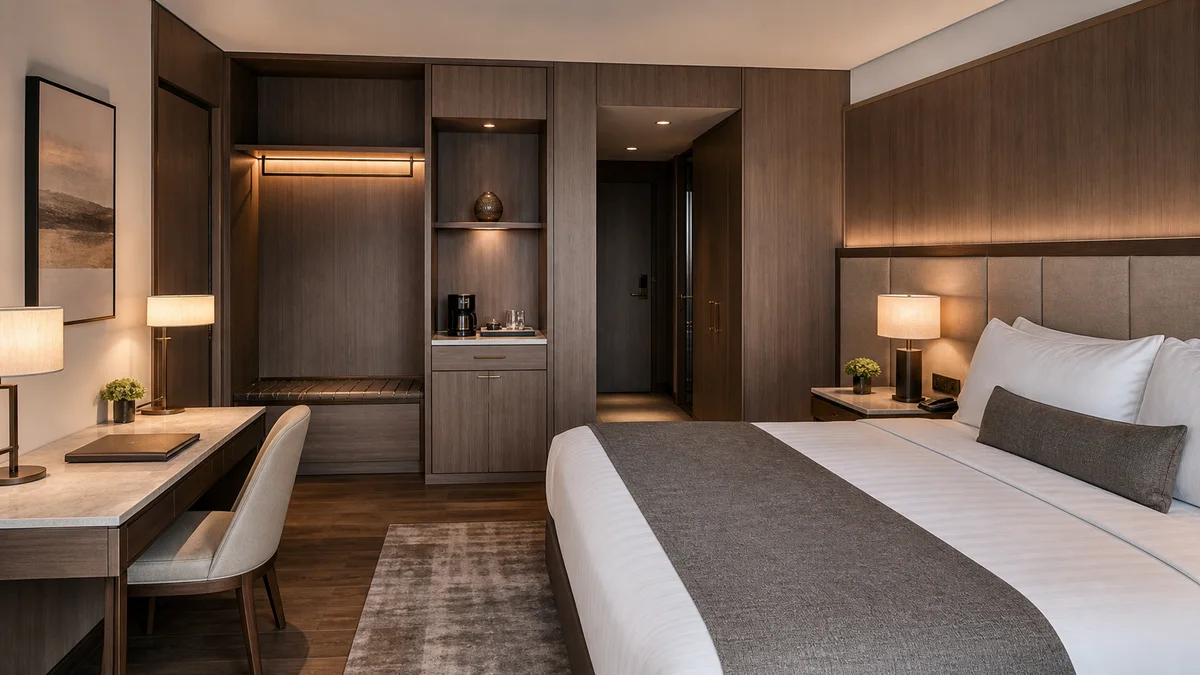
Hotel guest rooms are furniture-dense little economies: a wardrobe, a minibar unit, a desk, a luggage bench, a vanity, headboard panelling — multiplied by two or four hundred keys, expected to look identical in every room and survive a decade of guests who treat none of it gently. That package is casework, and buying it well is a different discipline from buying residential cabinetry. Here's what the category covers, what "contract grade" actually means, and how experienced FF&E buyers run the procurement.
What casework covers — and where it sits in FF&E
In hospitality procurement, FF&E (furniture, fixtures and equipment) splits into loose furniture (beds, chairs, sofas — items that ship as objects) and casework or millwork: the fitted, built-in cabinetry made to the room's dimensions. A typical guest-room casework package includes the wardrobe or closet, the minibar/refreshment unit, the writing desk and its wall panel, the luggage bench, the TV/media wall, the bathroom vanity, and often the headboard wall panelling that ties the room together. Public-area millwork — reception desks, bar fronts, corridor panelling — usually rides on the same package.
The reason the distinction matters to a buyer: loose furniture is bought from catalogues; casework is manufactured to your room drawings, which means the supplier's real product is repeatable custom production — exactly the capability behind hospitality project solutions.
"Contract grade" — what it really means
Hospitality operators use "contract grade" loosely, but the substance is specific: materials and construction chosen for commercial duty cycles, not domestic ones. In practice that means moisture-tolerant cores in every wet or humid zone (guest bathrooms live steamy lives — the full logic is in our humid-climate vanity specification); high-pressure laminates or hard-wearing lacquers on surfaces guests touch; impact-resistant edges on everything at suitcase height; and hardware rated for relentless open-close cycles — a wardrobe door in a hotel opens more times in a year than a home wardrobe does in ten. Hinge and runner grades, soft-close everywhere, and corrosion-resistant fittings in bathrooms are specification lines, not luxuries; our cabinet hardware guide covers the tiers and how to lock them contractually.
Fire and safety compliance belongs in the specification too: hotel projects commonly carry flammability and material requirements set by the operator's brand standards and local code. State the applicable standards in the RFQ and require documentation with the submittal — a capable manufacturer expects this; a hesitant answer here is a supplier screen in itself.
Repeatability across hundreds of rooms
A hotel's brand promise is consistency, and the casework carries it: room 512 must be room 212 with a different view. Procurement teams enforce that through the model-room process — and it's the single practice most worth copying. The factory produces one complete room's casework first; it's installed, reviewed by owner, operator and designer; every correction is captured; and the revised, signed package becomes the control standard for the full production run. Skipping or rushing the model room to save a few weeks is the classic false economy — it converts one room's corrections into four hundred rooms' snagging.
From there, consistency is process: batch-controlled finishes so room 300's walnut matches room 30's, CNC-driven repetition, sampling QC across the run, and a pre-shipment inspection on every delivery wave against the model-room standard.
Coordinating the whole room package
The rooms read as designed only when every piece speaks one language: the vanity matches the wardrobe, the desk matches the minibar unit, the headboard panelling ties to all of it. Splitting these across suppliers invites the classic hospitality snag — three "matching walnuts" from three factories that don't match under room lighting. Consolidating the room's casework with one manufacturer closes that risk structurally: one finish batch, one hardware package, one set of shop drawings, one accountable party — and it packs efficiently, because a room's mixed pieces fill containers the way identical boxes can't. It also simplifies the operator's life for the decade after opening: one source for spare doors, panels and hardware, ordered as attic stock with the original batch.
For renovation programmes — where hotels stay partially open — packing and delivery discipline matters double: floor-by-floor wave deliveries, unit-set packing per room, and quiet-hours site logistics all belong in the contract, not in goodwill.
New-build versus renovation programmes
The two hotel scenarios buy the same product on different clocks. New-build casework rides the construction programme like apartment cabinetry: model room during structure works, production during finishing trades, wave deliveries by floor as fit-out advances. The risk to manage is programme slip upstream — casework ordered against an optimistic site schedule arrives to find no floors ready, so tie delivery waves to milestone certifications rather than calendar dates.
Renovation flips the constraints: the hotel is often trading, floors close in blocks of a few weeks, and every day a floor is dark costs revenue. That compresses casework into a rhythm of precise, repeated mini-projects — one floor's rooms measured, delivered, installed and handed back on a drumbeat. What the factory must offer here is schedule reliability more than anything: buffer stock produced ahead, deliveries sequenced to the floor plan, and packing that moves through service lifts and corridors without damage. Renovation buyers should also survey early for the classic surprise — rooms that were "identical" in 2005 drawings but have drifted over twenty years of repairs — and build a dimension-verification step into the first floor before committing the remaining floors to production.
Procurement tips from the project side
The buyers who run smooth casework programmes, across hotel projects of every size, tend to share habits: they issue RFQs with complete room drawings and a written finish/hardware schedule rather than mood boards; they require physical finish samples and judge them under guest-room lighting; they lock the model-room process into the programme with dates; they inspect production waves rather than trusting the first container; and they order attic stock with the main run. None of it is exotic — it's the same discipline as apartment procurement with a stricter consistency bar, and it front-loads effort where it's cheap (paper and samples) to avoid paying where it's expensive (installed rooms).
FAQ
Frequently asked questions
What's the difference between casework and millwork in hotels?
The terms overlap and are often interchangeable: both mean the fitted, manufactured woodwork — wardrobes, desks, vanity units, panelling — made to the project's drawings, as opposed to loose catalogue furniture.
What does a guest-room casework package typically include?
Wardrobe, minibar unit, desk and desk wall, luggage bench, TV/media wall, bathroom vanity and often headboard panelling — plus reception, bar and corridor millwork when the public areas are consolidated into the same package.
Why is the model room so important?
It converts design intent into a physically approved standard before mass production. Every correction found in the model room is one correction; the same issue found after the run is hundreds.
Can hotel casework handle humid climates?
Yes, when specified for it: moisture-tolerant cores, sealed edges and corrosion-resistant hardware in bathrooms and tropical properties. Say the climate in the RFQ and make the spec answer it.
How is casework priced?
Per room-package against your drawings — driven by materials, finishes, hardware grade and key count. Volume works in your favour: the more identical rooms, the sharper the per-key price.
Start a conversation
Share key counts and room drawings — we'll quote the full casework package with a model-room programme
Get a Factory-Direct QuoteKeep reading
Related posts
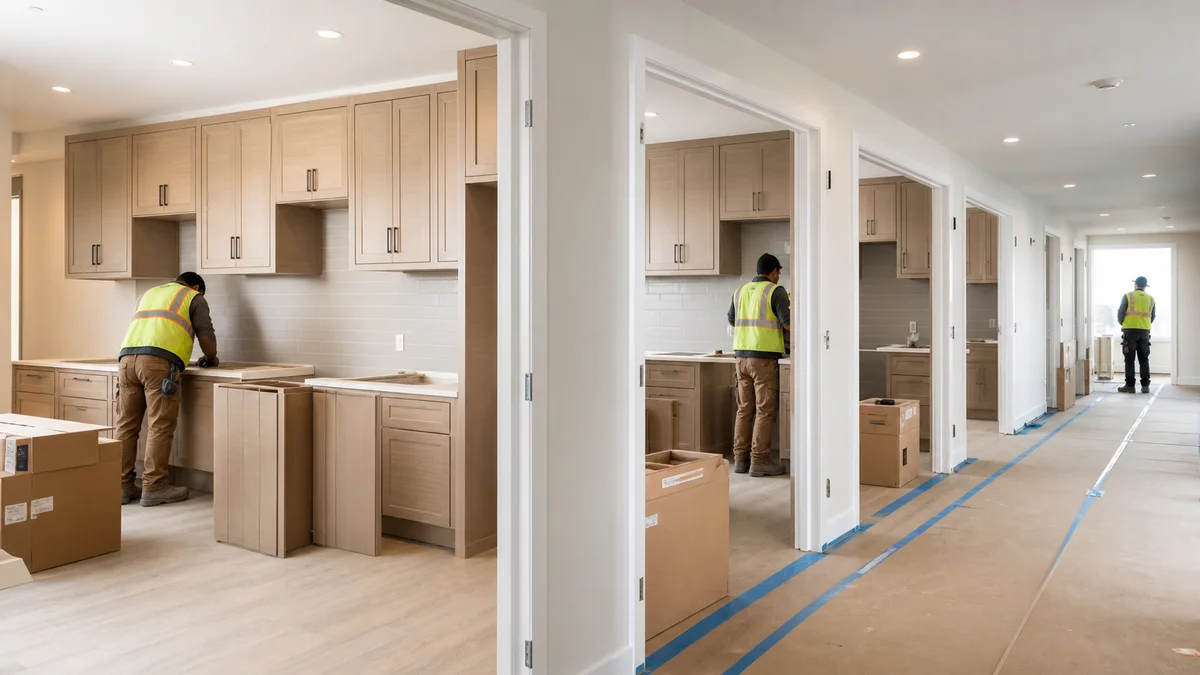
Cabinetry for Apartment Developments: A Procurement Guide (2026)
How developers procure cabinetry for apartment projects — spec standardisation, repeatability at scale, lead-time planning and coordinating every room.
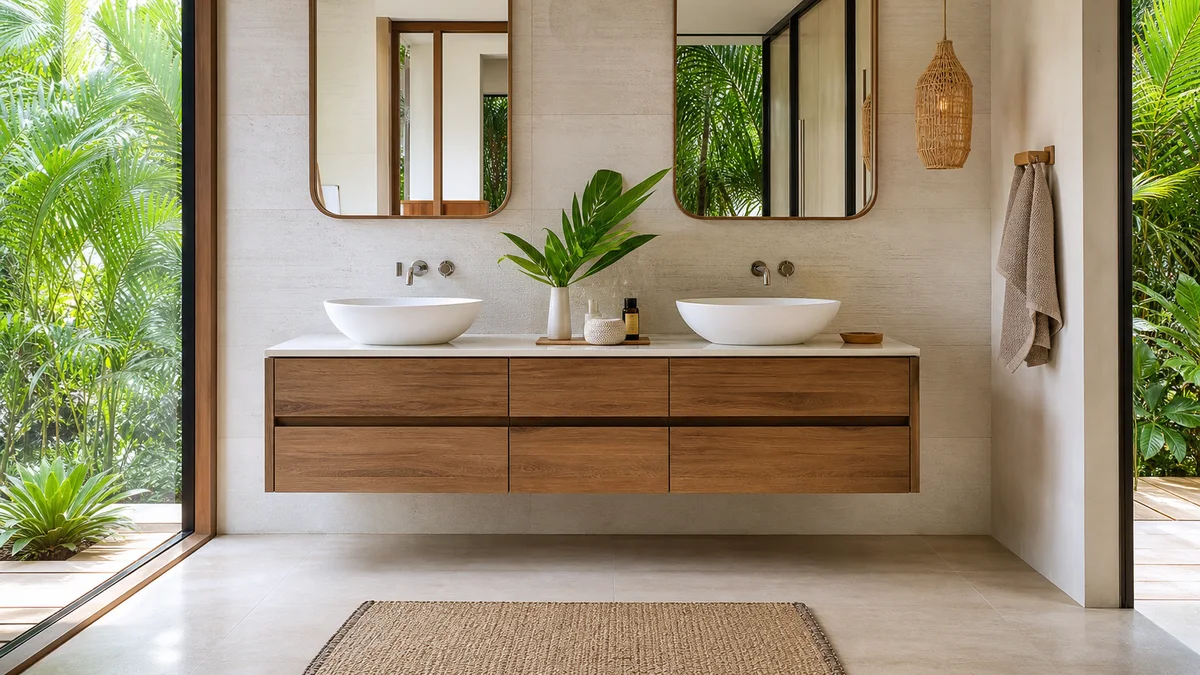
Best Bathroom Vanity Materials for Humid Climates (2026 Guide)
Which bathroom vanity materials survive humid and tropical climates — waterproof cores, sealed edges and the right finishes, for Southeast Asia and the Gulf.
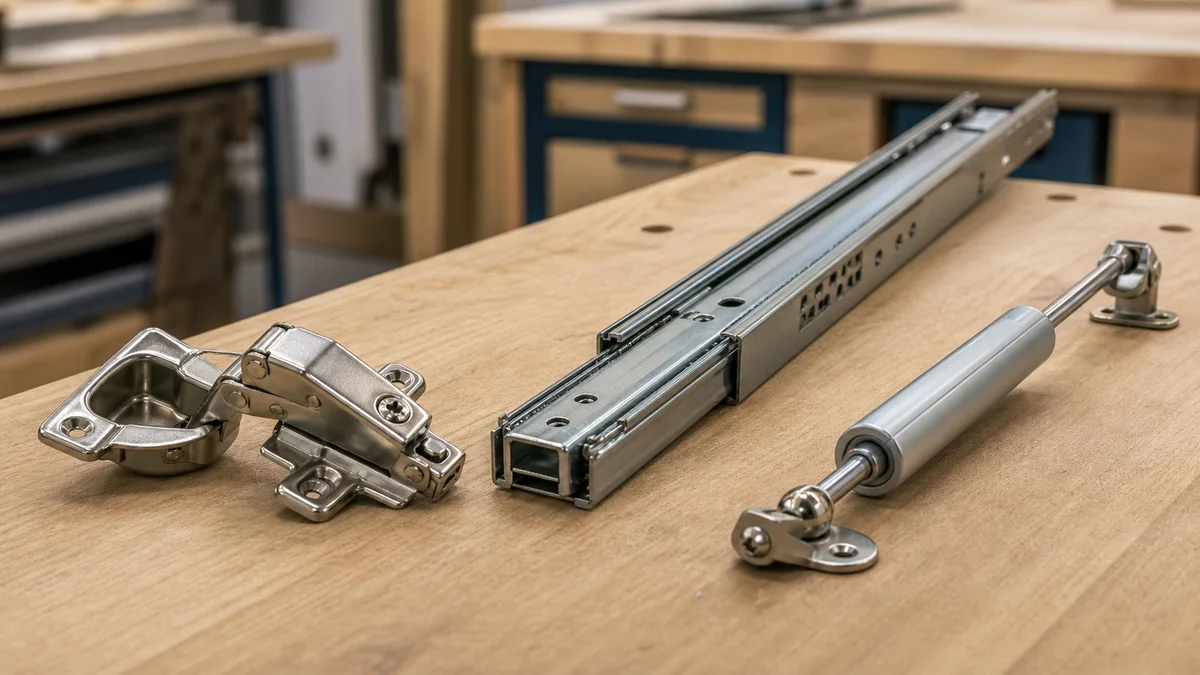
Cabinet Hardware Guide: Hinges, Runners & Lift Systems (2026)
A buyer's guide to cabinet hardware — hinges, drawer runners, lift systems and soft-close — what the grades and brands mean, and what to specify in an order.