
Importing Cabinets & Doors from China: Documents & Duties

Getting cabinets and doors made is only half the job — landing them cleanly through customs is the other half. The good news: the import side is mostly paperwork and planning, and once you understand the pieces it's very manageable. This guide walks through the documents, HS codes and duties, choosing a forwarder, and the customs mistakes that trip up first-time importers.
The documents you'll need
Customs clearance runs on a standard set of documents. Your supplier prepares most of the export paperwork; you (or your customs broker) present it on arrival. The core set:
- Commercial invoice — describes the goods, quantities, values and trade term; the basis for duty calculation.
- Packing list — carton-by-carton contents, weights and dimensions.
- Bill of Lading (B/L) — the carrier's document of carriage and title to the goods.
- Certificate of Origin — states where the goods were made; sometimes needed for duty treatment.
- Any product-specific documents — depending on your country and product, you may need compliance or safety documentation (this varies widely by destination, so confirm your local requirements early).
The single biggest cause of clearance delays is documents that don't match — values, quantities or descriptions that differ between invoice, packing list and B/L. Insist on consistency across all three. A manufacturer that ships regularly, across our full product range, should produce clean, matching export documents as a matter of course.
HS codes and duties
Every imported product is classified under an HS code (Harmonized System) that determines the duty rate your country charges. Cabinets, cabinet parts, and different door types can fall under different codes, so classification matters — the wrong code means the wrong duty and possible penalties.
Two practical points. First, confirm the correct HS code for your specific goods using your own country's customs tariff lookup, or have your customs broker classify them — don't assume. Second, duty rates are set by your destination country, not the supplier, and they change; look them up for your codes rather than relying on a number someone quoted informally. If your cabinets ship under DDP, duties are the seller's responsibility to pay — but you should still know the classification. If they ship FOB or CIF, the duty is yours to pay on arrival, so budget for it up front. (For how the trade term changes who pays, see FOB, CIF and DDP explained.)
Choosing a freight forwarder or customs broker
Unless you're shipping DDP (where the seller delivers to your door), you'll want a freight forwarder to handle the ocean leg and a customs broker to clear the goods — often the same company offers both. A good forwarder will advise on routing, consolidate paperwork, flag document issues before they cause a hold, and arrange inland delivery from the port.
Choose one with experience in your trade lane and, ideally, with furniture or cabinetry, since they'll know the typical classifications and packing. Get the quote itemised — ocean freight, destination charges, customs clearance, inland delivery — so you can see the full landed cost, not just the sea freight. A reliable broker frequently pays for itself by avoiding a single costly delay.
Port, delivery and timing
Plan the last mile before the container arrives. Decide your destination port, whether you need the goods delivered to a warehouse, site or door, and whether you can receive a full container (FCL) or need it unpacked at a depot. Cabinets are heavy and bulky — confirm you have the access, equipment and labour to unload when it lands.
Build the timeline backward from your install or sell date: production time, then ocean transit, then customs clearance (which can take days, longer if documents are queried), then inland delivery. Leaving slack for clearance is wise — it's the step most outside your control.
Common customs pitfalls to avoid
- Mismatched documents — differing values or quantities across invoice, packing list and B/L. The number-one cause of holds.
- Wrong HS classification — leads to incorrect duty and possible penalties. Verify the code.
- Under-declaring value — tempting to lower duty, but it's illegal and risks seizure and fines. Declare accurately.
- Ignoring destination-specific requirements — some countries require specific compliance or safety documentation for cabinetry or doors. Check yours early.
- No slack for clearance — assuming the container clears instantly. Build in buffer time.
- Skipping inspection — importing defects you can't easily return. Catch them before shipment; see inspect cabinets before shipment.
FAQ
Frequently asked questions
What documents do I need to import cabinets from China?
At minimum: commercial invoice, packing list and Bill of Lading, usually plus a certificate of origin, and any destination-specific compliance documents. Your supplier prepares the export paperwork; make sure all documents match.
What's the HS code for kitchen cabinets?
Cabinets and their parts, and different door types, are classified under different HS codes, and the duty tied to each is set by your country. Confirm the exact code with your national customs tariff lookup or your broker rather than assuming.
Who pays the import duty?
It depends on the trade term. Under DDP the seller pays duties; under FOB or CIF you pay them on arrival. Either way, know your classification and budget accordingly.
Do I need a customs broker?
For FOB and CIF shipments a customs broker (often via your freight forwarder) makes clearance much smoother. Under DDP the seller handles clearance, so you may not need one.
How long does customs clearance take?
It varies by country and can take from a day to several, and longer if documents are queried. Build buffer time into your schedule and keep your paperwork consistent to avoid holds.
Start a conversation
We prepare clean export documents for every order — get a factory-direct quote
Get a Factory-Direct QuoteKeep reading
Related posts
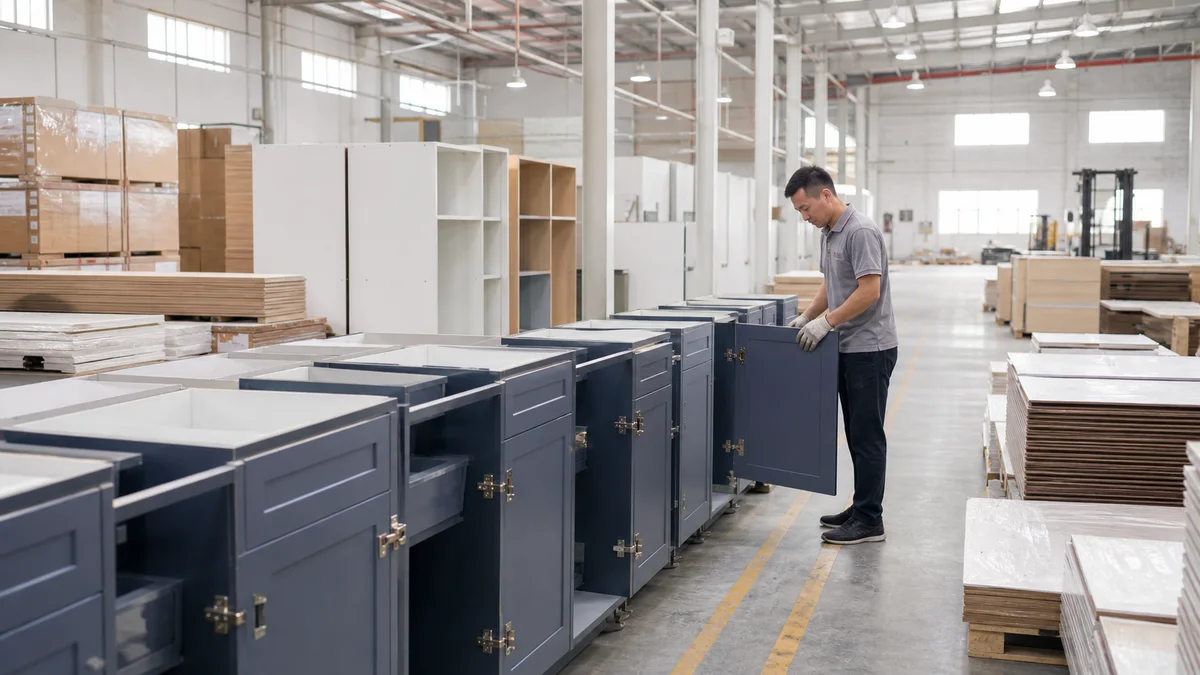
How to Source Kitchen Cabinets from China: A 2026 Buyer's Guide
Step-by-step guide to sourcing kitchen cabinets from China — specs, choosing a manufacturer, samples, pricing, QC and shipping. Avoid the common mistakes.
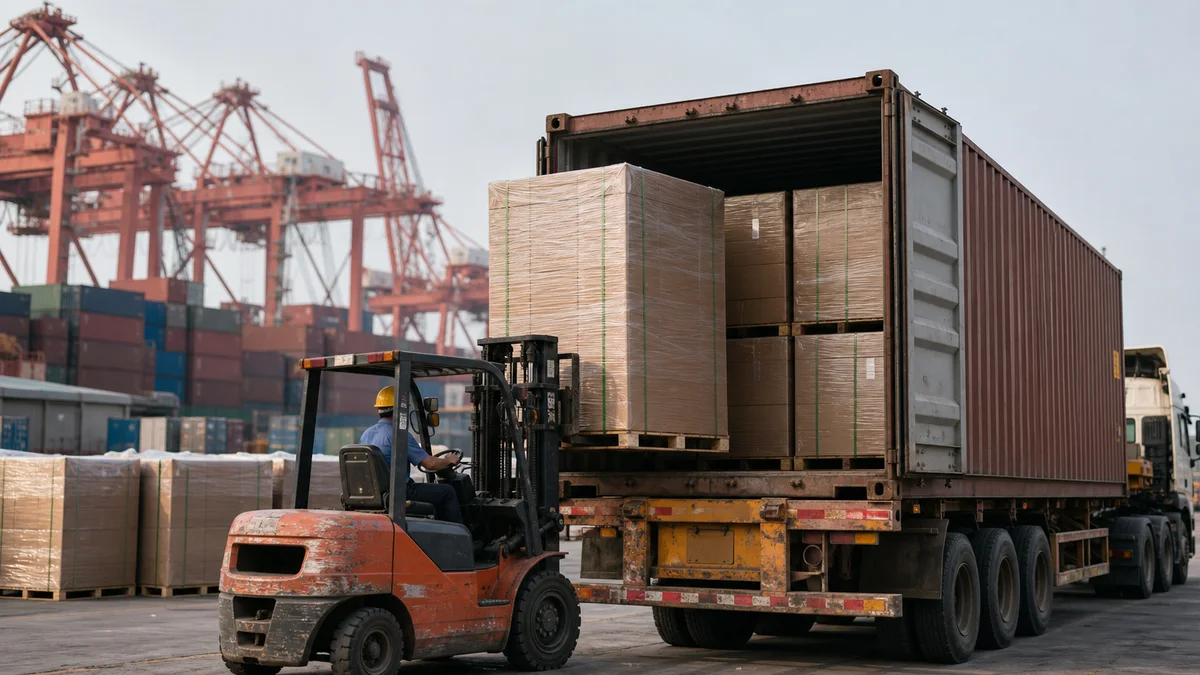
FOB vs CIF vs DDP: Shipping Cabinets from China (2026)
FOB, CIF and DDP explained for cabinet buyers — what each Incoterm includes, who carries the risk, and which term to choose when importing from China.
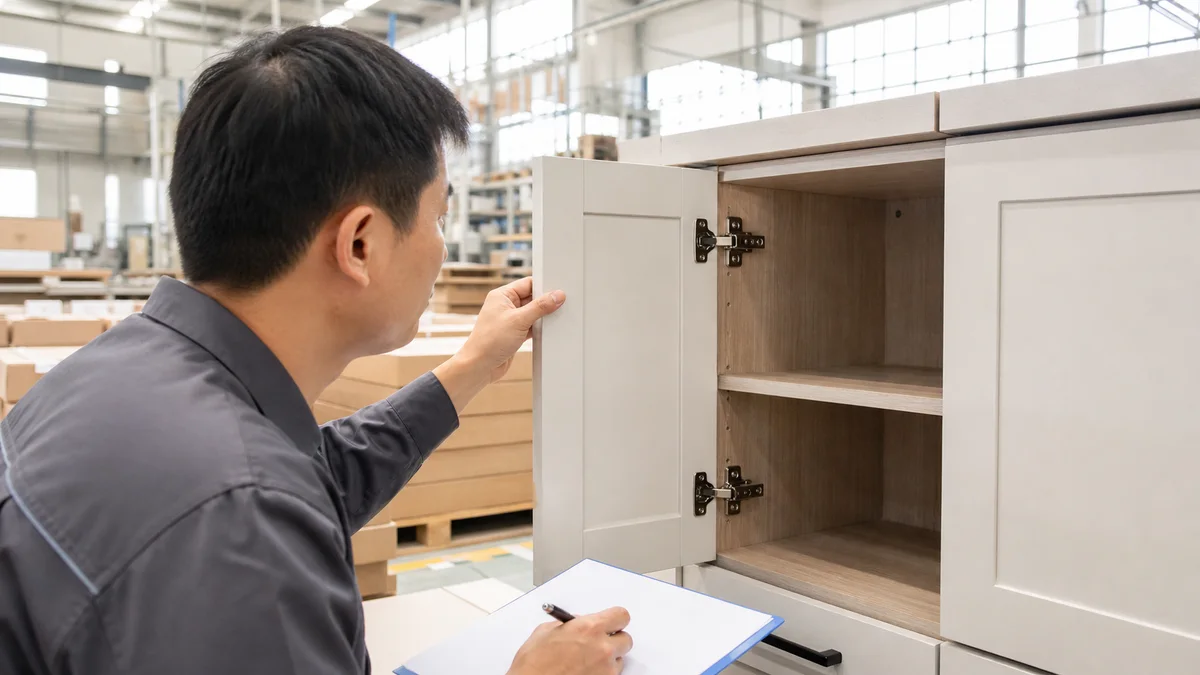
How to Inspect Cabinets Before Shipment (2026 QC Guide)
A pre-shipment inspection guide for cabinet buyers — what to check on carcass, doors, hardware, finish and packing, plus DIY, third-party and video QC.