
How to Inspect Cabinets Before Shipment
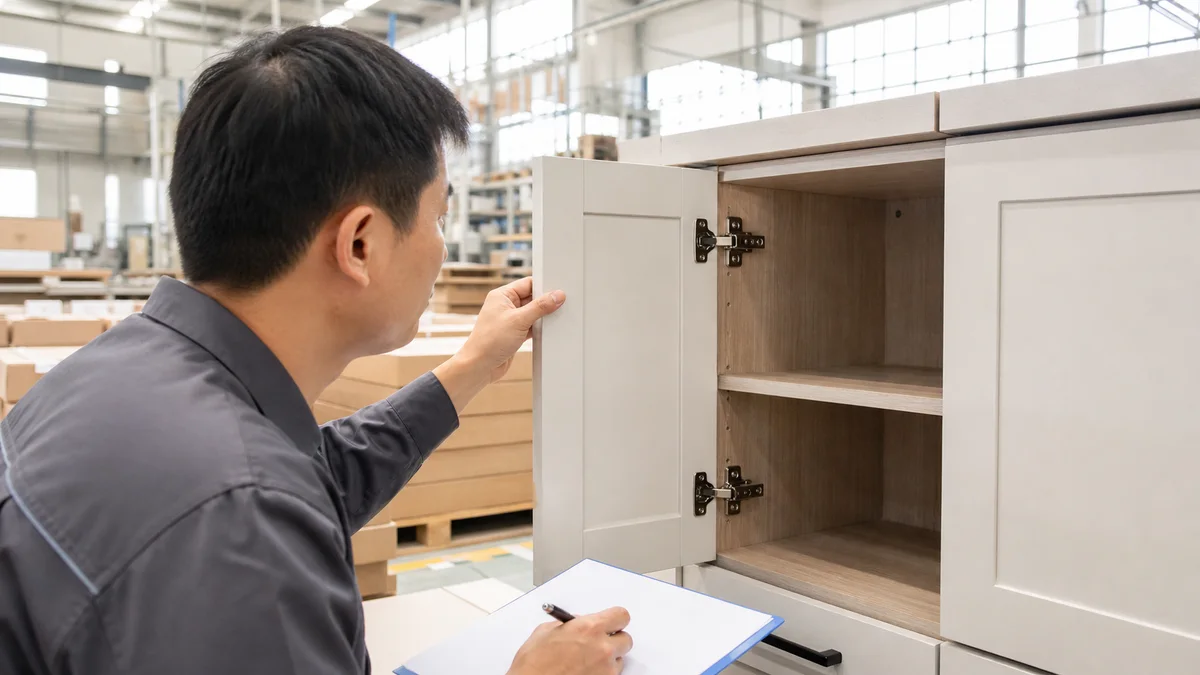
Pre-shipment inspection is the last, cheapest chance to catch a problem before a container of cabinets crosses an ocean. Fix a misaligned door in the factory and it costs minutes; discover it after the container lands and it costs a claim, a delay, and an unhappy client. This guide covers what to check, and how to run the inspection whether you're on-site, using a third party, or doing it by video.
Why pre-shipment QC matters
Cabinets are bulky, made of many parts, and expensive to return. Once a container is sealed and shipped, any defect becomes your problem to solve at the far end — replacements mean re-manufacturing, re-shipping and weeks of delay. A pre-shipment inspection, done when the order is finished and about to be packed, is your leverage: issues found now are the supplier's to fix before the goods leave. It's the highest-return quality step in the whole process, and a credible manufacturer will welcome it rather than resist it.
What to check — the five areas
Work through the order area by area. Sample enough units across the batch, not just the one on top.
1. Carcass (cabinet box) Confirm the board type and thickness match your spec. Check that panels are square, edges are cleanly banded with no lifting or gaps, drilling is accurate, and back panels are properly fitted. The box is the structure — flaws here are the ones you can't fix later.
2. Doors and fronts Doors are the most visible part and the most common complaint. Check alignment and consistent gaps (reveal) between doors and drawers, that they sit flat with no warping, that the finish is even, and that colour matches your approved sample across the whole batch — not just one door.
3. Hardware Open and close every sample: hinges and drawer runners should operate smoothly, soft-close should actually soft-close, and lift systems should hold. Confirm the hardware brand or grade matches what you ordered — substituted hardware is a frequent quiet downgrade.
4. Finish Inspect under good light for scratches, dents, uneven gloss, orange-peel texture, colour variation between panels, and dust or debris in the coating. High-gloss and lacquer finishes show flaws most, so check them hardest.
5. Packing Good product still arrives damaged if it's badly packed. Verify export-grade cartons, corner and edge protection, that fragile parts (glass, mirrors) are secured, labelling is correct, and the container-loading plan won't crush lower cartons. Packing is part of quality, not an afterthought.
How to run the inspection: three options
You don't have to fly to China to inspect an order. Pick the level that fits the order's value and your risk tolerance:
- DIY / on-site. You or a colleague visits the factory before packing. Best control and the chance to resolve issues face to face — but it costs travel and time, so it's usually reserved for large or first orders.
- Third-party inspection agency. An independent inspector visits on your behalf, works from an agreed checklist, and sends a report with photos. A cost-effective middle ground that many importers use as standard, especially with a new supplier.
- Video / remote inspection. The supplier walks you through the finished goods on a live video call before sealing the container. Lowest cost and fast; relies on a cooperative, transparent manufacturer — which a factory-direct partner should be.
Whichever you choose, agree the checkpoints up front: incoming material, in-process (mid-production), and pre-shipment (finished, before packing). Catching a systemic issue at in-process stage is even cheaper than at pre-shipment.
A quick pre-shipment checklist
Run through this before you approve the container to ship:
- Board type, thickness and colour match the approved spec and sample.
- Carcasses square; edge-banding clean; drilling accurate.
- Door alignment and gaps consistent; no warping; finish even across the batch.
- Every sampled hinge, runner and soft-close operates correctly; hardware brand/grade correct.
- Finish free of scratches, dents, uneven gloss and colour variation.
- Export cartons, corner protection, fragile items secured, labels correct.
- Quantities and configuration match the packing list and your order.
- Any defects photographed, listed, and agreed with the supplier before sealing.
For what happens next — documents, HS codes and duties on the import side — see importing cabinets and doors from China.
FAQ
Frequently asked questions
When exactly should the inspection happen?
At pre-shipment stage: the order is finished and about to be packed, but the container isn't sealed yet. That's the last point where the supplier still owns the fix.
Do I have to visit the factory myself?
No. A third-party inspection agency or a live video walkthrough both work well. On-site visits are usually reserved for large orders or a first order with a new supplier.
What are the most common cabinet defects?
Door misalignment and inconsistent gaps, colour variation across the batch, substituted or lower-grade hardware, edge-banding lifting, and finish flaws on high-gloss surfaces. Packing weaknesses cause a lot of in-transit damage too.
What if the inspection finds problems?
Because it's pre-shipment, the supplier corrects or remakes the affected units before the container ships. Document defects with photos and get the fix agreed in writing before you approve sealing.
Can a reliable factory handle QC for me?
A credible manufacturer runs its own incoming, in-process and pre-shipment checks and shares the results. Ask how QC is documented on your order — transparency here is a good sign.
Start a conversation
Ask us how we run in-process and pre-shipment QC on your order
Get a Factory-Direct QuoteKeep reading
Related posts
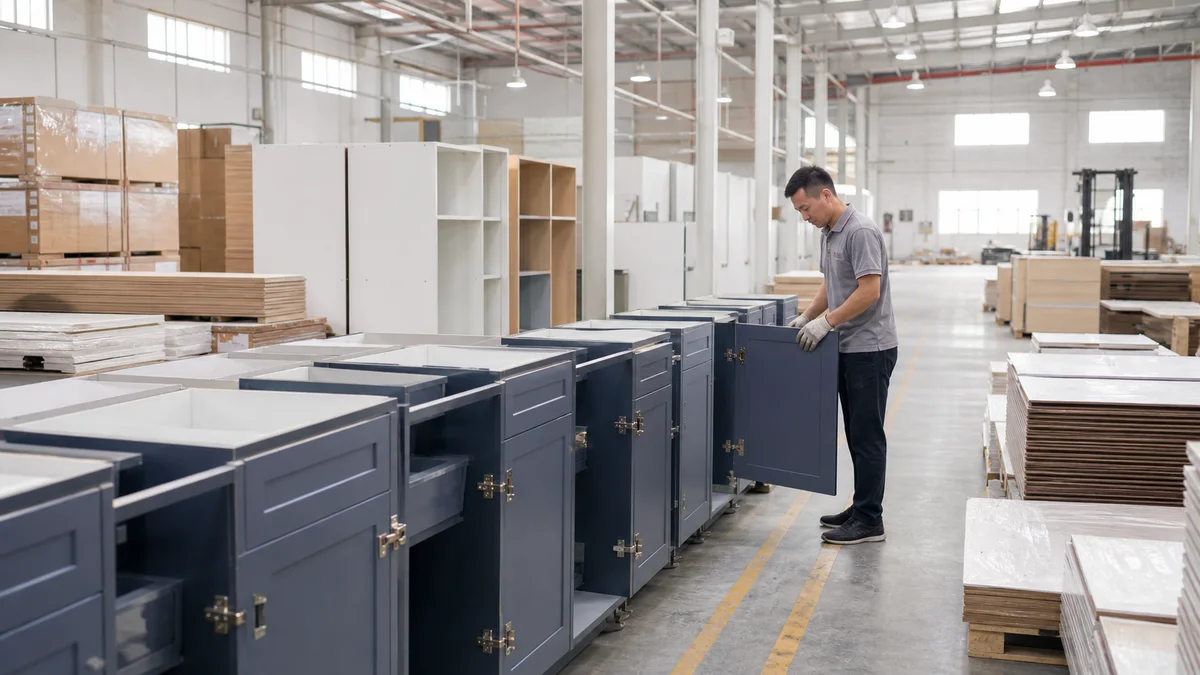
How to Source Kitchen Cabinets from China: A 2026 Buyer's Guide
Step-by-step guide to sourcing kitchen cabinets from China — specs, choosing a manufacturer, samples, pricing, QC and shipping. Avoid the common mistakes.
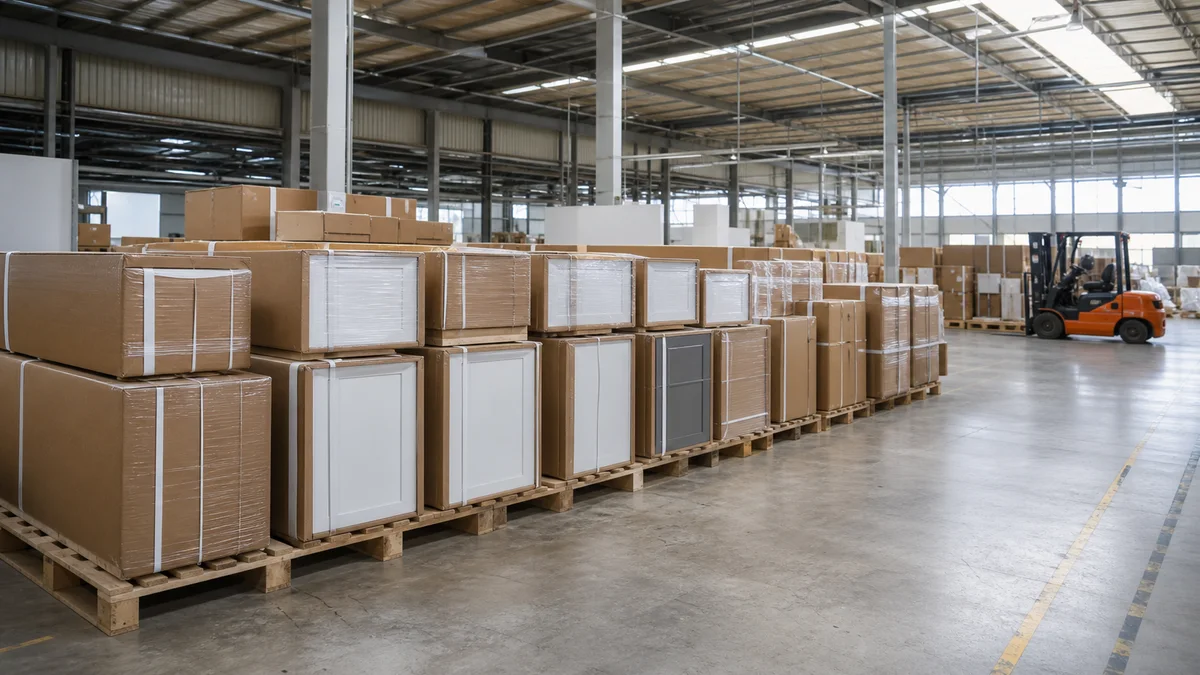
Kitchen Cabinet MOQ, Lead Time & Pricing Explained (2026)
How cabinet MOQ, lead time and pricing actually work when buying from a China factory — what drives each, and practical ways to lower your landed cost.

Importing Cabinets & Doors from China: Docs & Duties (2026)
How to import cabinets and doors from China — documents, HS codes and duties, choosing a forwarder, port and delivery, and customs pitfalls to avoid.