
Kitchen Cabinet Finishes Explained: Matte, Gloss and Woodgrain
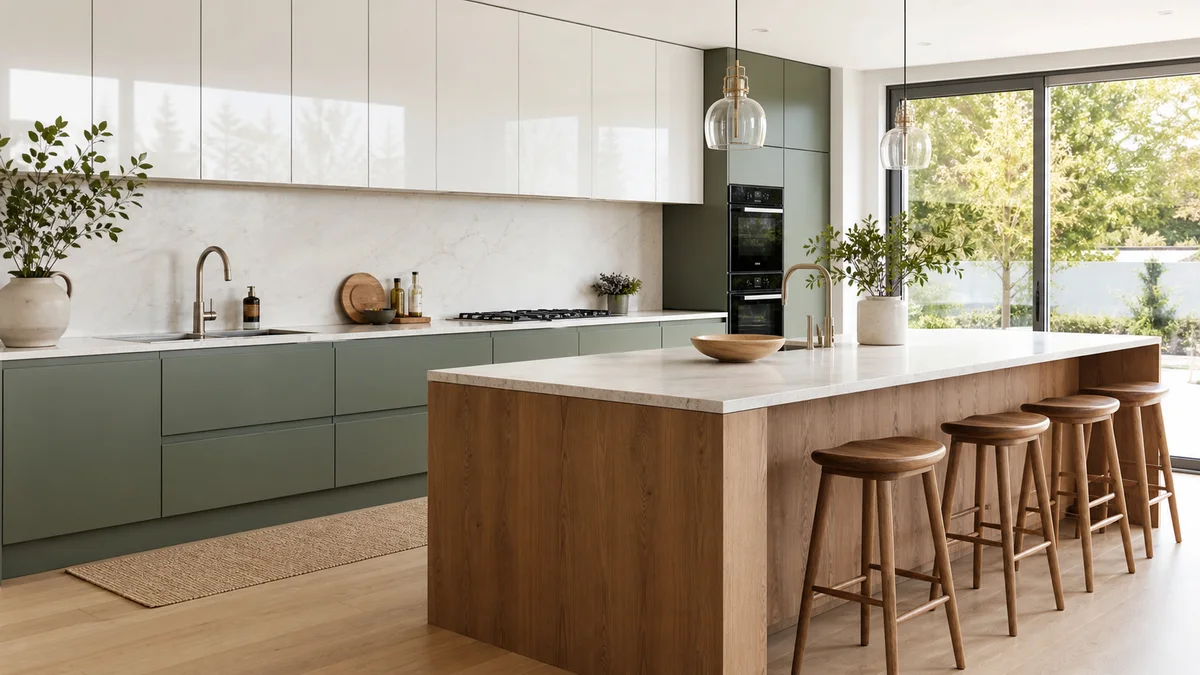
Ask ten buyers what finish they want and you'll hear the same three words: matte, gloss or woodgrain. Those words describe the look — but each look can be built by several different finish systems, at different prices and durability levels. Understanding both layers, the look and the system underneath, is what lets you order the kitchen you actually pictured. This guide keeps it in plain English.
Matte: the contemporary favourite
Matte surfaces reflect almost no light: soft, uniform, calm. The look has owned high-end kitchen design for the past decade — especially in handleless, European-style kitchens where big uninterrupted panels show off an even, glare-free surface. Matte's everyday superpower is concealment: fingerprints, smudges and fine scratches all show far less than on gloss, which makes dark matte colours (graphite, forest green, navy) genuinely livable rather than high-maintenance.
The systems behind the look: matte lacquer — sprayed, any colour you can name, the premium route (see lacquered kitchen cabinets); super-matte laminates and films — modern boards with velvety anti-fingerprint surfaces at a friendlier price; and matte melamine for volume projects. What to watch: very cheap matte films can feel plasticky and burnish shiny at wear points — a physical sample tells you in seconds what a photo never will.
Gloss: light, depth and drama
Gloss does the opposite job: it bounces light around the room, adds visual depth to colour, and makes compact kitchens read larger and brighter. It photographs beautifully — one reason show units and sales brochures lean glossy — and wipes clean with a single pass.
The systems: acrylic delivers the deepest, most mirror-like gloss of any mainstream option (acrylic gloss cabinets); high-gloss lacquer comes close with far more colour freedom and the unique bonus of being repairable; gloss melamine and laminates give the effect at volume-project prices, with a slightly shallower shine. The honest trade-off across all of them: gloss shows fingerprints, dust and swirl scratches more than matte, and dark gloss shows them most of all. Light gloss colours in easy-wipe households are where the look earns its keep.
Woodgrain: warmth without the tree
Woodgrain finishes bring timber's warmth to the kitchen, and today they span a wide realism ladder. At the top sits real wood veneer — actual timber slices over a stable core, with grain that can be matched to flow across a whole bank of doors (wood veneer cabinets). One step down, synchronised-texture melamine and laminates print the grain and emboss the surface to match it, so your fingers feel ridges where your eyes see grain — convincing enough that most visitors never question it, at a fraction of veneer's cost. Ordinary flat-printed woodgrain sits at the entry level: fine for budget programmes, visibly printed up close.
Woodgrain's design role is usually warmth in combination: a woodgrain island under matte painted perimeter cabinets, woodgrain tall units flanking white gloss walls. Few kitchens go full timber; most borrow its warmth in one zone.
Durability and cleaning, compared
All three looks live happily in real kitchens when the system underneath is right; they just age differently. Matte hides daily wear best and needs no polishing — its risk is burnishing on cheap films. Gloss stays vivid and wipes fastest but displays fingerprints and fine swirls; microfibre cloths only, and it stays pristine. Woodgrain hides wear well thanks to its pattern; veneer versions want coasters-and-common-sense care and can be re-lacquered, while melamine versions shrug off abuse but can't be refinished. Whichever you choose, the edges and the board beneath decide longevity more than the face — the deeper mechanics are in our full lacquer vs acrylic vs melamine comparison.
How to choose for your project
Let the market and the maintenance reality decide, not the brochure. Rental and volume residential: matte or woodgrain melamine — forgiving, economical, current. Show kitchens and sales units: gloss where drama sells, or two-tone matte-plus-woodgrain for the design-led look. Premium custom: matte lacquer with a veneer or solid accent — today's high-end signature. Family kitchens: matte or woodgrain over gloss, purely for fingerprint sanity. And in every case, mix deliberately: two finishes in one kitchen almost always looks more designed than one finish everywhere. One last practical note: judge samples under the room's actual lighting, not showroom spotlights — matte shifts colour warmly under domestic light, and gloss doubles whatever glare the room already has.
FAQ
Frequently asked questions
Which cabinet finish is most popular right now?
Matte leads contemporary design, especially in handleless kitchens, with woodgrain strong as the warm accent. Gloss remains the choice where brightness and drama matter — small kitchens and show units.
Is matte harder to clean than gloss?
No — it's more forgiving day to day because it hides marks. Gloss wipes clean fastest but shows every fingerprint between wipes. Both clean with mild detergent and a soft cloth.
Does woodgrain melamine look fake?
Good synchronised-texture board doesn't at normal distance — the embossed surface follows the printed grain. Flat-printed budget versions are easier to spot. Judge from a physical sample, not a photograph.
Can I mix matte, gloss and woodgrain in one kitchen?
Yes, and designers usually do — a woodgrain island with matte perimeter units is a classic pairing. Keep it to two finishes (three at most) and repeat each in more than one place so the mix looks intentional.
Are these looks available in any door style?
Matte and gloss suit flat slab doors best; profiled shaker doors take matte or satin lacquer beautifully but can't wear sheet-based gloss or synchronised woodgrain, which need flat faces.
Start a conversation
Tell us the look you want — we'll match it to a finish system and send samples
Get a Factory-Direct QuoteKeep reading
Related posts
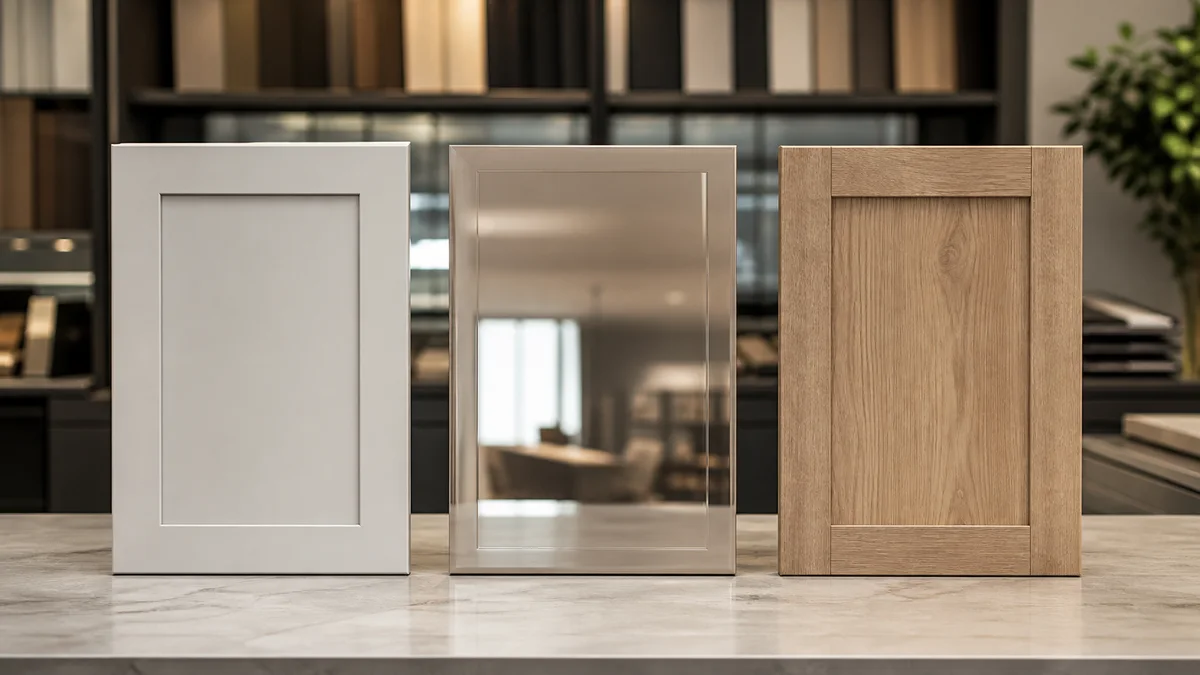
Lacquer vs Acrylic vs Melamine Kitchen Cabinets: Full Comparison (2026)
Lacquer, acrylic and melamine kitchen cabinets compared — look, durability, maintenance, cost and best use cases, to pick the right finish per project.
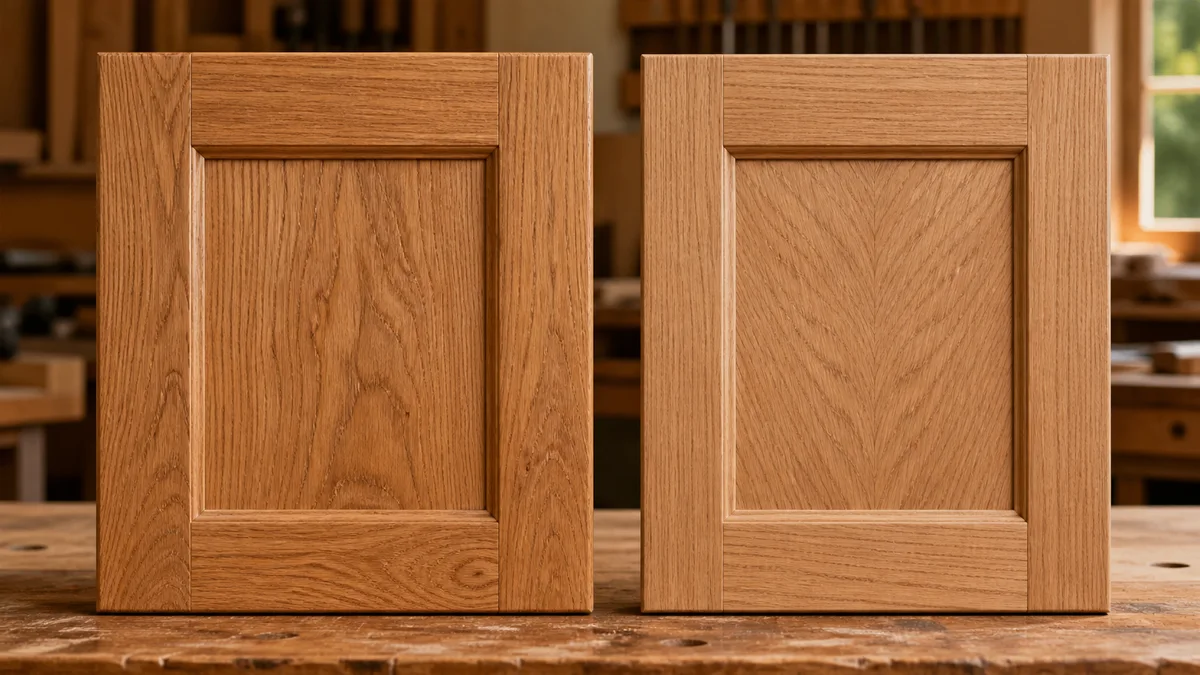
Solid Wood vs Wood Veneer Cabinets: Which Is Right for You? (2026)
Solid wood and wood veneer cabinets compared — grain, stability, repairability and cost — and which delivers the premium timber look your project needs.
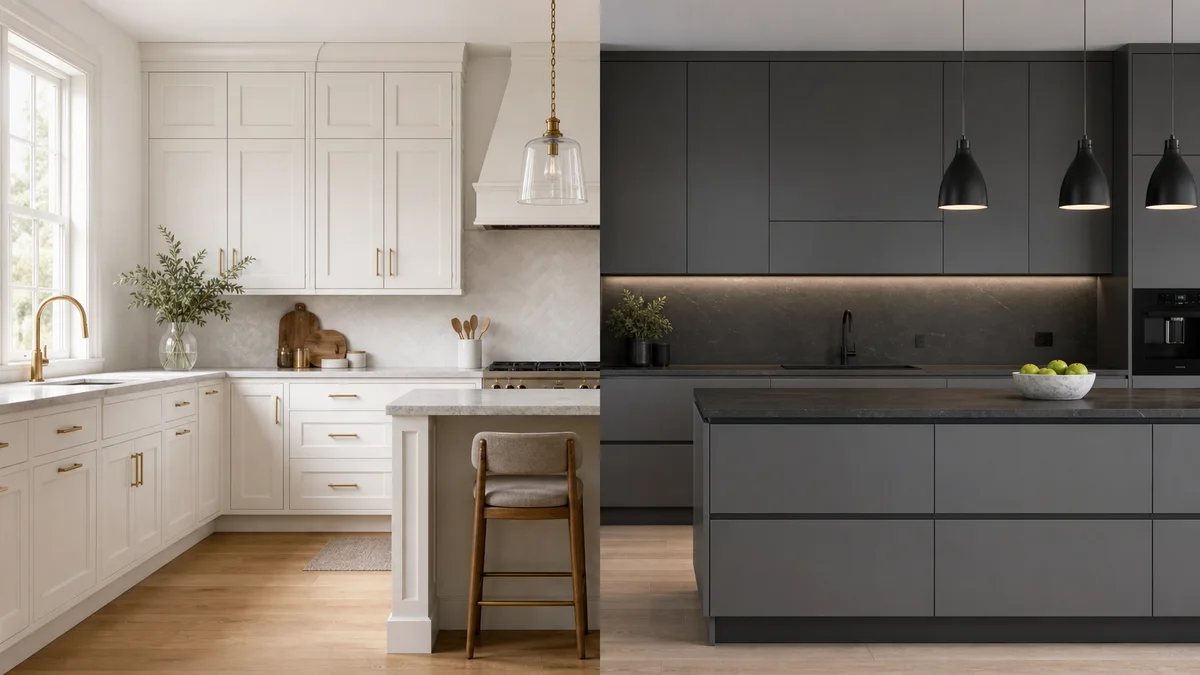
Shaker vs Modern Kitchen Cabinets: Which to Choose (2026)
Shaker and modern slab kitchen cabinets compared — style, market fit, construction, cost and cleaning — with advice on which sells best in which market.