
Lacquer vs Acrylic vs Melamine Kitchen Cabinets: Which Finish Should You Choose?
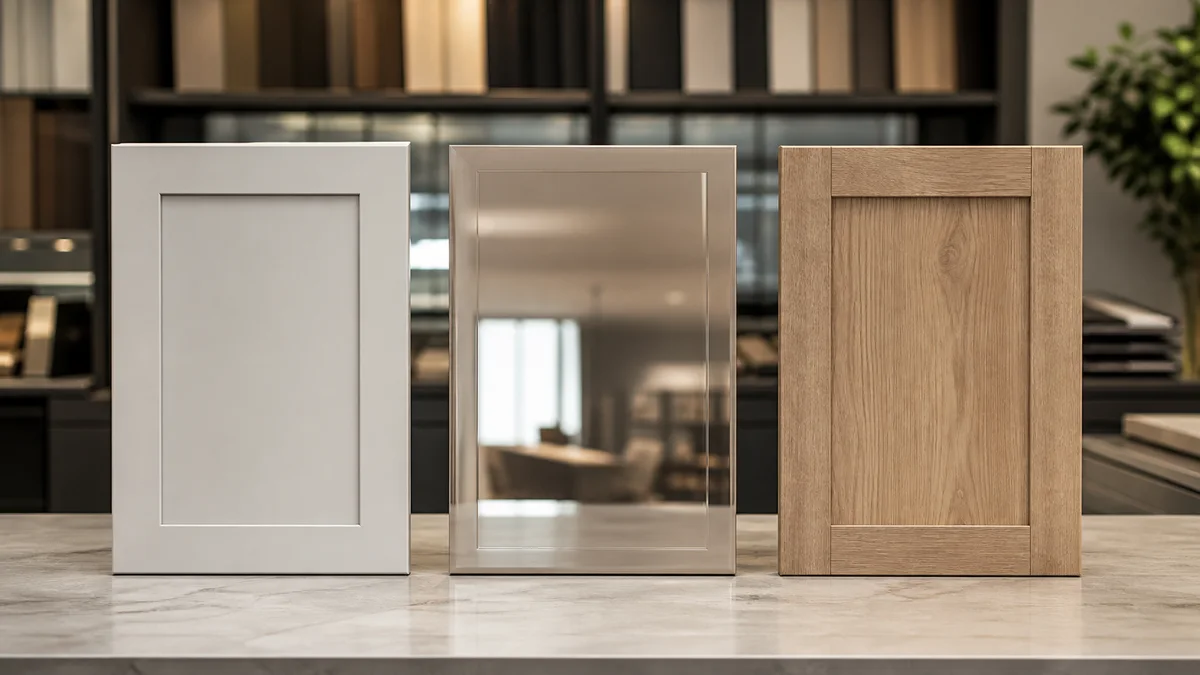
Walk into any cabinet showroom and the three finishes you'll meet first are lacquer, acrylic and melamine. They can look deceptively similar in a photo — and behave completely differently in a real kitchen, on a real budget, over ten real years. This guide compares the three honestly: how each is made, how it looks and ages, what it costs relative to the others, and which projects each one actually suits. By the end you should be able to match a finish to your market instead of guessing.
How each finish is made
Understanding the construction explains almost every difference that follows.
Lacquer is a sprayed finish. The door — usually an MDF core — is sprayed with multiple coats of paint or lacquer, sanded between coats, then cured. Because it's applied as a liquid, lacquer can wrap seamlessly around profiled edges, curves and routed details, and it can be tinted to virtually any colour in matte, satin or high gloss. It's the most labour-intensive of the three, which is why it sits at the top of this price range.
Acrylic is a rigid, mirror-gloss PMMA sheet laminated onto a board core. Think of it as a thin layer of plexiglass bonded to the door face. The result is the deepest, most reflective gloss of any mainstream finish — noticeably "wetter" looking than sprayed gloss lacquer — with excellent colour depth. Edges are usually finished with matching or aluminium edge-banding, since the sheet can't wrap around corners.
Melamine is a resin-impregnated decor paper fused onto particleboard or MDF under heat and pressure. The paper can carry any printed pattern — solid colours, wood grains, stone and concrete textures — which makes melamine the chameleon of the three. It arrives as a finished board, needs no spraying, and is by far the most economical and the fastest to produce.
Look and feel
If pure visual drama is the goal, acrylic high-gloss cabinets win the gloss contest: the surface reads like glass and makes small kitchens feel larger by bouncing light around. The trade-off is that a mirror surface shows fingerprints and every speck of dust, so it suits show kitchens and easy-wipe households more than busy family ones.
Lacquer kitchen cabinets offer the widest aesthetic range. Because the colour is sprayed, you can specify any RAL or NCS shade, choose matte through high gloss, and finish profiled or curved doors — something sheet-based finishes can't do. Matte lacquer in particular has become the signature of high-end European-style kitchens: soft, uniform, no glare, and it hides fingerprints far better than gloss.
Melamine kitchen cabinets have closed most of the visual gap in the last decade. Modern synchronised-texture boards align the printed grain with an embossed surface, so a walnut or oak melamine door both looks and feels convincingly like wood. What melamine can't give you is a custom colour outside the manufacturer's decor library, or a true mirror gloss.
Durability and maintenance
Day-to-day toughness runs roughly opposite to price. Melamine's fused surface is hard, scratch-resistant and doesn't yellow; it shrugs off most kitchen abuse and wipes clean with anything non-abrasive. Its weak point is edges — if the edge-banding is poorly applied and moisture gets into the core, the board swells. Good edge-banding is the single thing to inspect hardest on a melamine order.
Acrylic is colour-stable and doesn't yellow with UV exposure, but the glossy surface scratches more easily than melamine and shows those scratches clearly. Fine swirl marks from rough cloths are the classic complaint; microfibre-only cleaning keeps it pristine.
Lacquer sits in the middle: a quality multi-coat lacquer is durable and repairable — small chips can be touched up or re-sprayed, which is impossible with the other two — but it is paint, so a hard knock can chip it, and cheap single-coat lacquer ages poorly. With lacquer more than any other finish, you get what the spray shop put in.
Cost comparison
Exact pricing depends on your specification and volume — door sizes, colour, gloss level, hardware and order quantity all move the number, and we break down how that works in MOQ, lead time and pricing. But the relative ranking is consistent across almost every manufacturer:
| Melamine | Acrylic | Lacquer | |
|---|---|---|---|
| Relative cost | $ — most economical | $$ — mid to upper | $$$ — premium |
| Gloss level | Matte to soft sheen | Mirror high-gloss | Matte to high-gloss |
| Colour freedom | Decor library only | Solid colours, gloss | Any colour, any sheen |
| Profiled/curved doors | No (flat only) | No (flat only) | Yes |
| Scratch resistance | Best | Moderate, shows marks | Good, chips repairable |
| Repairability | Replace part | Replace part | Touch-up possible |
| Best for | Volume projects, rentals, wood-grain looks | Show kitchens, modern glam | High-end custom, matte trends |
A useful rule of thumb for developers and distributors: melamine for volume and wood-grain looks, acrylic when the brief says "glossy and modern", lacquer when the brief says "premium" or the design needs a non-standard colour or profiled door.
Which finish for which project
Multi-unit residential and rental projects. Melamine, almost every time. The economics work at volume, the surface survives tenants, and synchronised wood grains photograph well in listings. Pair it with a sensible carcass — see our guide to cabinet carcass materials — and you have a specification that repeats reliably across a hundred units.
Mid-range family kitchens. Melamine fronts with one acrylic or lacquer accent — an island face or a feature wall of tall units — is a popular way to get a premium focal point without paying premium across the whole kitchen.
Show kitchens, display homes and modern apartments. Acrylic's mirror gloss earns its keep where first impressions sell. Choose lighter colours if fingerprints worry you; they show far less than dark gloss.
High-end custom and design-led projects. Lacquer. It's the only one of the three that gives designers full colour freedom, matte finishes and shaped doors. It also matches the current European preference for ultra-matte, handleless kitchens.
One more practical note: the three finishes are door finishes, and they can be mixed in one order — many of our project clients run melamine carcasses throughout with different door finishes by room or by unit grade. A factory quoting all three under one roof makes that mix easy to coordinate.
FAQ
Frequently asked questions
Which is better, lacquer or acrylic, for a high-gloss kitchen?
Acrylic gives a deeper mirror gloss and never needs polishing; lacquer high-gloss is close behind and can be repaired if chipped. If pure gloss depth is the goal, acrylic; if you want gloss plus colour freedom or future touch-ups, lacquer.
Do melamine cabinets look cheap?
Not any more, if you specify well. Synchronised-texture wood grains and matte super-finishes have made quality melamine hard to distinguish from veneer or paint at normal viewing distance. Poor edge-banding is what looks cheap — inspect that, not the decor paper.
Which finish lasts longest in a busy kitchen?
Melamine typically takes daily abuse best and shows the least wear. Acrylic keeps its colour but shows scratches; lacquer is durable and repairable but can chip on impact. All three last many years when made and installed properly.
Can I mix finishes in one kitchen or one container order?
Yes — mixing is common: melamine for tall and base units with an acrylic or lacquer island, for example. A single manufacturer producing all three finishes can colour-match and ship them in the same order.
Is acrylic the same as high-gloss lacquer?
No. Acrylic is a solid PMMA sheet laminated onto the board; high-gloss lacquer is sprayed paint polished to a shine. Acrylic's gloss is deeper and more uniform; lacquer offers more colours and can coat shaped doors.
Start a conversation
Tell us your project and budget — we'll recommend the right finish and send samples
Get a Factory-Direct QuoteKeep reading
Related posts
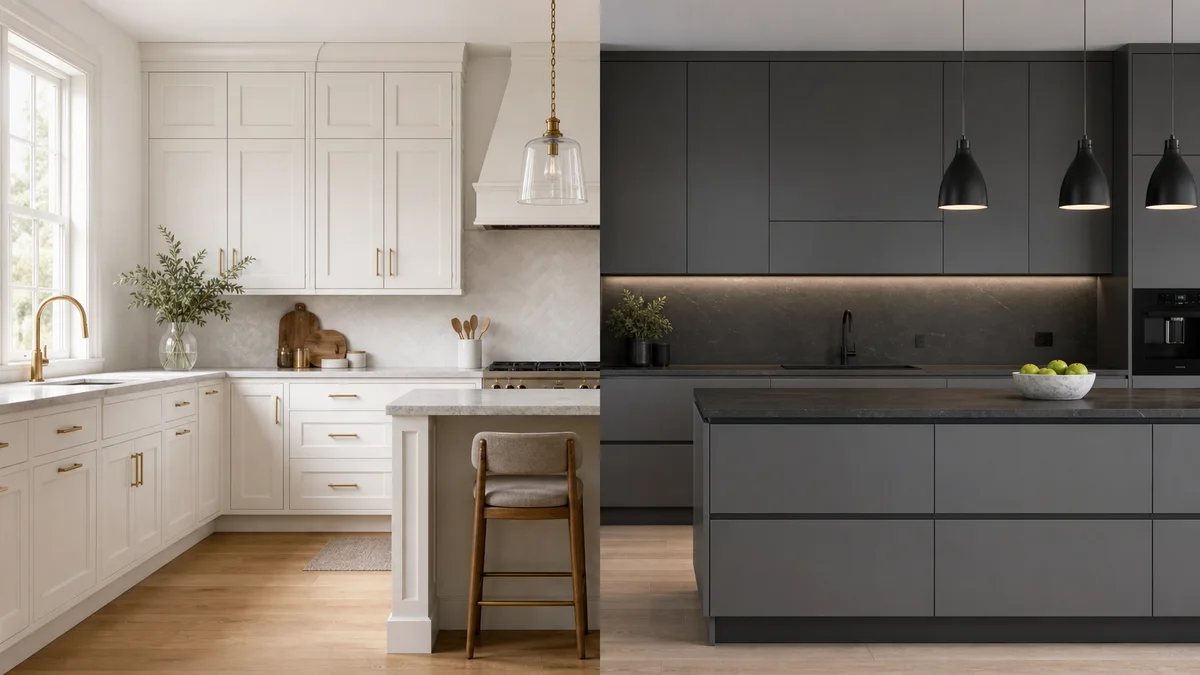
Shaker vs Modern Kitchen Cabinets: Which to Choose (2026)
Shaker and modern slab kitchen cabinets compared — style, market fit, construction, cost and cleaning — with advice on which sells best in which market.
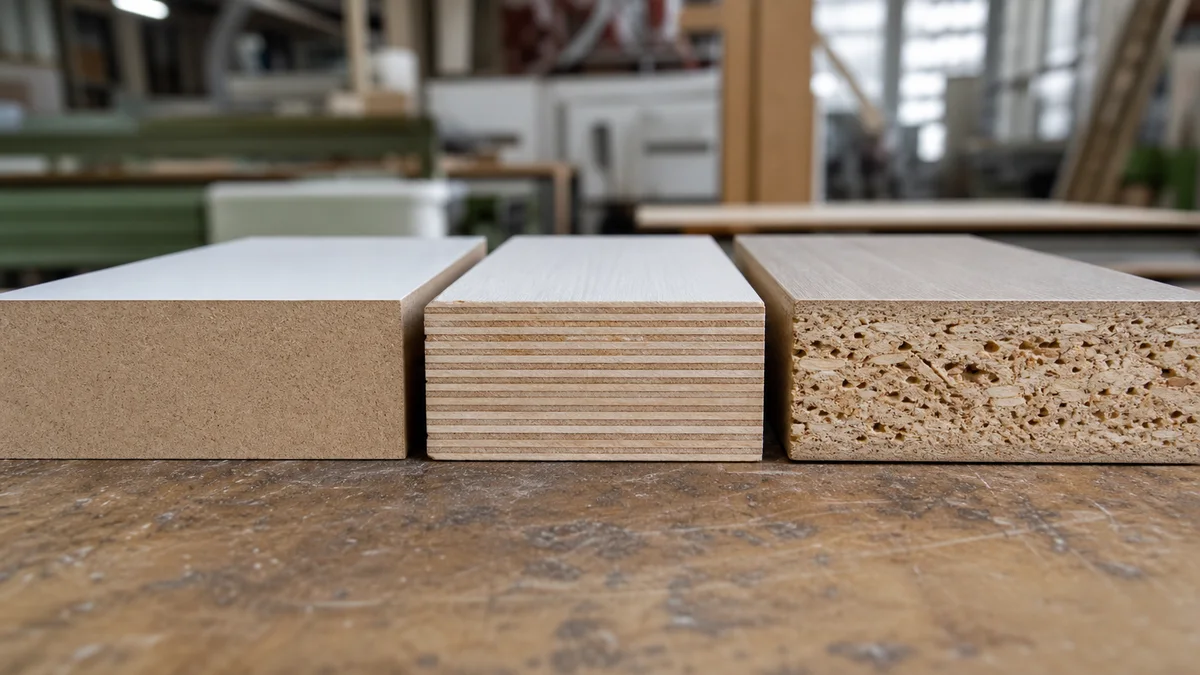
MDF vs Plywood vs Particleboard: Choosing a Cabinet Carcass (2026)
MDF, plywood and particleboard compared for cabinet carcasses — strength, moisture resistance, weight and cost, plus which board to choose in humid climates.
Kitchen Cabinet MOQ, Lead Time & Pricing Explained (2026)
How cabinet MOQ, lead time and pricing actually work when buying from a China factory — what drives each, and practical ways to lower your landed cost.