
RTA vs Assembled Cabinets: Freight, Assembly and Which to Buy
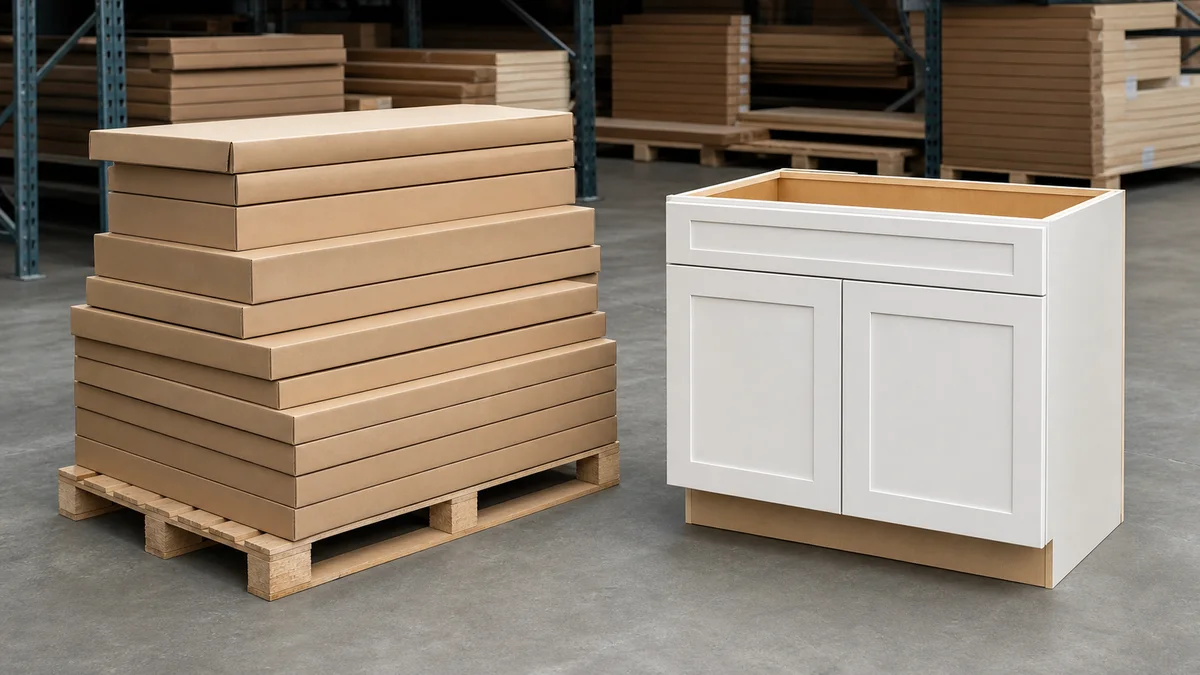
Every importer of cabinets eventually faces the RTA question: ship them flat-packed and assemble at destination, or pay for the factory to assemble and ship finished boxes? The answer moves real money — freight, labour, warehouse space and damage rates all shift with it — and the right choice differs for a distributor, a developer and a contractor. Here's the honest arithmetic.
What RTA actually means
RTA — ready-to-assemble, also called flat-pack or knock-down (KD) — means the cabinet leaves the factory as machined, edge-banded, pre-drilled panels packed flat in cartons, together with hardware packs, and becomes a cabinet at destination via cam-and-dowel or screw assembly. Nothing about the materials or machining is inherently different from an assembled cabinet: a quality flat-pack / RTA cabinet uses the same boards, the same edge-banding and the same hinges as its factory-assembled twin. The difference is purely where the box gets built — and everything downstream of that.
The freight equation
Cabinets are boxes of air once assembled. An assembled base unit occupies its full cubic volume in the container while containing mostly empty space; flat-packed, the same cabinet collapses into a dense carton. Since ocean freight is priced per container, not per cabinet, the units-per-container number is the whole game: pack more cabinets into the same container and the freight cost per cabinet falls in direct proportion.
The honest way to run the numbers for your own case — without trusting anyone's generic ratio — is a four-line calculation. One: get your supplier's container-loading plan for both formats (a serious factory will provide exactly how many of your units fit a 40'HQ each way). Two: divide your container freight cost by each quantity — that's freight per unit, both ways. Three: price the destination assembly labour per unit at your local rate. Four: compare (RTA freight + assembly cost) against assembled freight. The trade term you buy on affects who's paying which legs, so put both quotes on the same basis first — see FOB, CIF and DDP shipping terms.
The pattern this calculation usually reveals: the higher your volume and the cheaper your destination labour, the harder RTA wins; the smaller the order and the costlier your local labour, the more assembled shipping defends itself.
Assembly effort, honestly stated
Factory-quality RTA assembles predictably: pre-drilled holes meet cam fittings, and a practised two-person crew turns cartons into cabinets at a steady rhythm. But "predictably" assumes two things are true. The machining must be accurate — sloppy drilling turns assembly into rework, which is why RTA punishes low-grade suppliers harder than assembled formats do. And someone at destination must actually do the work: a distributor with a warehouse crew absorbs this easily; a developer must put assembly into the installer's scope and schedule; a buyer with neither should price that labour honestly before being seduced by the freight saving.
Quality and damage: the overlooked variables
Two second-order effects deserve a place in the decision. Transit damage patterns differ: assembled cabinets can rack and scuff at corners when containers move, while flat cartons are dense, braced and stack squarely — well-packed RTA frequently arrives in better condition than assembled units on rough routes. Consistency flips the other way: an assembled cabinet was squared and checked by the factory that built it, while an RTA cabinet's final quality includes the assembler's competence. For branded showroom work where every reveal must be perfect, factory assembly buys certainty; for volume programmes with a trained crew, RTA's consistency is entirely manageable.
Warehouse economics also quietly favour RTA for distributors: flat cartons store denser, rack safer and handle with less damage than assembled boxes — inventory that costs less per month to hold. One packing detail to specify for distribution work: one cabinet per carton set, clearly SKU-labelled, with the hardware pack and assembly sheet inside. Mixed cartons save a little container space and cost far more in warehouse sorting time and mis-picks later.
Who should choose which
Choose RTA if you're a distributor or wholesaler moving volume, you have (or can train) assembly capacity, your market's labour rates are moderate, or warehouse density matters to your economics. This is the format built for the import trade — and the reason RTA dominates it.
Choose assembled if the order is small enough that freight savings stay marginal, your destination labour is expensive or unavailable, the programme is premium and every unit must arrive showroom-ready, or your installer's scope can't stretch to assembly.
Mix them if your project has both natures: assembled for the show units and premium floors, RTA for the volume floors. A factory producing your custom kitchen cabinets to specification can run both formats in one order — same finishes, same hardware, one container plan. Volume, as always, moves every number in this article; see MOQ, lead time and pricing for how.
FAQ
Frequently asked questions
Is RTA lower quality than assembled cabinets?
Not inherently — same boards, banding and hardware, different assembly location. Quality risk concentrates in machining accuracy and the assembler's work, so RTA rewards buying from an accurate factory and using a practised crew.
How much freight does RTA actually save?
It depends on your cabinet mix and route, which is why we won't quote a universal figure. Ask for container-loading plans in both formats and divide your freight cost by each — that's your real number, in your own order.
How long does RTA assembly take per cabinet?
With pre-drilled, cam-and-dowel construction and a practised two-person team, assembly is a steady production-line rhythm rather than a carpentry job. Exact pace depends on cabinet complexity — drawer stacks take longer than open base units.
Do RTA cabinets arrive damaged more often?
Usually the opposite, when packed properly: dense flat cartons brace better in transit than assembled boxes. Insist on export-grade cartons and corner protection either way.
Can I order some cabinets assembled and the rest RTA?
Yes — mixed-format orders are routine for project buyers: assembled for show units, RTA for volume, one factory and one container plan.
Start a conversation
Send your quantities — we'll quote both formats with container plans so you can compare landed cost
Get a Factory-Direct QuoteKeep reading
Related posts
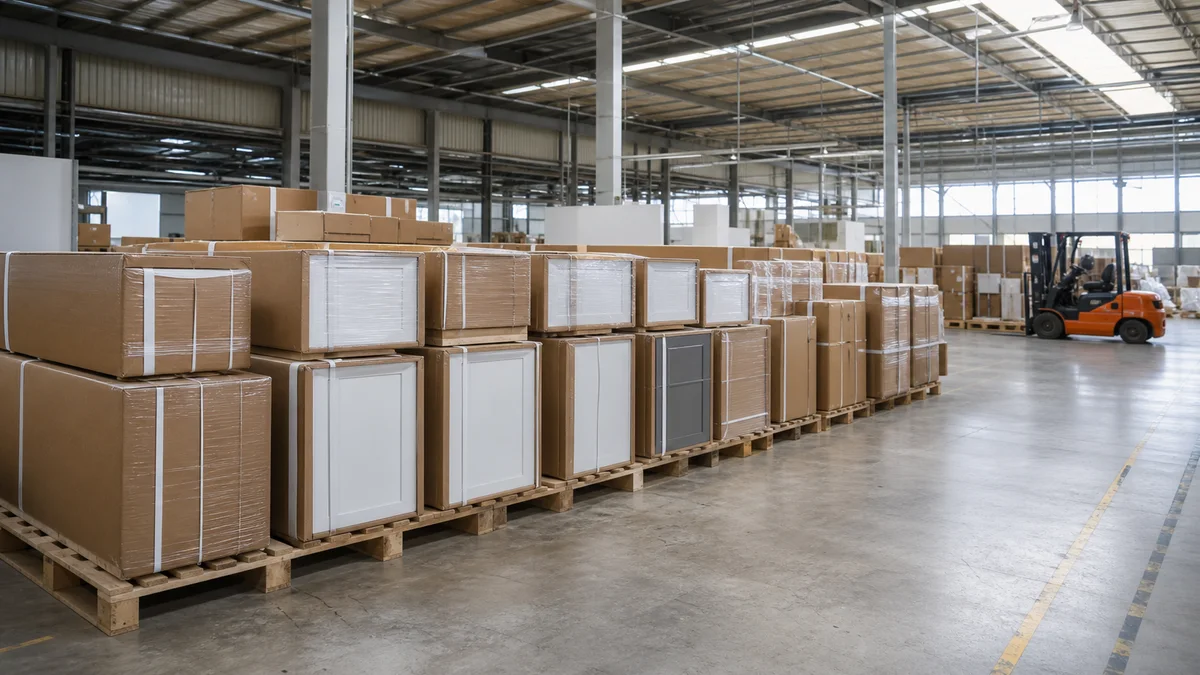
Kitchen Cabinet MOQ, Lead Time & Pricing Explained (2026)
How cabinet MOQ, lead time and pricing actually work when buying from a China factory — what drives each, and practical ways to lower your landed cost.
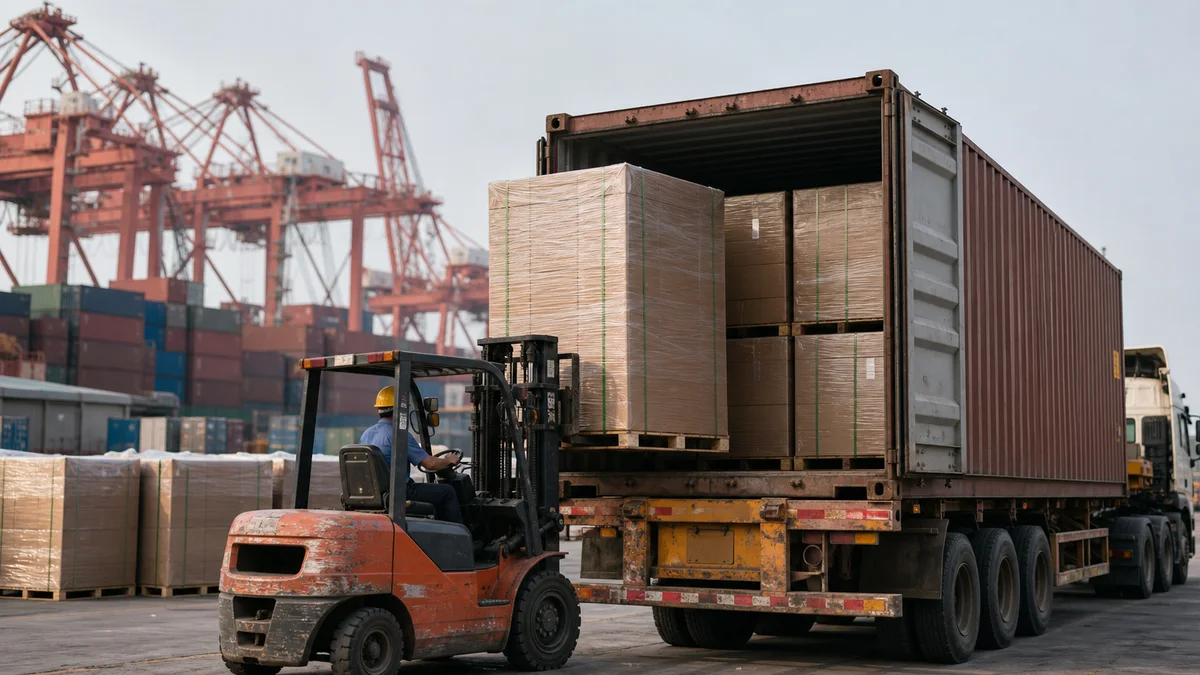
FOB vs CIF vs DDP: Shipping Cabinets from China (2026)
FOB, CIF and DDP explained for cabinet buyers — what each Incoterm includes, who carries the risk, and which term to choose when importing from China.

China vs Local Kitchen Cabinet Suppliers: An Honest Comparison (2026)
Cost, lead time, quality control and communication — an honest comparison of buying kitchen cabinets from China versus a local supplier, and when each wins.