
Shaker vs Modern Kitchen Cabinets: Which Should You Choose?
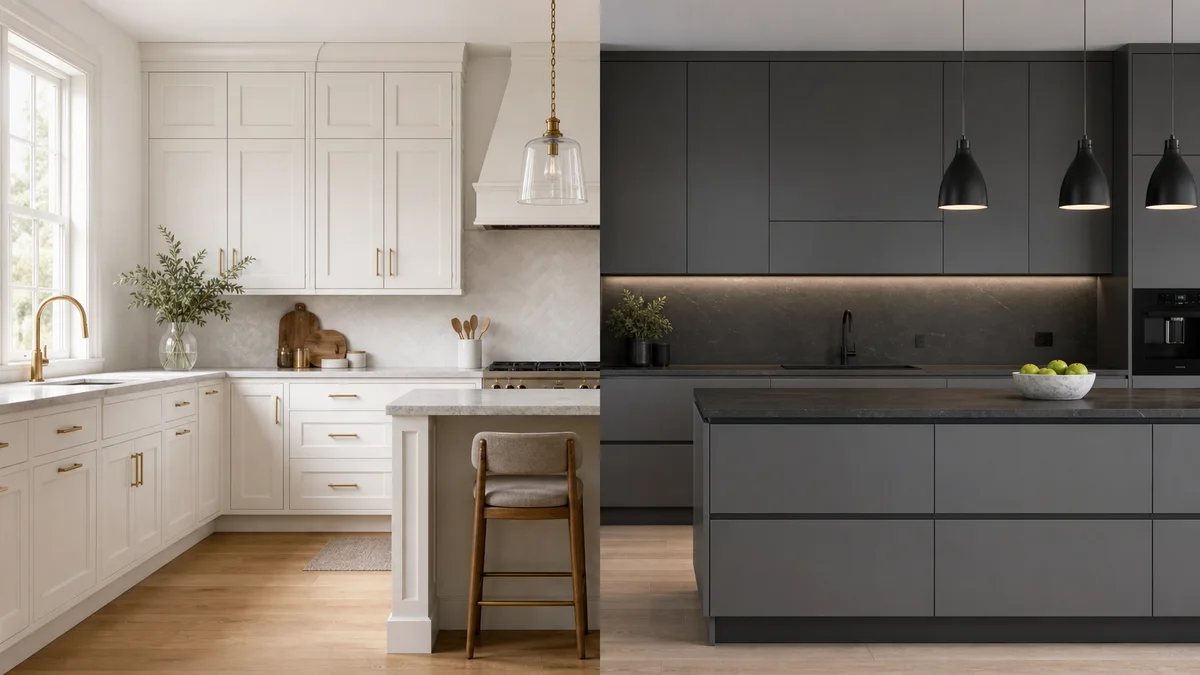
Shaker or modern slab — for most kitchen projects the style decision comes down to these two families, and it's rarely just a matter of taste. The style you choose changes the construction method, the finishes available, the cleaning routine, the cost, and — if you're a developer or distributor — how fast the units sell in your particular market. Here's a practical comparison from a factory that builds both every week.
Defining the two styles
Shaker is the framed classic: a five-piece door with a flat centre panel surrounded by a rail-and-stile frame. Born from 18th-century Shaker furniture-making, the style reads as timeless, warm and slightly traditional without being ornate. It usually wears handles or knobs, and it takes paint colours beautifully — white, cream, sage and navy shaker kitchens have been strong sellers for decades and still are.
Modern (slab / flat-panel) is the minimalist counterpart: a single flat door with no frame, no profile, no visual noise. It pairs naturally with handleless designs — push-to-open mechanisms or routed J-pull grooves — and with the full range of contemporary finishes: matte lacquer, high-gloss acrylic, wood-grain melamine, super-matte laminates. The look is clean, architectural and current.
Both styles are built as frameless (European-style) cabinets in our factory — the difference is the door, not the box. That matters for buyers: the carcass, hinges and internal fittings can be identical across both, which simplifies a mixed order.
Style and market fit
This is the deciding factor for most project buyers, so let's be direct about where each style sells.
Shaker dominates in markets with traditional housing stock and classic tastes: the US and Canada, the UK and Ireland, Australia and New Zealand. In these markets a white or painted shaker kitchen is the safe, broad-appeal choice — real-estate agents recommend it precisely because it offends nobody and photographs as "timeless" in listings. If you're flipping houses, furnishing rentals or building spec homes in these regions, shaker is the low-risk default.
Modern slab leads in continental Europe, the Middle East, Southeast Asia and China, and in urban apartment markets everywhere. New-build apartments, hotels and design-led villas skew heavily to modern slab-door kitchens — the style matches contemporary architecture and lets developers differentiate with finish and colour rather than door profile. In Gulf and Asian project markets, handleless matte or gloss kitchens are effectively the standard specification now.
Mixed markets reward reading your buyer, not the trend articles. A useful test: look at what the top-selling new developments in your city installed last year. Kitchens are replaced on decade cycles, so local momentum matters more than global fashion.
Construction, materials and cleaning
The five-piece shaker door takes more machining and assembly than a slab, and its inner frame lines add one cleaning consideration — dust and grease settle into the corner joints, so shaker kitchens ask slightly more of their owners than wipe-flat slabs. Neither point is a defect; they're just characteristics to price and to communicate.
Finish options differ more meaningfully. Shaker doors are typically painted (lacquered) MDF or solid wood, because the profile needs a sprayed finish to coat evenly — sheet materials can't wrap the frame. Slab doors accept everything: melamine, laminate, acrylic, veneer or lacquer, which is why slab kitchens span from budget rental fit-outs to premium matte showpieces. We compare those surface options in detail in our cabinet finish comparison.
Durability is comparable when both are made well. Painted shaker edges can chip at the frame joints under hard use; slab edges depend on quality edge-banding. Both issues trace back to manufacturing quality rather than style.
Cost comparison
For the same size kitchen from the same factory, shaker generally costs more than melamine-faced slab and about the same as (or slightly more than) lacquered slab, because the five-piece door carries more machining, assembly and spraying labour. Slab in melamine is the most economical way to a finished kitchen; slab in acrylic or matte lacquer climbs back up toward shaker territory.
For project buyers the bigger cost lever is repetition: a single door style and colour repeated across many units drops the per-unit price of either style. The expensive kitchen is the one where every unit is different — a point we expand on in our guide to sourcing kitchen cabinets from China.
The verdict: how to choose
Choose shaker if your buyers skew traditional (US, UK, AU suburban and family markets), you want broad resale appeal, or the property's architecture is classic. Choose modern slab if you're building apartments or hotels, selling into Europe, the Middle East or Asia, targeting younger urban buyers, or the design brief says minimalist or handleless.
If you serve more than one market segment, run both from one supplier: identical carcasses, two door programmes. Developers frequently fit slab kitchens in one-bedroom units and shaker in family townhouses within the same project — same container, same hardware, two audiences served.
There's also a middle path worth knowing: the slim shaker (a narrower frame, sometimes just a few millimetres of profile) and the two-tone kitchen (shaker or slab base units in a colour, slab tall units in wood grain). Both have grown strongly in recent years precisely because they hedge between the two camps — traditional enough for classic buyers, clean enough for modern ones. If your market research comes back split, a slim-shaker programme in two or three neutral colours is one of the safest specifications you can order, and it costs closer to standard shaker than to premium slab finishes.
Hardware finishes matter more than most buyers expect, too. Brass or bronze handles instantly warm up a shaker kitchen; black or stainless bar pulls modernise it. Slab kitchens make the opposite move — going handleless with J-pull grooves or push-to-open reads as premium and saves the hardware budget for hinges and runners, where quality is felt every day rather than seen.
FAQ
Frequently asked questions
Which style is more popular in 2026?
Both remain top sellers globally. Shaker holds the lead in North American and British-influenced markets; slab leads in Europe, the Middle East, Asia and new-build apartments worldwide. Match the market, not the global average.
Is shaker more expensive than modern slab?
Usually somewhat, because the five-piece door needs more machining and a sprayed finish. A melamine slab kitchen is the most economical option; premium slab finishes can cost as much as shaker.
Which is easier to keep clean?
Slab — a flat door wipes in one pass. Shaker's frame lines collect a little dust and grease at the joints and need occasional detail cleaning.
Can shaker cabinets look modern?
Yes — a slim-frame shaker in a matte contemporary colour with minimal handles reads as transitional or "modern classic," a popular middle path when buyers can't agree.
Can I order both styles in one container?
Yes. Since the cabinet boxes are identical, mixing shaker and slab door programmes in one order is routine for project clients.
Start a conversation
Tell us your market and we'll quote shaker, modern or both — with door samples
Get a Factory-Direct QuoteKeep reading
Related posts
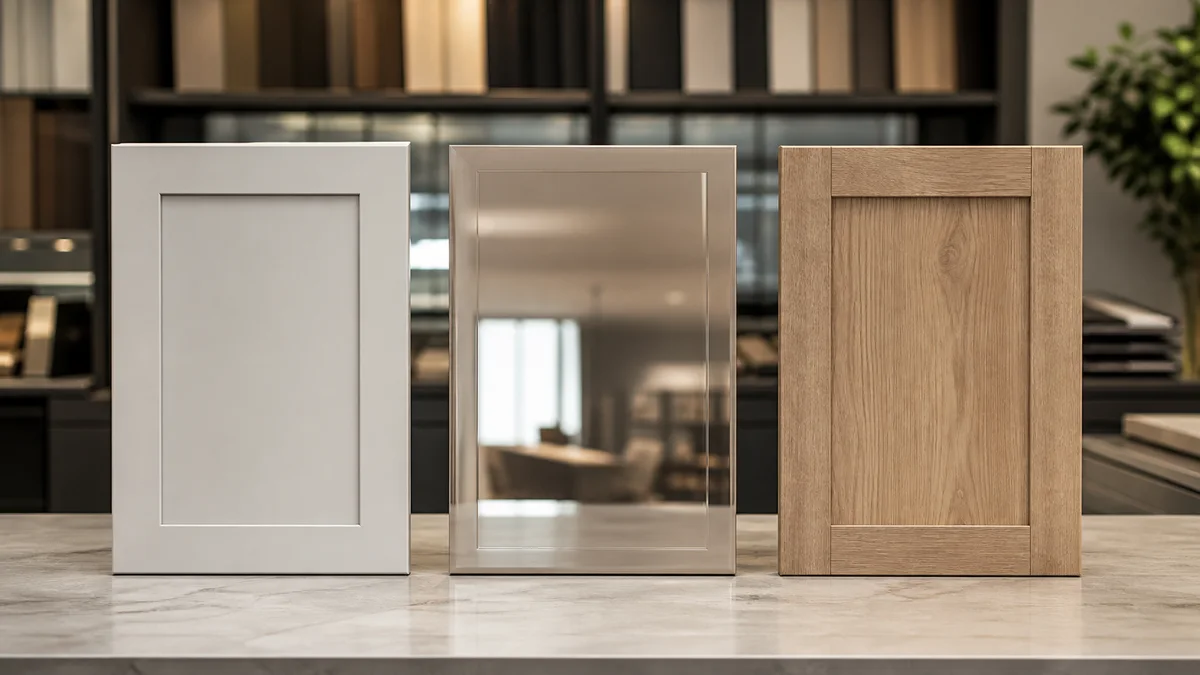
Lacquer vs Acrylic vs Melamine Kitchen Cabinets: Full Comparison (2026)
Lacquer, acrylic and melamine kitchen cabinets compared — look, durability, maintenance, cost and best use cases, to pick the right finish per project.
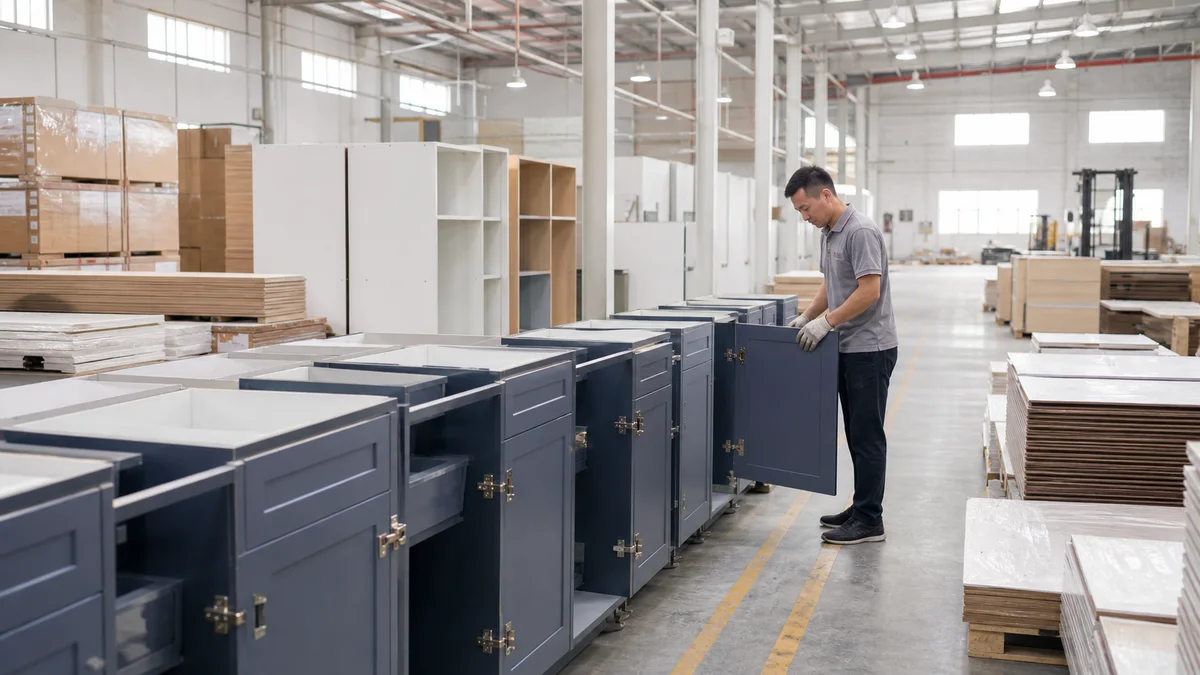
How to Source Kitchen Cabinets from China: A 2026 Buyer's Guide
Step-by-step guide to sourcing kitchen cabinets from China — specs, choosing a manufacturer, samples, pricing, QC and shipping. Avoid the common mistakes.
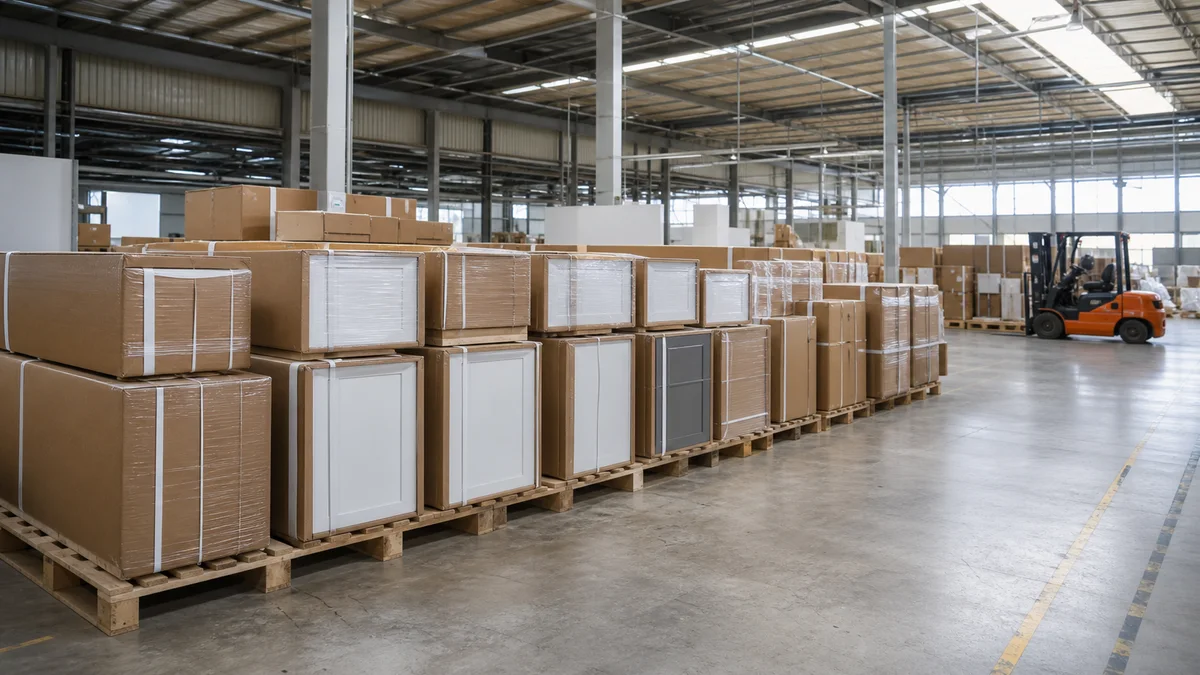
Kitchen Cabinet MOQ, Lead Time & Pricing Explained (2026)
How cabinet MOQ, lead time and pricing actually work when buying from a China factory — what drives each, and practical ways to lower your landed cost.