
Solid Wood vs Wood Veneer Cabinets: Which Is Right for Your Project?
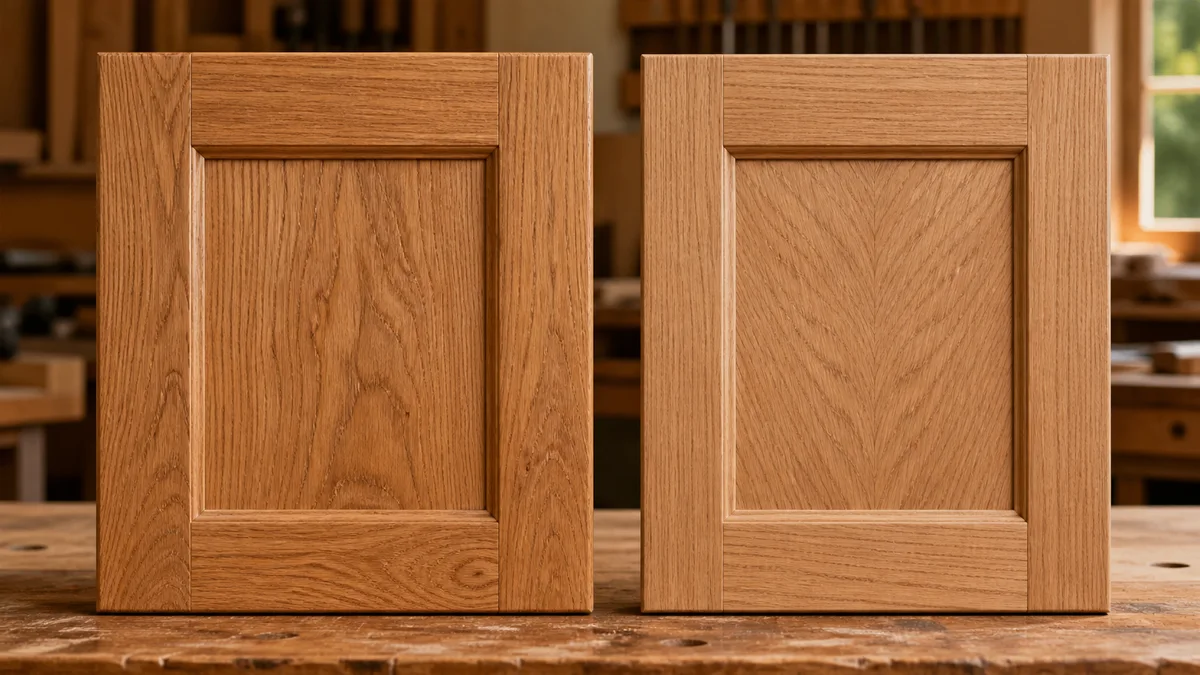
When a project brief says "real wood," you still have a decision to make: solid timber, or real-wood veneer over an engineered core? Both are genuinely wood — that surprises some buyers — and each earns its place in premium cabinetry for different reasons. The choice affects cost, stability in different climates, repairability and even which designs are possible. Here's how to decide.
What each one actually is
Solid wood cabinets use boards milled directly from timber — oak, walnut, ash, cherry — for the door frames and panels. The material is wood through and through: cut it anywhere and you find the same timber. Construction typically follows traditional joinery: frame-and-panel doors that allow the wood to expand and contract with the seasons.
Wood veneer is a thin slice of real timber — the same oak or walnut — bonded to a stable engineered core such as MDF or plywood. The face you see and touch is genuine wood grain; the core underneath is doing the structural work. Because veneer leaves are sliced sequentially from one log, adjacent doors can be grain-matched — book-matched or slip-matched — into continuous flowing patterns no solid boards can replicate.
Neither is an imitation. The imitation category is printed melamine "wood grain," which we compare separately in our guide to lacquer, acrylic and melamine finishes.
Grain, stability and repairability
Grain and looks. Solid wood offers depth, variation and character — no two doors identical — which is precisely its charm for classic and rustic designs. Veneer offers control: matched grain running uninterrupted across a bank of handleless doors, a look modern luxury design leans on heavily. For large flat surfaces, veneer usually looks more premium, not less, because solid boards that wide would need visible joints.
Stability. This is veneer's quiet superpower. Solid timber moves — it expands and contracts with humidity, which traditional joinery accommodates but flat modern doors do not. In dry-winter or humid-summer climates, wide solid panels can warp, cup or crack. Veneer on an engineered core stays flat through the seasons, which is why almost all large flat "timber" doors in contemporary kitchens are veneer. If your market swings in humidity, that fact should weigh heavily.
Repairability. Solid wood wins here: scratches and dents can be sanded out and refinished, effectively renewing the surface — once, twice, for decades. Veneer's face layer is thin; light scratches can be touched up, but deep damage generally means replacing the door rather than sanding it. Attic stock (a few spare doors in the original order) is the standard insurance.
Cost and where each makes sense
Solid wood is the more expensive route: premium timber, more material, more joinery labour, and stricter drying and selection standards. Veneer delivers the same species' look at a meaningfully lower cost, since a single log's worth of veneer faces many doors. As with every specification choice, quantity changes the numbers — see MOQ, lead time and pricing for how volume moves cost.
Choose solid wood kitchen cabinets when the design is classic — shaker, raised-panel, profiled frames; the client wants heirloom permanence and future refinishing; or the brief explicitly demands solid construction (some high-end markets simply expect it).
Choose wood veneer cabinets when the design is modern flat-panel with continuous grain across doors; the climate is humid or strongly seasonal; sustainability of premium species matters (one walnut log goes much further as veneer); or you want the timber look closer to a mid-range budget.
Plenty of premium projects mix both deliberately: solid frames where hands touch — doors on classic runs, edges — and veneer across wide flat faces. The point isn't that one is "real" and one isn't; it's that each is the better engineering answer to a different design.
The surface treatment deserves a line in your specification as well. Both solid and veneer doors can be finished with clear lacquer (the durable, wipe-clean default for kitchens), oil or hardwax-oil (a natural matte feel that's spot-repairable but wants occasional re-oiling), or a tinted stain under lacquer to shift the timber's tone. For kitchens we generally recommend lacquered finishes for their moisture and stain resistance; oiled timber belongs more in wardrobes, studies and furniture pieces that never meet a splash of curry.
FAQ
Frequently asked questions
Is veneer just a cheap version of solid wood?
No. Veneer is real timber, chosen for stability and grain-matching that solid boards can't achieve on wide flat doors. High-end furniture and luxury joinery have used veneer for centuries — it's a design tool, not a shortcut.
Which lasts longer, solid wood or veneer?
Both last decades when well made. Solid wood can be refinished repeatedly, which extends its life; veneer resists warping better in changing humidity. Longevity depends more on construction quality and climate fit than on the label.
Do solid wood cabinets warp?
Wide flat solid panels can move with humidity — that's why traditional solid doors use frame-and-panel joinery. In humid or strongly seasonal climates, veneer on an engineered core is the safer choice for flat modern doors.
Can you match veneer and solid wood in one kitchen?
Yes. Ordering both from one factory in the same species and stain keeps colour consistent — a common premium specification: solid profiled frames plus veneer flat faces.
How do I tell veneer from solid wood on a finished door?
Look at the edge and the back: veneer doors show a uniform core at the edge (usually banded) and often repeating grain across doors; solid wood shows continuous end-grain and unique variation door to door.
Start a conversation
Tell us the look you're after — we'll advise solid, veneer or a mix, with samples
Get a Factory-Direct QuoteKeep reading
Related posts
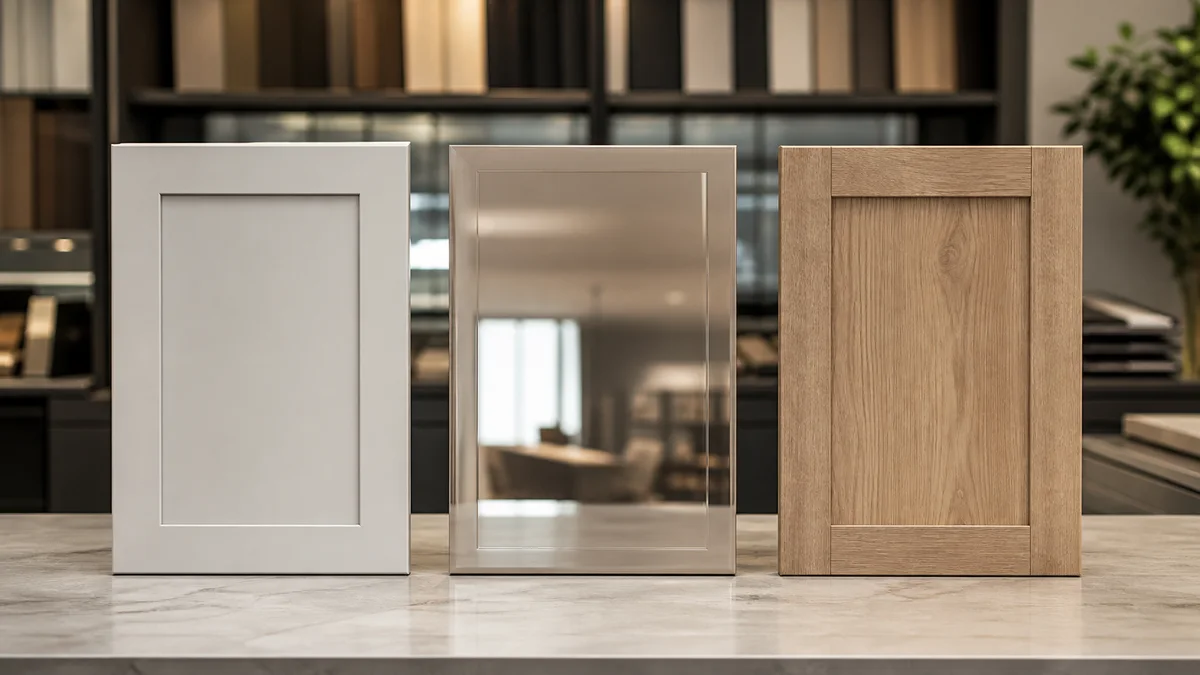
Lacquer vs Acrylic vs Melamine Kitchen Cabinets: Full Comparison (2026)
Lacquer, acrylic and melamine kitchen cabinets compared — look, durability, maintenance, cost and best use cases, to pick the right finish per project.
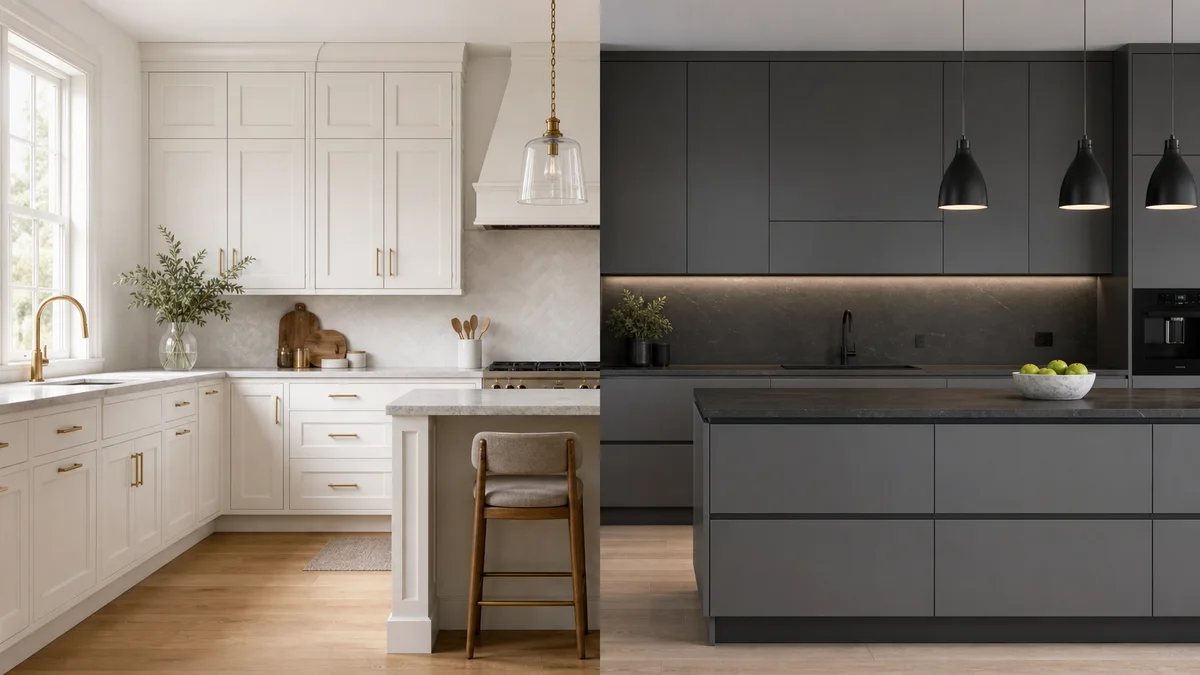
Shaker vs Modern Kitchen Cabinets: Which to Choose (2026)
Shaker and modern slab kitchen cabinets compared — style, market fit, construction, cost and cleaning — with advice on which sells best in which market.
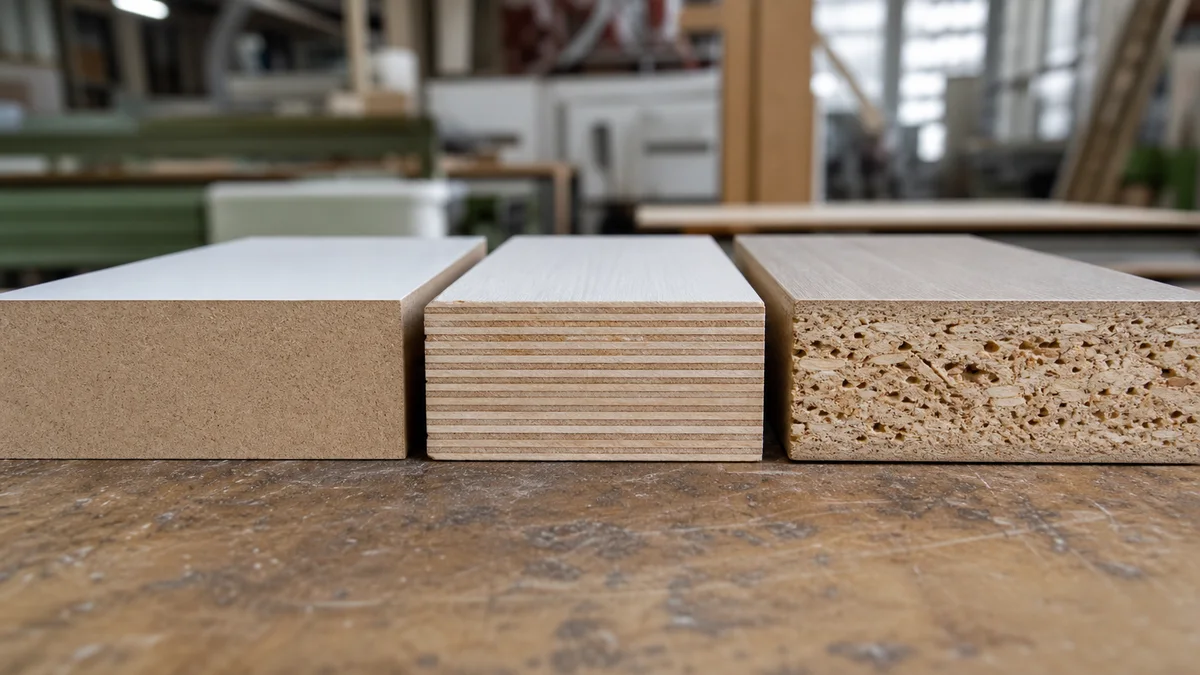
MDF vs Plywood vs Particleboard: Choosing a Cabinet Carcass (2026)
MDF, plywood and particleboard compared for cabinet carcasses — strength, moisture resistance, weight and cost, plus which board to choose in humid climates.